Prefer Jewish News on Google
‘I wasn’t supposed to survive:’ Wounded IDF veteran’s message of resilience to UK Jews
Seriously injured in Gaza, 26-year-old IDF veteran Eytan says Beit Halochem saved his future – now he’s giving back
He sits in a café in north-west London, speaking almost casually about shrapnel in his skull, the colour of blood on a kindergarten floor and the moment he believed “statistically, we shouldn’t have made it out alive.” Not once does his voice crack.
“I will never forget the feeling of metal, the shards piercing. It’s hot and cold at the same time.”
That moment came in November, inside Gaza, when a Hamas bomb detonated beside him. Minutes later, as medics undressed the wounded, an ambush began.
“By military definition, we were in a death box. They had us cornered from all sides. It was either us or them.”
Had he not refused to walk his full reservist team into the building seconds earlier, all 24 would likely have been killed. He calls it luck. His medical team call it survival against odds most do not beat.


He was not even meant to be in Israel. Like thousands of released veterans, he had gone travelling, trekking in Nepal.
“I only connected to reality at around 9 o’clock Nepal time. It felt like the worst joke someone could pull. You don’t fathom something like this could ever happen.”
He and three fellow officers hiked across the mountains, bribed helicopter pilots and slept in Dubai airport.
“It was like The Amazing Race – just in the worst possible conditions, and not a million dollars at the end.”
Within hours of landing, he was back in uniform. “You just go back as if you never left. It’s muscle memory.”
He lost five friends on 7 October alone. “Some from service, and some at the Nova party.”
He breaks eye contact only once, recalling the clearing of ruined kibbutzim.
“The first time I broke down was when I saw a bloody footprint. Someone was shot, bleeding constantly, ran to a safe room. The door was broken through. There was a puddle of blood on the other side. They sat there and bled to death.”
There is no greater reason to avenge, protect, and make sure everyone who is still captured by Hamas comes back home.
Evacuated by helicopter, he remembers being “freezing cold” and “very high” on medication.
He called his girlfriend before surgery.
“We hadn’t spoken for two and a half weeks. I said, ‘Hey it’s me.’ She said, ‘Oh hey, what’s up?’ Like nothing had happened.”
He underwent brain surgery to remove shrapnel and later surgery for hearing loss.
“My physical rehabilitation ended four months after. Emotionally, I’m still going through it.”
His real recovery began at Beit Halochem, Israel’s rehabilitation organisation for wounded veterans.
“It’s one of those things you don’t want to know exists until you need it. My girlfriend’s brother is a disabled veteran. He literally grabbed me and said, ‘You’re coming with me.’”
“You feel like you have a safe space. A bad day, good day, confusing day – you have somewhere to go.”
He goes every day.
“Sometimes just to work out, sometimes for coffee. But most importantly, you’re not alone.”
He tells stories like miracles spoken in deadpan.
“There’s a 19-year-old with no arm and both legs amputated. He swims faster than me. He beats me in the pool. If he can do it, I can do it.”
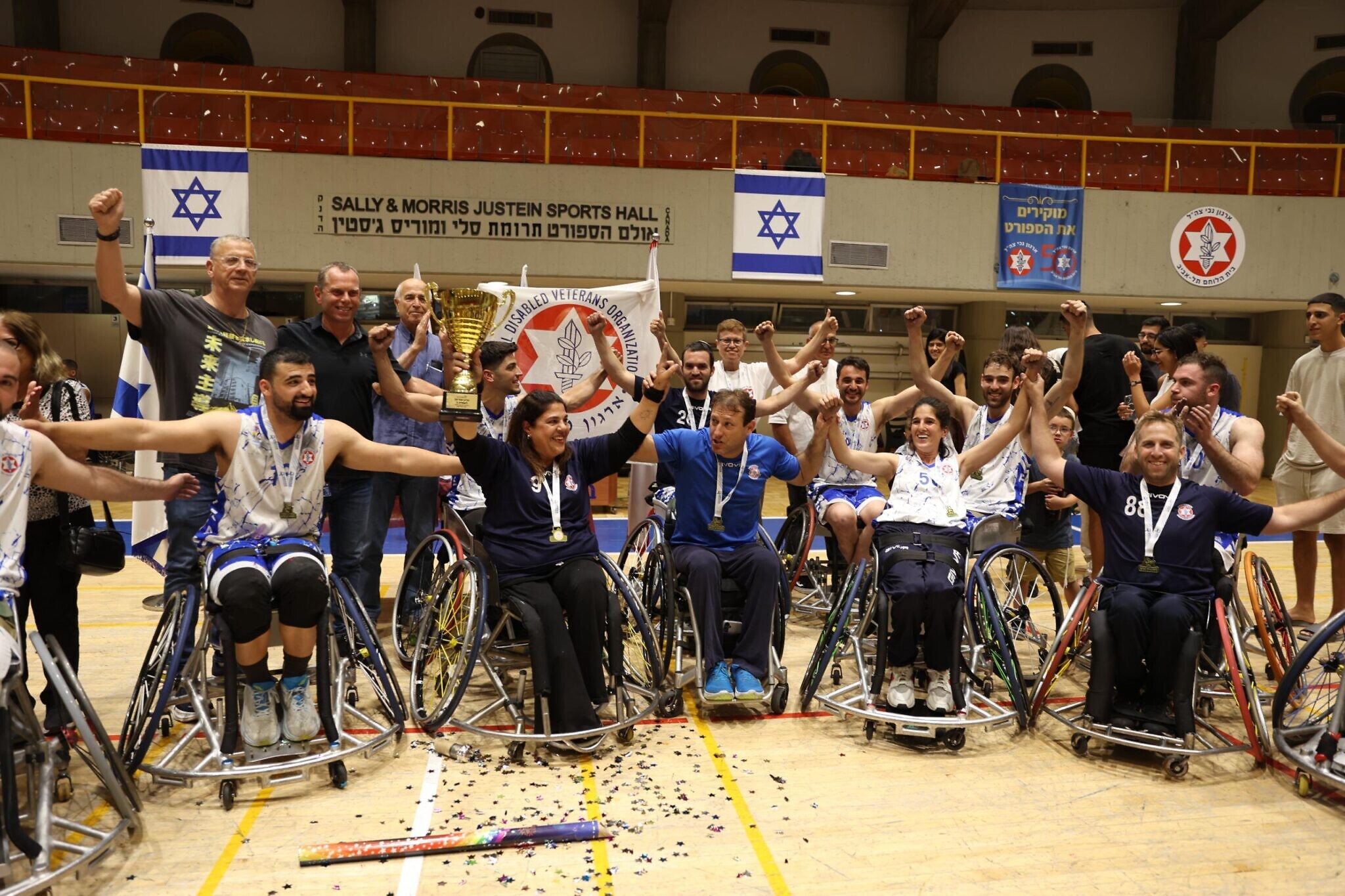
On a ski trip: “There was a kid missing an entire leg. I thought, what is he going to do? He snowboarded like nothing happened – fell a thousand times, smiled, got up, kept going.”
Two months after joining, he began visiting newly injured veterans in hospital.
If someone did it for me, I can do it for others. Even a five-minute conversation – ‘Come have a coffee, come swim’ – can change another veteran’s life.
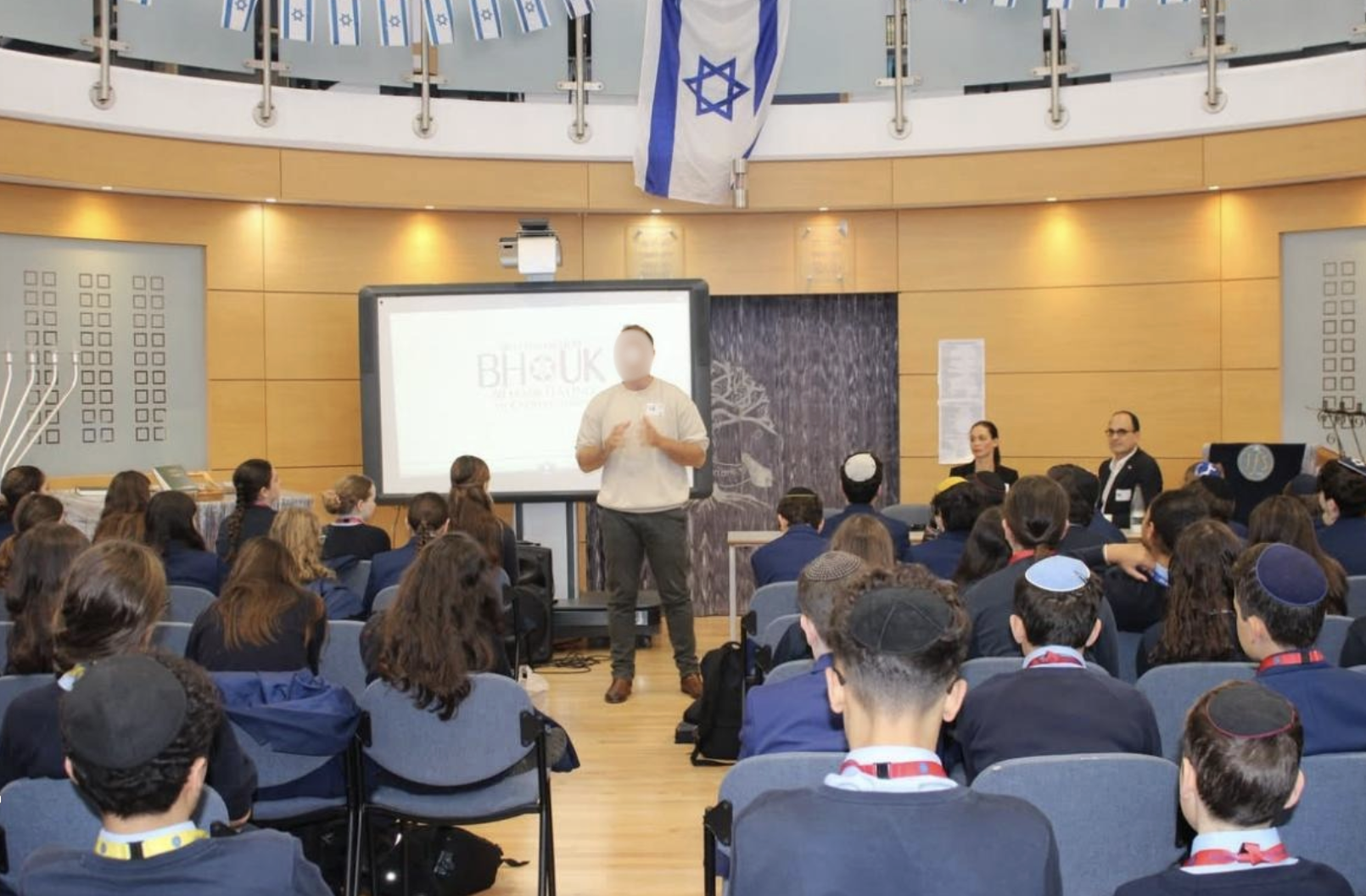
He has been touring British schools, synagogues and churches with Beit Halochem UK. His visit coincides with a moment of fierce public scrutiny of Israel and the IDF – including on British stages.
Asked about Glastonbury, where rapper Bob Vylan accused Israel of genocide to cheers from thousands, he does not blink.
“You can’t fight ignorance. If millions of people want to believe lies and fairy tales – it frustrates me, but I can’t fight it.”
Then he says, without hesitation: “With all my heart, the IDF is the most responsible, moral military force in the world. I will defend that until the day I die.”
Does it feel lonely? “It kind of feels like we’re alone in the world. But then you come to communities like this and you realise – maybe it’s not that alone.”
Beit Halochem UK director Spencer Gelding says more than 17,500 newly injured veterans have joined the charity since 7 October, bringing the total close to 70,000.
“That’s the number people forget,” Eytan says. “Their conflict may end – but their battle is just beginning.”
He and his partner are rebuilding their lives. He is studying business and working in tech.
“There is a life before, and a life after. It’s a full 180. You just pivot and adjust to the new reality.”
He finishes his coffee. He smiles.
“The fact I’m here at all means I have something to live for. And that was not the day I was willing to give up.”

Keep community journalism free.
Jewish News is free for everyone. No paywall. No barriers. Just trusted journalism for anyone who wants to stay connected to Jewish life in Britain.
If you value that, please support us.
From as little as £5 a month, you can help keep our journalism free and accessible to all.
Every day, we report on the issues that matter to our community. We celebrate achievements, support charities, challenge antisemitism and ensure Jewish voices are heard more widely.
From as little as £5 a month, you can help us continue to:
- Report on the stories shaping Jewish life in the UK and beyond
- Bring our community together through shared stories, events and campaigns
- Celebrate the people, culture and moments that define our community
- Support organisations doing vital work across Jewish Britain
You can make a one-off donation or become a regular supporter. Every contribution helps keep our journalism free, independent and accessible to all.
If everyone who values Jewish News gave a small amount, it would make a real difference to our future.