Prefer Jewish News on Google

From Imran Ahmed to Heidi Bachram, those opposing hate speech are being targeted
Too many appear willing to ignore the simple fact that antisemitism is a weapon forged to be used against Jews; it is not a weapon used by Jews against antisemites
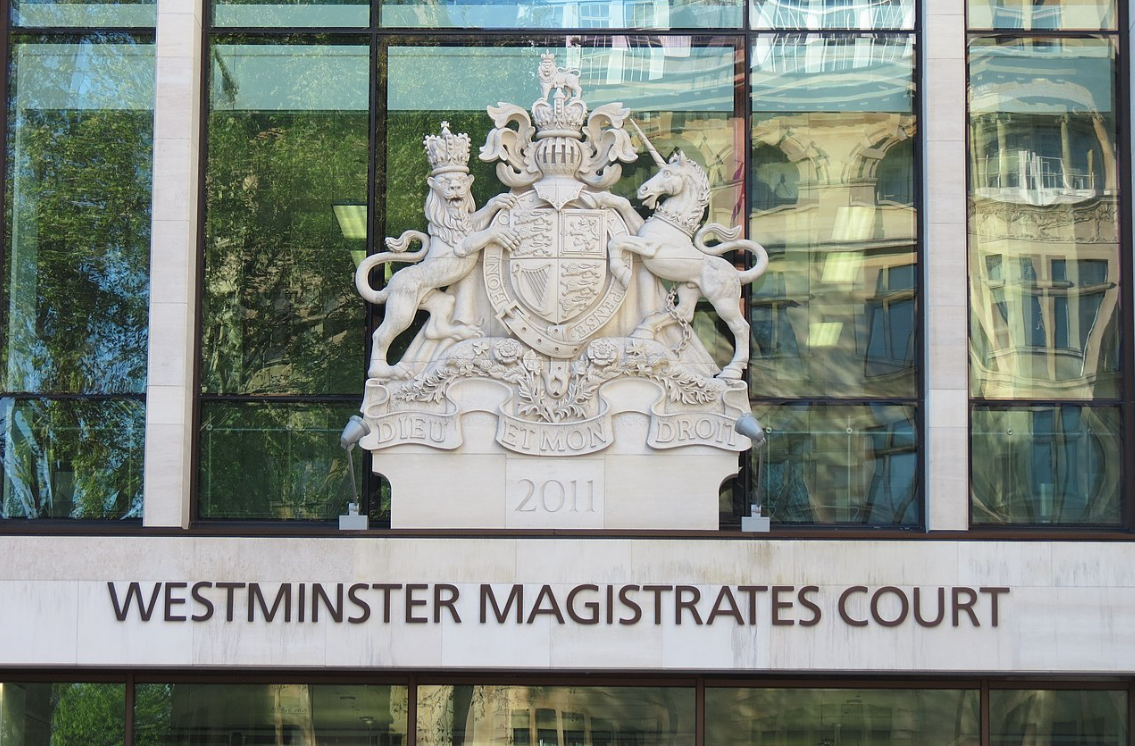
In the space of just a week, we have seen hostile decisions in UK courts against those trying to protect Jews from antisemitism; and then a brilliant Muslim Brit deported from the USA for trying to do the same.
Stand-up comedian Reginald Hunter successfully had a summons to court quashed, to face an accusation of ‘improper use of a public communications network’. He published tweets, aimed at antisemitism campaigner Heidi Bachram. One explained why he hates ‘these people’ and is ‘committed to their destruction’. Not because of Jew hatred, he said and not because they are ‘European Nazis pretending to be JEWS’. But ‘because of all the lying’.
‘Hey sugar’, he went on, addressing Heidi, who had campaigned for the release of her husband’s cousin, kidnapped by Hamas, who was in the end murdered: “I don’t hate you for being an agent of evil. Not new. Not even uncommon. You being a liar, a persistent liar KNOWING the truth, is why I will see you and your kind ended, even if it costs me EVERYTHING. You are not even a JEW. Run tell that.”
I don’t know if the Campaign Against Antisemitism (CAA) messed up its private prosecution, which is a notoriously difficult enterprise at the best of times. And I don’t know if the above antisemitic rubbish, tweeted in public against an honest and courageous woman, is, in the sense of the criminal law, an improper communication. But the judge’s response is quite something. CAA, he found, ‘was not playing it straight’ but was ‘seeking to use the criminal justice system… for improper reasons’.
The judge was cross that CAA, he said, had not told him, in the documents, that this was a response to Bachram trying to have Hunter ‘cancelled’ – as though this was relevant to the nature of his response.



It was the campaigner against antisemitism who was the aggressor, and an antisemitic response was not criminal because it was defensive. CAA, argued Hunter’s KC, an argument accepted by the judge, was “weaponising and using the courts for their own political agenda”.
But it is antisemitism that is a weapon forged to be used against Jews; it is not a weapon used by Jews against antisemites. The idea that people who complain about antisemitism are the aggressors, dishonestly trying to silence ‘criticism of Israel’, is a key mechanism of contemporary antisemitism, which in fact silences Jews and corrodes their ability to speak out. It is a mechanism that I described long ago, and named the Livingstone Formulation, after it was employed by the former Mayor of London.
I was an expert witness in the magistrates court last week. I explained to the court how a placard displayed at a demonstration, which depicted Netanyahu as Dracula with the blood of an innocent child dripping off his fangs, was antisemitic. The Metropolitan Police had arrested; the Crown Prosecution Service (CPS) had prosecuted; the judge threw it out. The Met and the CPS won’t do that again, I assume. The judge said there was no evidence the placard threatened anyone; that most people wouldn’t recognise (like the professor does) that this was antisemitic; and that Netanyahu was indicted by the ICC. Case dismissed.
The CPS, we also learned in the last week, decided not to prosecute the ‘Bob Vylan’ punk-rock due after they seemed to have incited violence on a grand scale with the chant ‘Death Death to the IDF’ at Glastonbury.
I get libelled ten times a day. You know the kind of thing that is normal for Jews nowadays: ‘Shut the fuck up, you genocidal baby killing freak.’ I was publicly accused of antisemitism by a colleague where I work and by a Twitter account with a couple of million followers. A friend suggested that I might sue. I said no, it would be a lottery, I don’t trust a British judge. They might be fair, or they might embrace the antisemitic common sense that has become normal amongst so many of the so-called good and clever people in our society.
And then I read that Imran Ahmed, the founder and Chief Executive of the Centre for Countering Digital Hate (CCDH), had been deported from the USA, accused by the Trump regime of being an opponent of the First Amendment right to free speech. He was a Muslim boy who won a scholarship to Manchester Grammar and went to medical school at 17. He didn’t like it but was afraid to tell his parents that he’d dropped out. After 9/11 he resolved to dedicate himself to fighting extremism and applied both to Cambridge to study social science and to the British Army to join the war against terror. Cambridge accepted him first.
CCDH mobilised the most sophisticated research methods to understand the threat of extremism spreading via social media. One of its findings was that there were clear similarities in the ways that different extremist ideas spread online: antisemitism, anti-vaccine and Covid conspiracy fantasies and support for Islamist extremism. It argued that the big social media platforms should be held accountable for the extremism that was hosted on their networks. The owner of X, and others, read this as a threat to free speech, even if the First Amendment in fact only regulates government’s rights to intervene.
How free societies protect themselves from hate speech while defending free speech is one of the key questions for the liberal democratic state in our time. Imran’s work was an important part of these debates about debate. To hush him up by deporting him is in itself a violation of free speech. It is not an appropriate response to an argument, and to evidence, that Trump’s supporters wish to be excluded from the discussion.
Anti-democratic ideas sometimes come from ‘abroad’ and they sometimes don’t. The democratic state should defend itself against them in both cases. Imran Ahmed was a friend to America and an important voice in debates about free speech. He obeyed the law, just as the Americans he worked with obey the law, and he should be treated the same, while working in and contributing to the United States of America.
These cases, relating to free speech and hate speech in democratic societies, have one key thing in common – they were dealt with in ways that were more in keeping with what threatens our democracy than with what protects it.

Keep community journalism free.
Jewish News is free for everyone. No paywall. No barriers. Just trusted journalism for anyone who wants to stay connected to Jewish life in Britain.
If you value that, please support us.
From as little as £5 a month, you can help keep our journalism free and accessible to all.
Every day, we report on the issues that matter to our community. We celebrate achievements, support charities, challenge antisemitism and ensure Jewish voices are heard more widely.
From as little as £5 a month, you can help us continue to:
- Report on the stories shaping Jewish life in the UK and beyond
- Bring our community together through shared stories, events and campaigns
- Celebrate the people, culture and moments that define our community
- Support organisations doing vital work across Jewish Britain
You can make a one-off donation or become a regular supporter. Every contribution helps keep our journalism free, independent and accessible to all.
If everyone who values Jewish News gave a small amount, it would make a real difference to our future.