
 Prefer Jewish News on Google
Insects hear plants ‘talking’ in distress, Israeli groundbreaking study reveals
Female moths avoid laying eggs on plants emitting ultrasonic ‘cries’, say Tel Aviv University researchers
In a world-first discovery, Israeli scientists have shown that insects can “hear” plants in distress – and change their behaviour in response.
The Tel Aviv University study found that female moths avoided laying eggs on tomato plants emitting high-frequency clicking sounds triggered by stress, such as drought. Instead, they preferred healthier, silent plants – offering the first direct evidence of acoustic interaction between plants and animals.
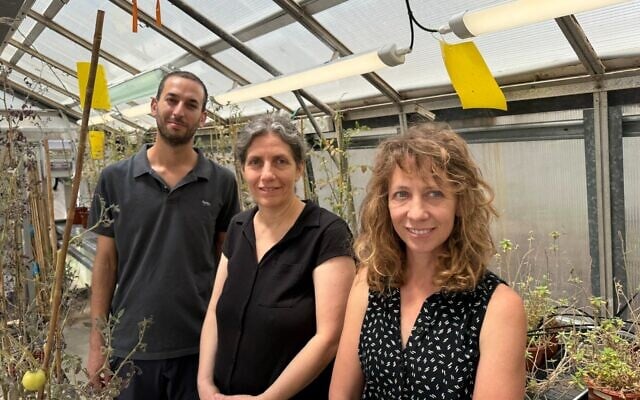
“After proving in our previous study that plants emit sounds, we hypothesised that animals capable of hearing them might respond and make behavioural decisions accordingly,” said Professor Yossi Yovel of the School of Zoology.
Conducted by researchers from Tel Aviv’s plant sciences and zoology departments, the study was led by Dr Raaya Zaltsman and Guy Zar-Eshhel, in collaboration with the Volcani Institute’s Plant Protection Department. Their findings were published in the peer-reviewed journal eLife.
The team previously discovered that plants produce ultrasonic pops – roughly one click per hour when well-hydrated, but dozens per hour when under stress. These sounds, undetectable to the human ear, fall within the hearing range of many insects, including moths.



“Female moths lay eggs on plants to provide food for their larvae once hatched,” said co-author Professor Lilach Hadany. “We assumed that they seek an optimal site on a healthy plant that can nourish the larvae well.”
In a series of controlled environments, the researchers tested whether African cotton leafworm moths (Spodoptera littoralis) could distinguish between healthy and stressed plants based on sound alone.
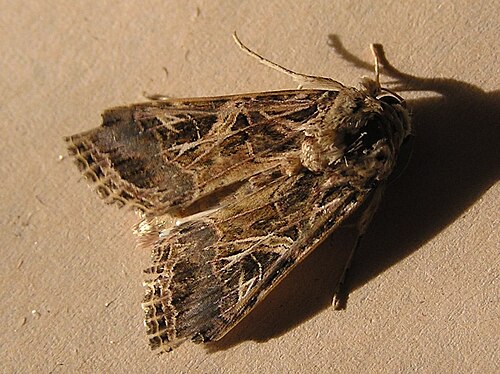
In one trial, moths were placed between two identical tomato plants – one in moist soil and the other in drying soil. The moths consistently laid eggs on the healthier, quieter plant.
In another setup, there were no plants to present – only a speaker playing ultrasonic recordings of distressed tomato plants. The moths laid more eggs on the side with the sound, apparently interpreting it as a sign of plan presence.
But when the same experiment was repeated with moths whose hearing had been disabled, the insects showed no preference – confirming that sound was the decisive factor.
Further tests revealed that moths did not respond to ultrasonic signals emitted by male moths, indicating their reaction was specific to plant-generated clicks.
Despite the clear behavioural shift, the scientists stressed that the interaction does not meet the strictest definition of “communication”.
“The sounds emitted by drought-stressed plants are probably a cue rather than a signal – they didn’t evolve to convey information to insects,” the team noted in the paper.
Still, the implications are vast. “This is just the beginning,” the researchers wrote. “Acoustic interactions between the plants and animals doubtless have many more forms and a wide range of roles. This is a vast, unexplored field – an entire world waiting to be discovered.”

Keep community journalism free.
Jewish News is free for everyone. No paywall. No barriers. Just trusted journalism for anyone who wants to stay connected to Jewish life in Britain.
If you value that, please support us.
From as little as £5 a month, you can help keep our journalism free and accessible to all.
Every day, we report on the issues that matter to our community. We celebrate achievements, support charities, challenge antisemitism and ensure Jewish voices are heard more widely.
From as little as £5 a month, you can help us continue to:
- Report on the stories shaping Jewish life in the UK and beyond
- Bring our community together through shared stories, events and campaigns
- Celebrate the people, culture and moments that define our community
- Support organisations doing vital work across Jewish Britain
You can make a one-off donation or become a regular supporter. Every contribution helps keep our journalism free, independent and accessible to all.
If everyone who values Jewish News gave a small amount, it would make a real difference to our future.





















