Prefer Jewish News on Google
INTERVIEW: Government guilty of ‘dereliction of duty’ over Maccabi fan security, says Chris Philp
In an interview with Jewish News, the shadow home secretary says Shabana Mahmood should have used powers to direct the police over security around match
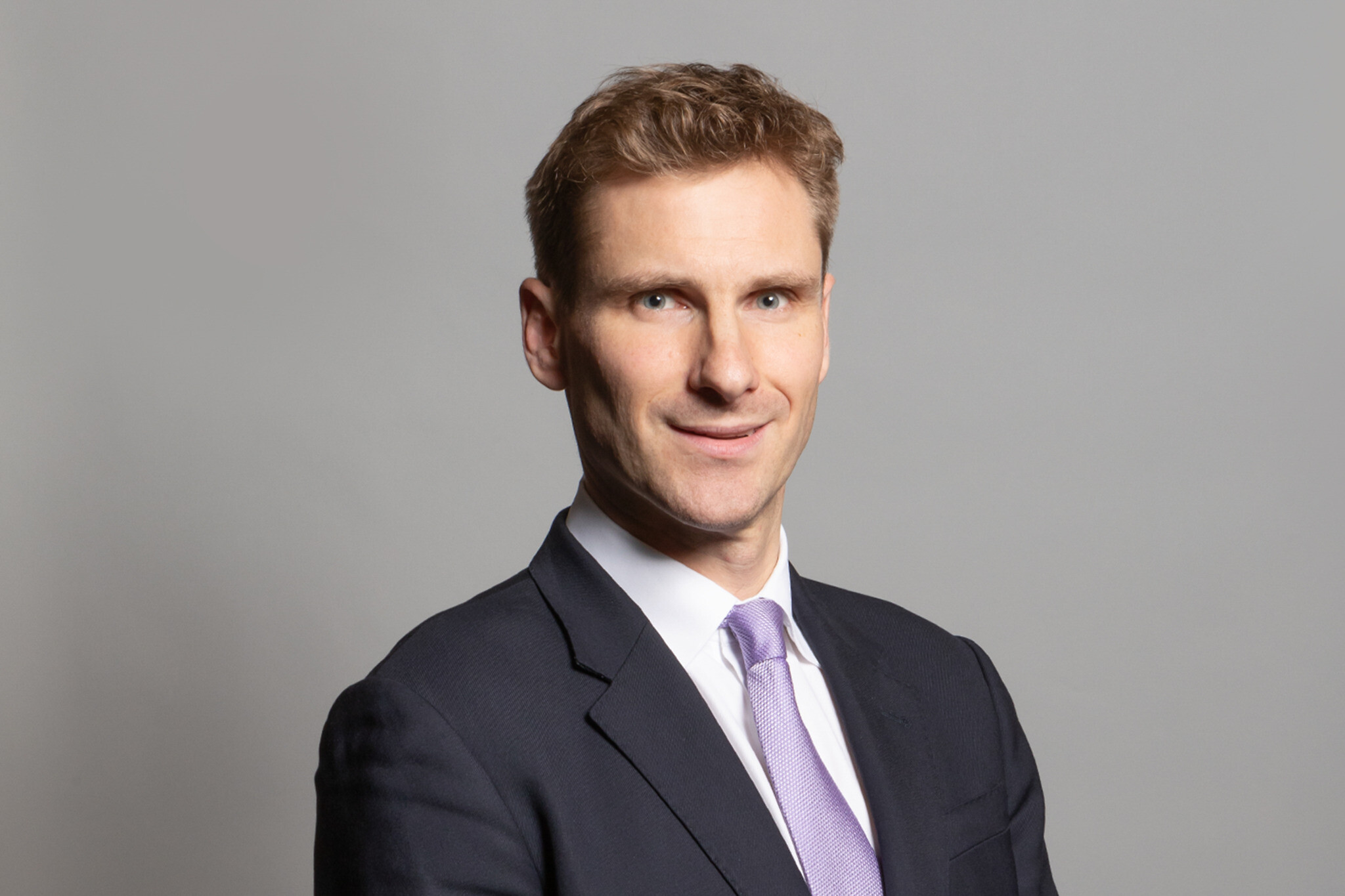
Conservative shadow home secretary Chris Philp has accused the government of being “guilty of dereliction of duty” in their handling of the security arrangements for the upcoming Aston Villa versus Maccabi Tel Aviv football match.
In an exclusive inteview with Jewish News, Philp said their actions have sent “a message to the world that the threat of antisemitic mob violence causes the UK authorities to capitulate.”
The Croydon South MP insisted Home Secretary Shabana Mahmood should have used powers under Section 40 of the Police Act to guarantee “proper protection” for visiting Israeli and Jewish fans ahead of the November Europa League match, even if that meant “drawing in resources from other police forces around the country if necessary.”
Philp, who served as a crime minister in the previous Tory government, also elaborated on his recent Conservative Party conference pledge to deport illegal migrants found guilty of antisemitism—expanding this to include “those in the country without citizenship who are found to be celebrating the October 7 Hamas atrocity.”
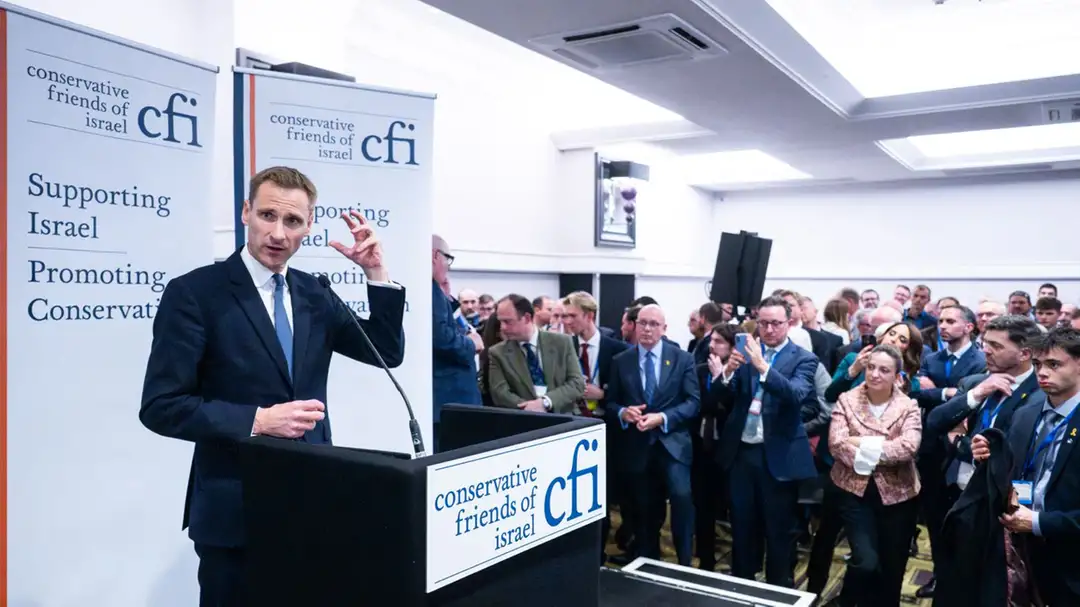
Speaking from his Westminster office during a busy week in which two of his urgent parliamentary questions—on the grooming scandal and the Chinese spy case—were granted by the Commons Speaker, Philp discussed the background to the football match controversy.


The previous evening, the Israeli team had announced they would not sell tickets to their fans for the November 6 match at Villa Park, citing fears that, due to “divisive” elements, their supporters’ safety was not guaranteed.
While Maccabi’s statement did not directly blame the UK government, Philp was clear where he placed responsibility:
“I think it’s been handled terribly by the Labour government,” he said.
“I think they failed to ensure that the right arrangements were in place to give protection to the Maccabi Tel Aviv fans due to come here.
“And I think they effectively, by failing to grip this situation, they have—they’re guilty of dereliction of duty, because in situations like this, you expect the government, the Home Secretary and the Prime Minister, to step in and grip the situation, because our country’s reputation internationally is at stake.”
Philp added:“The world has now seen that the threat of antisemitic mob violence causes the UK authorities to capitulate, and it sends a message that it’s unsafe for predominantly Jewish fans to come to a football game here.
“I think this is a shocking signal to send to the Jewish community here, and the Jewish community around the world.
“It’s a terrible reflection on the country, and I think it was a huge mistake of the West Midlands Police and Safety Advisory Group, some of whose members have made some clearly prejudicial remarks.”
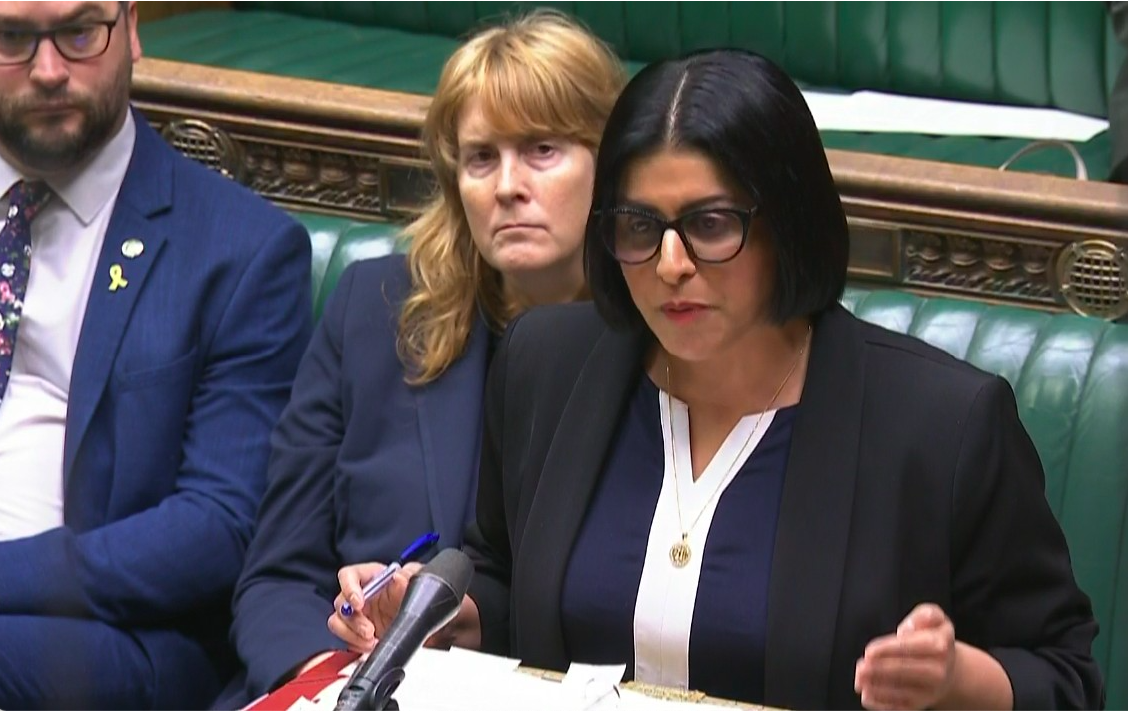
Perhaps unsurprisingly, Philp was also quick to point the finger of blame at the Home Secretary.
He claimed:“There are powers under Section 40 of the Police Act 1996 where the Home Secretary, if the police are failing, if a police force is failing generally or in a specific regard, and in this instance, it is a specific regard.
“The Home Secretary can exercise powers to direct the police. The Home Secretary could and should have done that in this case.
“Ultimate responsibility for this kind of thing rests with the government and the Home Secretary.
“She should have used the powers to ensure that proper protection was available, if necessary, drawing in resources from other police forces around the country as well, to make sure the fans could go there safely.
“And it just sends a terrible signal that, apparently, the threat of antisemitic mob violence causes the public authorities, up to and including the government, to capitulate.”
Jewish News has reported that, even with the absence of away fans, campaigners including local Birmingham MP Ayoub Khan—bolstered by inflammatory rhetoric from clerics—are intent on calling for the match to be cancelled.
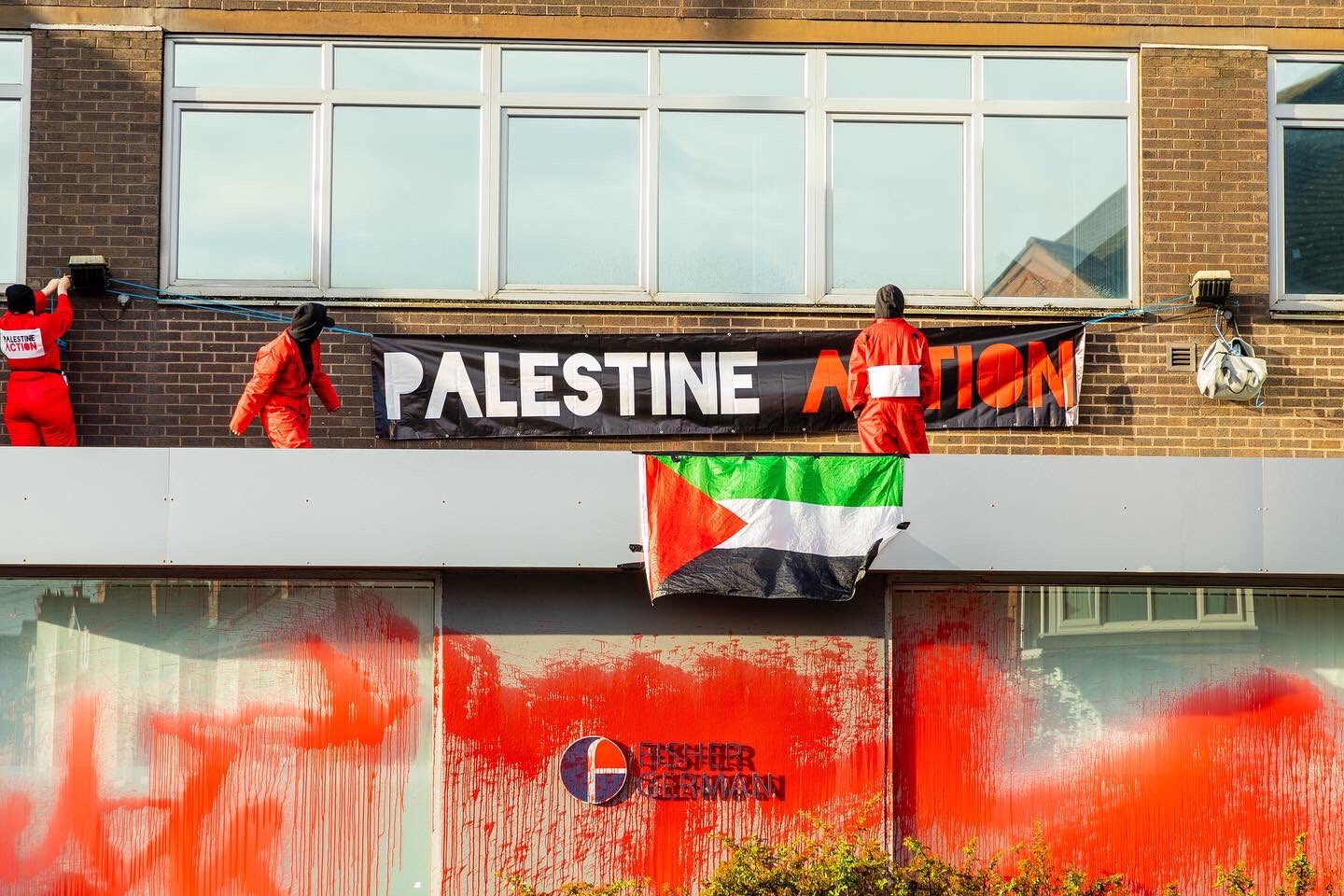
There is a real threat of activists from the proscribed group Palestine Action carrying out stunts at the stadium, if allowed to.
Philp called for an “overwhelming police response” on the night of the game.
He added:“While the tradition in this country is to decide things through democratic debate, the right to protest does not extend to the right to deliberately target other people, whether it’s people on a team bus or deliberately disrupting a sports game.”
Time did not permit a discussion on police cuts under the previous government, and their impact, but Philp offered his view on integration in the UK, especially in cities like Birmingham.
He declined to comment directly on shadow ministerial colleague Robert Jenrick’s recent remarks about city demographics, but stated:“If you don’t have integration, then it undermines the foundations of society.”
He continued:“You can’t have a functioning society or a functioning country if you don’t have integration.”
“There needs to be a commonly shared set of values, a commonly shared identity, loyalty, and affiliation to our country, the United Kingdom, first and foremost.
“If you don’t have that, then society and the nation state can’t function.
“And I am concerned that in some parts of the country, integration has manifestly not worked.”
Reflecting on current policies, Philp said:“We’re currently not getting it right … I think we have to stop mass immigration.”
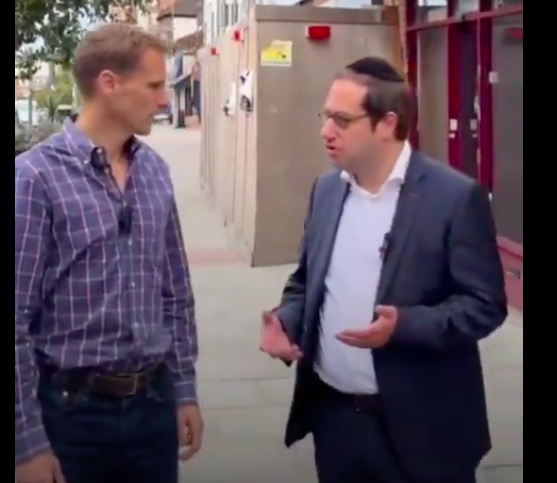
Turning to his party conference pledge to deport migrants found guilty of antisemitism, Philp was unequivocal: “If someone is in this country who is not a British citizen, and they exhibit support for extremism or support for terrorism or express racial or religious hatred, including antisemitism, then they should be deported.”
Asked about the threshold for deportation, he explained this was set out in the Public Order Act 1986, and that “clearly expressing support for a proscribed terrorist organization like Hamas or Hezbollah is a criminal offense under the Terrorism Act.”
He added:“But I think I would also go further than that and say, for example, expressing support for violence in furtherance of a political cause, even if it doesn’t meet the criminal threshold.
“We don’t want people here in this country who express support for violence, right?
“So, for example, people who celebrated the atrocities on October 7, in my view, even if their celebration of those atrocities doesn’t meet the criminal threshold, they should nonetheless be deported because they are celebrating an act of violence.”
Philp clarified he was referring to those “proven not to be a citizen and who is in the country illegally.”
Earlier in the interview, Philp, who was born in West Wickham, London, and studied physics at Oxford before co-founding a successful business, spoke positively about his experience with the Jewish community, particularly during his campaign in Hampstead and Kilburn in 2010.
“The Jews in the constituency were very well integrated and making a huge contribution to society in different ways, including in all kinds of different fields—in business and the arts, and a whole range of different fields,” he reflected.
“I was very struck by that, but obviously also became aware through that of some of the issues at the time with antisemitism.”
Philp praised the Conservative Party’s record on antisemitism.
“No party has been stronger or more consistent on this topic over, over many, many years—not just over the last few months like Reform,” he opined.
“The Tories have been a long-standing and very consistent force against antisemitism, going back to funding for the CST and speaking out when there have been antisemitic acts committed.”
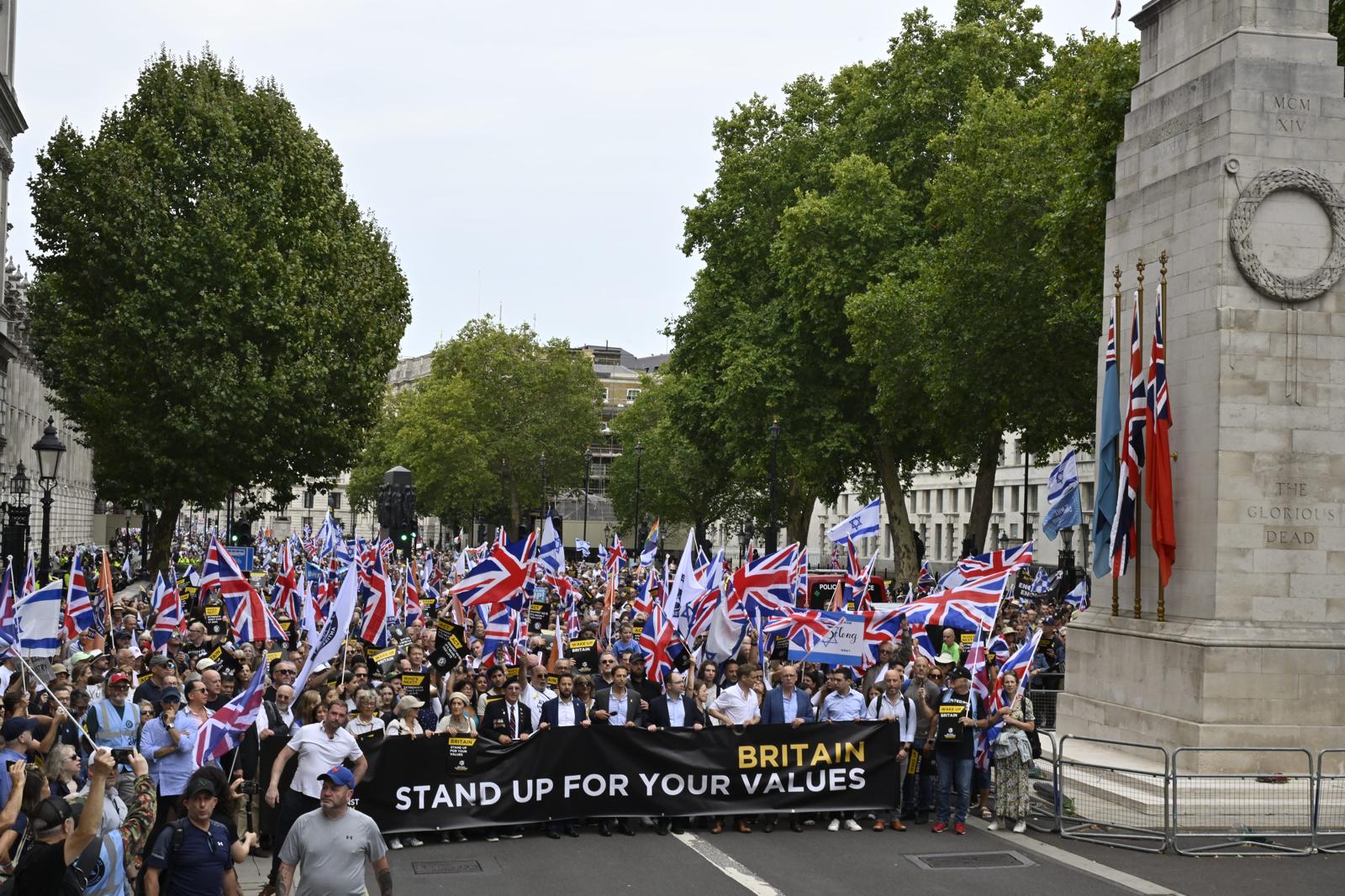
He said he “had no hesitation agreeing to speak at a recent Campaign Against Antisemitism rally in central London alongside Reform’s deputy leader Richard Tice,” and pointed out that “Labour did not send any minister to speak.”
Pressed on areas where the previous Tory government had failed to deliver, such as proscribing Iran’s IRGC, Philp said: “I was never the Prime Minister, I wasn’t my Home Secretary, nor was I the Security Minister.
“So, in terms of my responsibility, I never touched on the previous government’s thinking. You’d have to ask the ministers from the time.”
But he criticised Labour for not acting on its own commitment.
“They made a very clear commitment before the election to proscribe the IRGC, and they haven’t done so,” he said.
“So once again, this is another promise which Labour made, another election promise that Labour has broken.”
Philp acknowledged that some in the Jewish community feel let down by both main parties and have turned to Nigel Farage’s Reform UK, but objected to characterising this as a “stupid” move:
“I’m not going to call anyone stupid,” he reasoned. “This is obviously a difficult time for the Jewish community in this country.”
He drew a distinction between Conservative and Reform UK policies though.
“The difference between us and Reform, whether it comes to combating antisemitism or borders or indeed, any topic, frankly, whereas Reform has plausible sounding slogans, that is all they have, slogans.
“Dreamt up in a pub and written on the back of a fag packet.”
He said that under Badenoch, the Conservatives have “properly thought out our policies,” citing shadow attorney general Lord Wolfson’s “‘masterful” 200-page analysis of the ECHR laws and their failings.
“We’ve got a proper plan—our borders plan is properly thought out,” said Philp.
“If you remember when Nigel Farage launched their borders policy a few weeks ago, it collapsed when journalists asked a few basic questions.”
“We have properly thought out plans that will work in practice, while Reform simply has empty slogans that fall apart.”

Keep community journalism free.
Jewish News is free for everyone. No paywall. No barriers. Just trusted journalism for anyone who wants to stay connected to Jewish life in Britain.
If you value that, please support us.
From as little as £5 a month, you can help keep our journalism free and accessible to all.
Every day, we report on the issues that matter to our community. We celebrate achievements, support charities, challenge antisemitism and ensure Jewish voices are heard more widely.
From as little as £5 a month, you can help us continue to:
- Report on the stories shaping Jewish life in the UK and beyond
- Bring our community together through shared stories, events and campaigns
- Celebrate the people, culture and moments that define our community
- Support organisations doing vital work across Jewish Britain
You can make a one-off donation or become a regular supporter. Every contribution helps keep our journalism free, independent and accessible to all.
If everyone who values Jewish News gave a small amount, it would make a real difference to our future.