Prefer Jewish News on Google
INTERVIEW: Jon Lansman says defeating Farage should be a priority for UK Jews
Veteran Jewish Labour tells why he is backing Andy Burnham and is offering advice to Greens over tackling the rise of antisemitism in their party
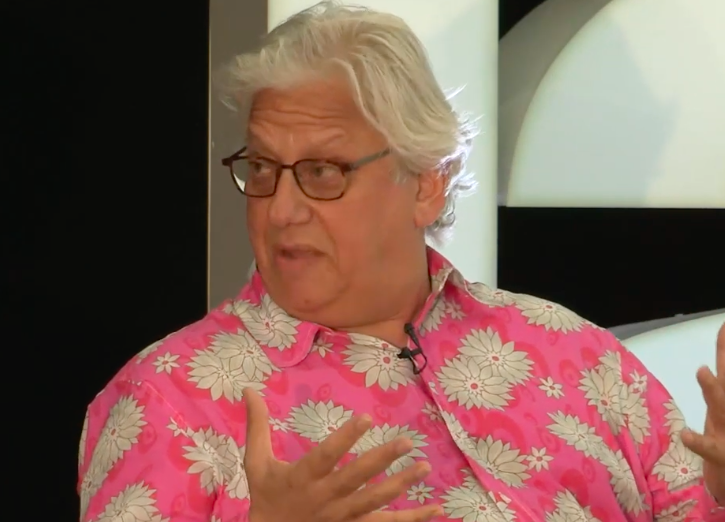
Defeating Nigel Farage’s Reform UK party should be “a priority for the Jewish community”, the veteran Labour left-winger Jon Lansman has claimed.
In a wide-ranging interview with Jewish News explaining his support for Andy Burnham—now widely seen as the likely next Prime Minister—Lansman made clear the stakes he believe are involved.
“We have got to beat Reform, and what happened in the Makerfield by-election was a good start,” he reasons.
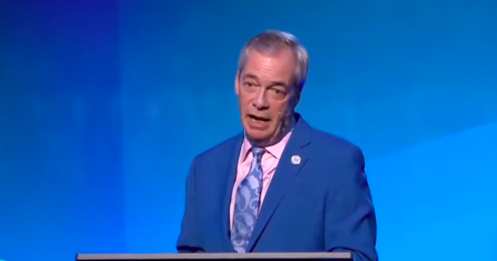
“But we have got to see it through. It is not a done deal. Actually, for the Jewish community, beating fascism, or certainly something very close to fascism, should be a priority,” Lansman said.
The 68 year-old , who founded the Momentum movement that helped propel Jeremy Corbyn to the Labour leadership and bring with it the scourge of antisemitism, said the threat from Reform UK and the broader far right remains very real.


“Whilst I think Reform has been dealt a big blow in the last few weeks, it is still a threat and the main threat from the far right. It is a more dangerous world; I worry a great deal about my grandchildren’s future,” he warned.
Turning to the issue of antisemitism on the left, Lansman expressed particular concern about the Green Party, noting that he has seen familiar patterns and even individuals migrate from Labour to the Greens.
“I am concerned about antisemitism in the Greens,” he admitted.
“I sat on loads of hearings in Labour [into antisemitism allegations], and I know the names. Many of them have gone into the Greens,” he said.
A Labour member for over 50 years, Lansman revealed he is now in conversation with members of the Green Party who recognise the risk posed by antisemitism within Zack Polanski’s party.
“I am talking to some of them,” he confirmed. “And I’m a member of the Labour Party, but I think it’s a good idea to root out antisemitism from all political parties.”
Still, Lansman was careful not to single out Polanski directly, admitting, “Sometimes I think he’s doing things effectively, but I still think he’s got things to learn.”
But Lansman emphatically rejected claims that the removal of Keir Starmer as Labour leader could now see a renewed influx of antisemites into the party, under the likely leadership of Burnham.
“I don’t expect a sudden flood of antisemites in Labour from the Greens because of Burnham, that’s totally unrealistic,” he said. “But do I expect a trickle over time, yes. Because there is antisemitism at some level spread across society very broadly. How could there not be?”
When asked about his own relationship with Corbyn, whose leadership campaign he once ran, Lansman confirmed that the two have not been in contact for some time.
Addressing Corbyn’s new political venture, he was frank: “I think it’s obvious Your Party is going nowhere,” he said.
As a veteran figure of the Labour Party’s left-wing and a practising Jew who grew up in an Orthodox family in Southgate, north London—not far from my own childhood home— Lansman’s name immediately stood out when I saw it listed among the prominent supporters of Andy Burnham.
For many in the Jewish community, Lansman’s long association with J Corbyn and the rise of the activist group Momentum—which at one stage became synonymous, fairly or unfairly, with the party’s antisemitism crisis—will bring back uneasy memories.
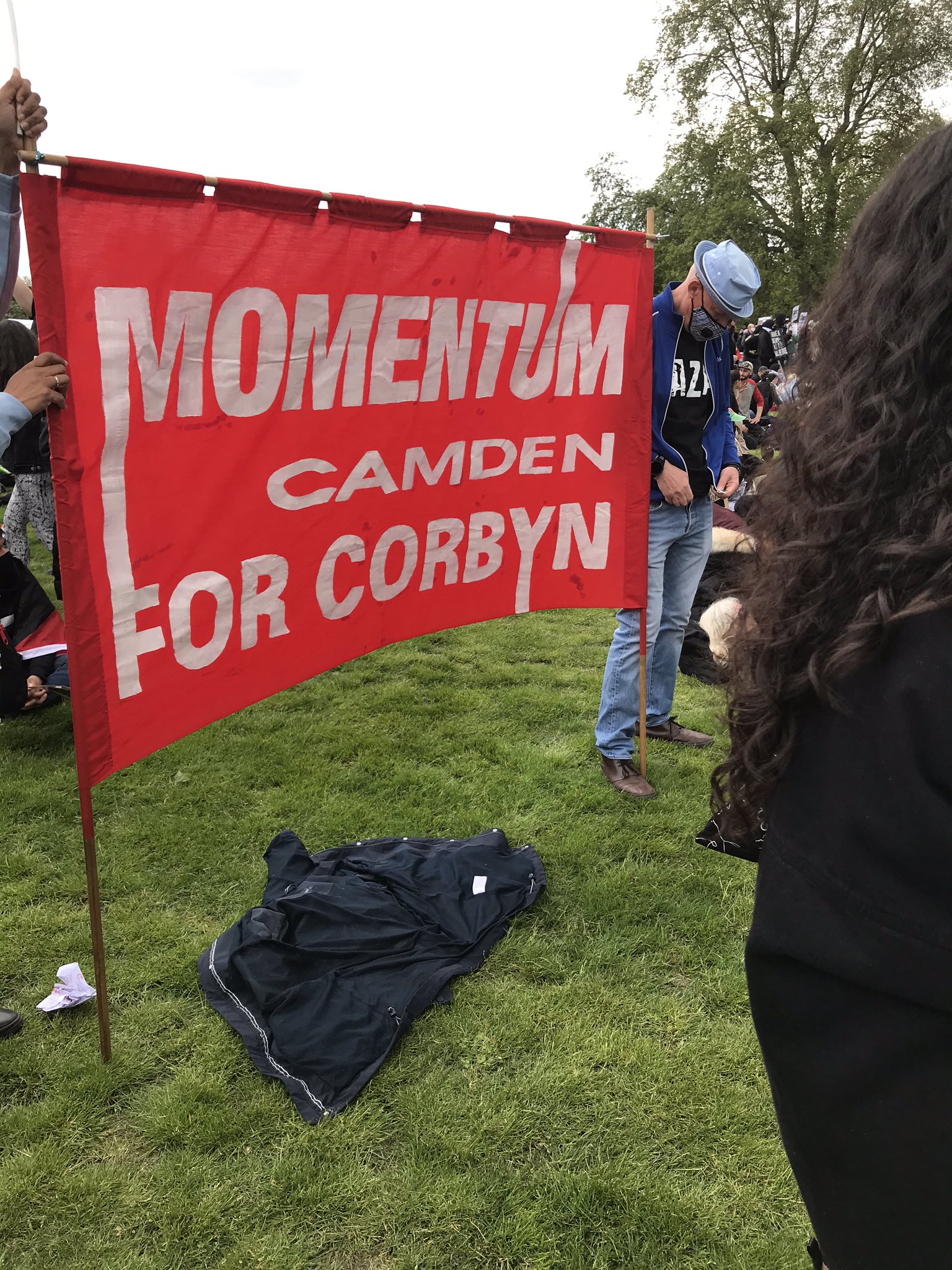
Some may even see Lansman’s support for Burnham as a warning signal—a sign that the former Greater Manchester mayor, now widely tipped to replace Starmer as Prime Minister, could steer Labour back to the left.
Yet Lansman’s Jewish identity and record on antisemitism have always been far more nuanced than some critics allow.
Despite playing a central role in Corbyn’s ascent, Lansman was among the first to publicly call out antisemitism within the party.
In 2016, he urged Ken Livingstone to “leave politics for good.” Two years later, he slammed Jewish Voice for Labour, remarking that “the most influential antisemitism-deniers, unfortunately, are Jewish anti-Zionists,” and describing JVL as “an organisation which is not just tiny but has no real connection with the Jewish community at all.”
By 2020, Lansman had stepped down as Momentum chair, joined the Jewish Labour Movement, and openly criticised the Palestine Solidarity Campaign for using the chant “from the river to the sea,” saying PSC was “in denial” about the impact such slogans have on Jews who wish to support Palestinian rights.
Lansman has spoken out about the pain that such rhetoric causes, noting that he and other left-wing Jews have at times felt alienated by the main pro-Palestinian campaign.
He has always been open about his deep roots in the community, once saying, “I have spent my whole life in the Jewish community, and I feel very much part of it. I want to see Labour as a place where Jewish people feel at home and safe.”
Lansman is still a regular attendee at Kehillah North London synagogue, which is near his home in London.
His ties to Israel are also personal and complex, having spent time on an Israeli kibbutz as a teenager and has maintained links with the Israeli left.

He tells Jewish News: “You know, I go to Israel. I stand by the decision of the UN in 1947 – the creation of the state of Israel. I stand in solidarity with the victims of Oct 7th and of Hamas.
“When I did my last Yachad trip, I went to Kibbutz Be’er and to Nir Oz and talked to people.
“One of the things that most shocked me was Hamas; I already had an opinion of.
“But what I didn’t realise was how Hamas people in uniform were followed by lots of civilians looting, and much worse. That was appalling.”
Yet Lansman is also a fierce critic of the Israeli government, saying, “I am intensely critical of Netanyahu.
“It started with corruption, but I do think – you have to be careful with the word genocide – that there are good grounds for an investigation into possible genocide. Let’s put it that way. I think what took place and is still taking place in Gaza is horrific.”
He has developed strong links with those behind the Standing Together Jewish-Palestinian left-wing group, and is fully supportive of their Makom Lekulanu political party (“A Place for Us All”), having discussed the move with its leaders on visits to Israel and at meetings in the UK.
Lansman is realistic about the limited appeal of the politics he believes in for Israelis and Palestinians at this moment in time. But trips to Israel and the West Bank have only helped cement his own viewpoint.
He says, “I’ve spent time in the West Bank. On a Yachad trip, we picked olives for a whole day, and the settlers came down that night and cut down all the trees we had picked from. It’s horrific. And you know, the business now of Palestinians facing the death penalty, while Jews don’t – how can people not think that there is a massive problem with that? Even with life and death – it’s horrific.”
We return to discussing Lansman’s decision to put his name to a campaign launched by allies of Burnham to help him return to Westminster, and ultimately launch a challenge to Starmer himself.
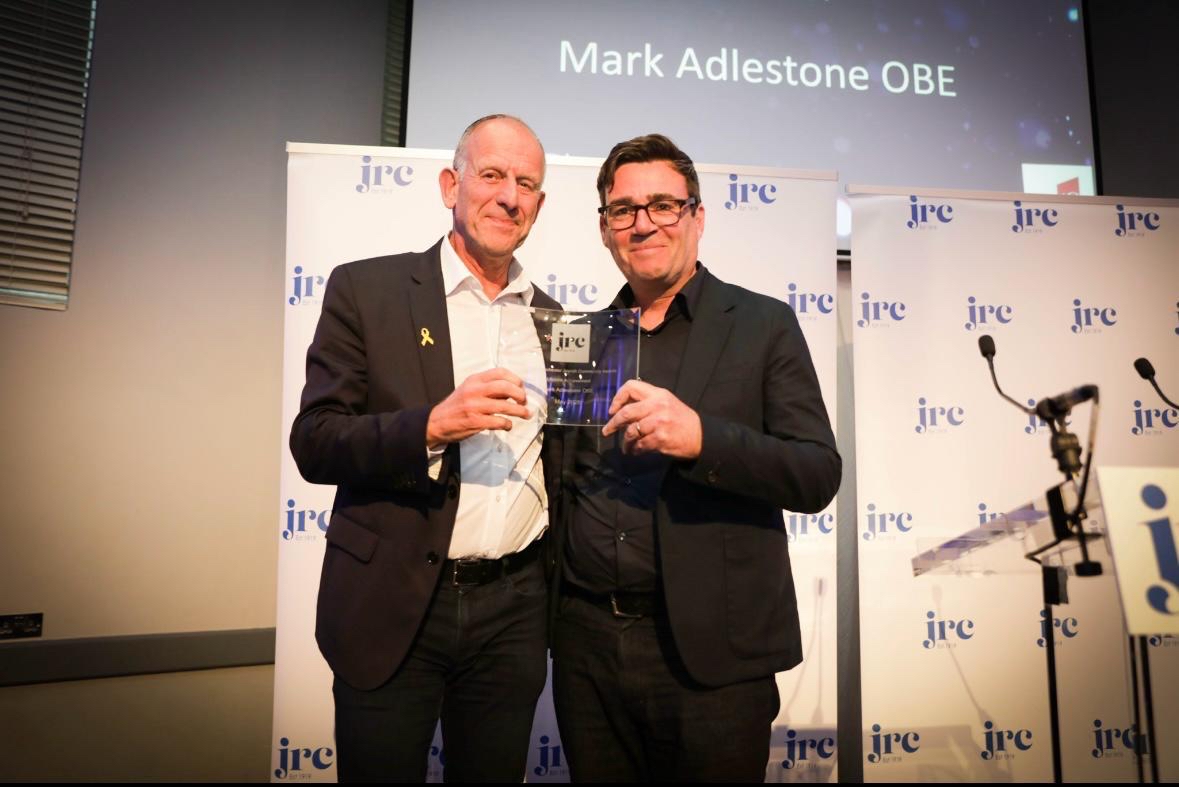
Last year, his name appeared as a key backer of a group named Mainstream, which described itself as a new broad left network and “the home for Labour’s radical realists.”
“I spent a lot of time talking about the need to build a more inclusive pluralist left,” says Lansman, of his decision to back the group.
“We don’t want a narrow left; we need an inclusive left.
“We need a pluralist party, so the left must be inclusive too. I have good relationships with people on the right, people who I regard as friends. I am Labour. I’ve been in it for 50 years.”
Critics have suggested Mainstream was merely a vehicle for Burnham’s ambitions to replace Starmer as prime minister.
“I’ve spent the last fifty years fighting for an inclusive, pluralist left—and I think Andy Burnham is right for this time,” Lansman says, when asked why he is backing him now.
“He’s got political experience, he connects with working-class voters, and he’s not afraid of radical ideas. ”
He adds:”In the recent Makerfield by-election, his influence was clear. His own backstory—growing up in the North, his track record as Mayor of Greater Manchester—means he understands the issues that matter to ordinary people.”
Lansman is also candid about the importance of credibility and experience.
He reasons:“Would I have liked to have seen someone further to the left? Maybe. But ability and experience count.
“Andy has proven he can deliver results and communicate across divides. He’s not just another politician—he’s someone who can unite Labour and reach out beyond it.”
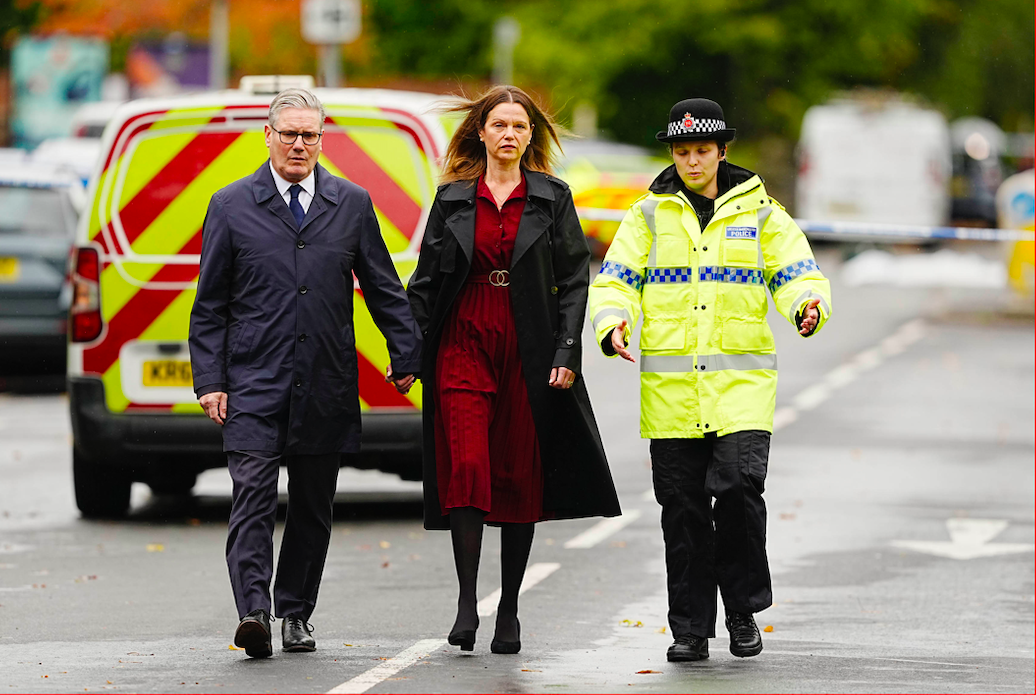
Asked about Burnham’s relationship with the UK Jewish community, Lansman is also optimistic. “Manchester is home to the second biggest Jewish community in the country,” he says.
“Andy’s worked closely with them as mayor, and I have family there who speak highly of him. He’s a better communicator than most, and his local experience means he starts from a good place. There’s no reason he can’t build trust with Jewish communities nationwide.”
He believes that Burnham’s openness and empathy will be key. “He’s shown, especially after recent violent attacks against Jews in Manchester, that he understands the need for solidarity and protection.,” he says.
It has also been suggested Burnham will not be someone to prioritise foreign policy.
But Lansman says he will have to take a stance on the Middle East fairly soon as a leader.”As far as Israel , of course, that gets more complicated,” says Lansman.
“It’s not clear to me what he thinks about Netanyahu and the Israeli government,” he adds.
“I would be very surprised if he is not hostile to Ben Gvir, Smotrich and co.
“And assume he is supportive of two states and a peace process that’s likely to lead to two states. That’s where I think he is.
“Now, you know, that’s not where Israeli politics is – although I live in hope.”
“I mean, how quickly does he want to get involved in the Israel-Palestine stuff?
“I think it would be all right if he left it for a little while, but he is going to have to take on foreign policy issues, and obviously, domestic policy is the most urgent.”
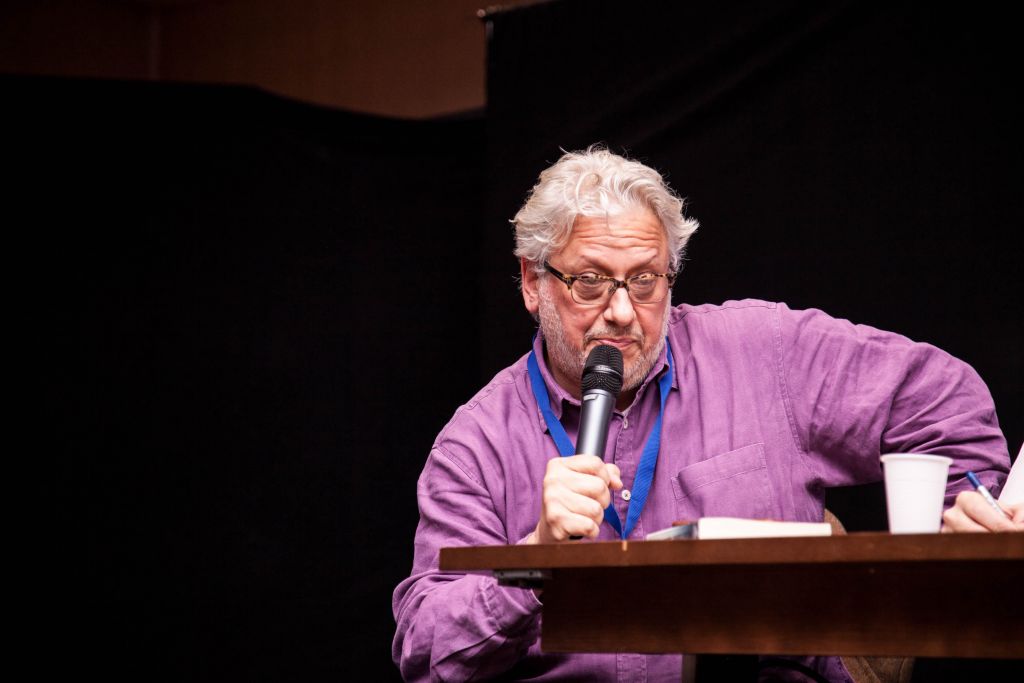
As someone who has been involved in the leadership campaigns of the late Tony Benn, Corbyn, and more recently Rebecca Long-Bailey’s failed attempt to beat Starmer as Labour leader, it’s interesting hearing Lansman’s view on why it has gone wrong so quickly for the current PM.
In terms of relations with the Jewish community and with wider working-class Britain, he feels there were real communication problems.
While he thought it admirable that Starmer devoted time to foreign policy matters, on Israel, Lansman said: “I’m not clear what Starmer’s position actually was. I know he had a distinctive desire, mainly down to antisemitism under Corbyn, to kind of support Israel. But what does supporting Israel mean?”
Similarly, he thought he struggled to convince working-class voters about his background. “Starmer – his father, I know he was a tool maker,” he laughs. “But he ran a factory. I think Keir overplayed that.
“I think people were not convinced. He certainly did not reach working-class voters. In the end, it was obvious.”
But what of those who argue the UK is now effectively ungovernable? With rising violence and antisemitism, is Lansman concerned about the very future of Jews in this country?
He says recent events and the continued threat from violence on the streets “is very disturbing, and it needs intelligence gathering and police action.”
As to what represents the biggest threat, he is also convinced that the main threat to the country and to its Jews “is from the far-right.”

Keep community journalism free.
Jewish News is free for everyone. No paywall. No barriers. Just trusted journalism for anyone who wants to stay connected to Jewish life in Britain.
If you value that, please support us.
From as little as £5 a month, you can help keep our journalism free and accessible to all.
Every day, we report on the issues that matter to our community. We celebrate achievements, support charities, challenge antisemitism and ensure Jewish voices are heard more widely.
From as little as £5 a month, you can help us continue to:
- Report on the stories shaping Jewish life in the UK and beyond
- Bring our community together through shared stories, events and campaigns
- Celebrate the people, culture and moments that define our community
- Support organisations doing vital work across Jewish Britain
You can make a one-off donation or become a regular supporter. Every contribution helps keep our journalism free, independent and accessible to all.
If everyone who values Jewish News gave a small amount, it would make a real difference to our future.