Prefer Jewish News on Google
Israeli AI firm helps launch world-first digital twin for assistive communication
D-ID joins NVIDIA, Lenovo, ElevenLabs and Irisbond to combine real-time avatars and eye-tracking technology that enables a new era of communication for people with severe disabilities
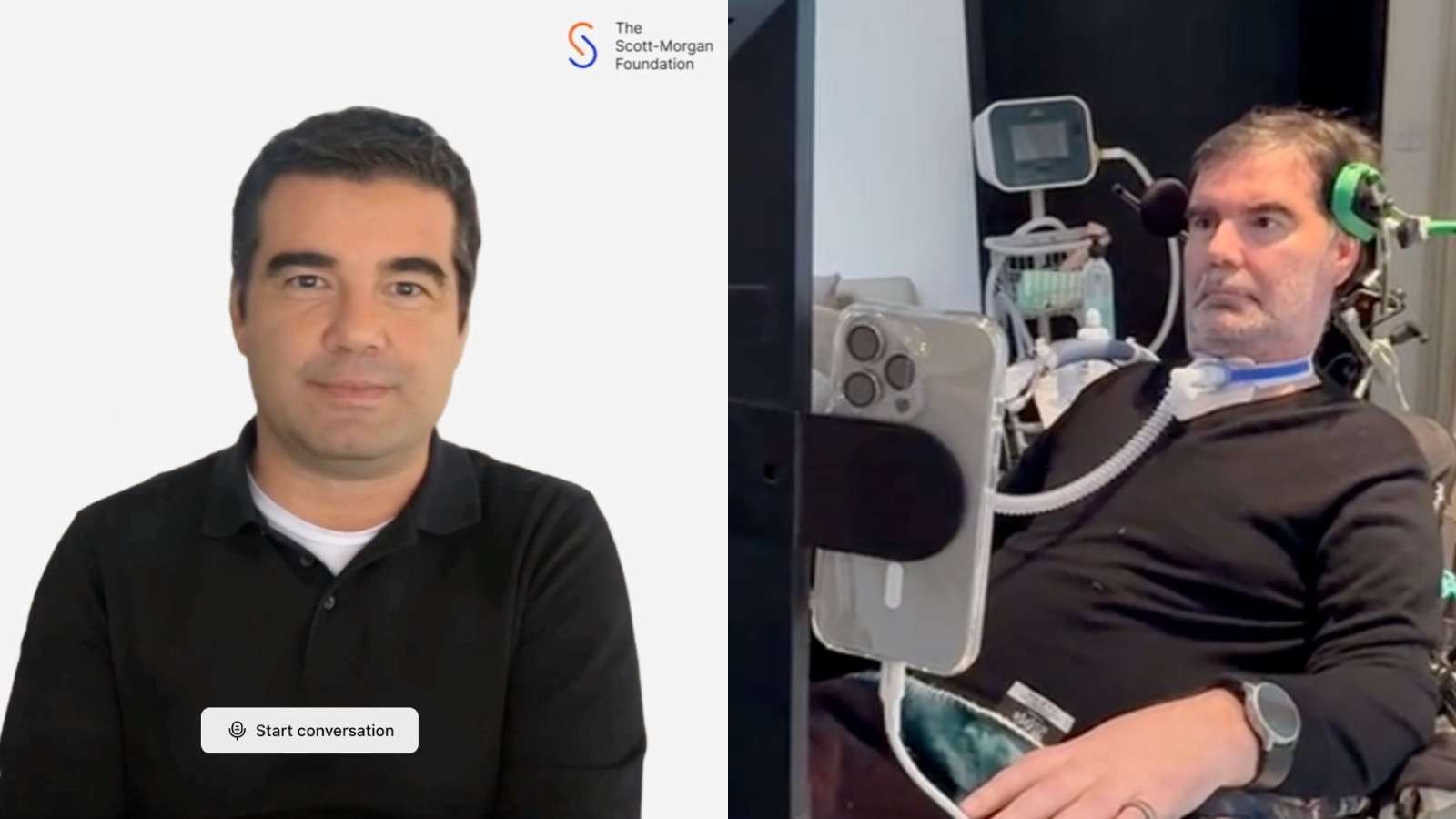
A selection of industry heavyweights, including Israeli AI avatar company D-ID, NVIDIA, Lenovo, ElevenLabs, and Irisbond, have teamed up to launch the world’s first digital twin communication system for people with severe disabilities.
The SMF VoXAI initiative is spearheaded by the Scott-Morgan Foundation and marks a major breakthrough in ‘AI for good’, bringing real-time, emotionally expressive conversation to individuals who are no longer able to speak.
At the centre of the platform is a personalised digital twin – a photorealistic avatar created from images or video captured while the user can still move or speak, preserving their appearance, identity and personality as their condition progresses.
During communication, eye-tracking captures the user’s intended words, a network of AI agents generates natural speech and emotional tone, and the avatar delivers it instantly on screen. The result is a shift from slow, effortful text output to spontaneous dialogue that reflects the user’s presence rather than their physical limitations. It is also the first ambient AI communication system designed entirely by someone who relies on it. Bernard Muller, who is fully paralysed by ALS, created the platform using only eye-tracking technology.
Tel Aviv–based D-ID, founded by Gil Perry in 2017, has grown into a global leader in real-time AI avatars. Its systems are used by major brands and public institutions to create personalised digital experiences, and the VoXAI project marks one of the clearest extensions of its technology into the disability-access space.
The company’s generative AI models produce real-time, expressive digital avatars from text, audio or images, enabling natural conversational interaction complete with expressions and contextual responses. In SMF VoXAI, D-ID’s streaming engine forms the expressive layer of the system, allowing users to be seen, recognised and emotionally understood even when they can no longer speak.
D-ID corporate clients include Gatorade, the Hartmann Group and Rafael. The company is backed by investors such as OurCrowd, Y Combinator, Pitango, AXA Venture Partners and Macquarie Capital. Earlier this year, D-ID expanded its enterprise footprint by acquiring Berlin-based video-creation platform Simpleshow, creating a combined operation that now serves more than 1,500 large organisations worldwide, many of them Fortune-class clients.
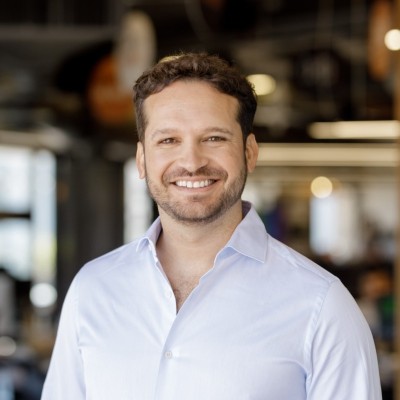
Gil Perry, co-founder and CEO of D-ID, said: “SMF VoXAI represents the next evolution of human–machine collaboration. By combining the empathy of human expression with the autonomy of agentic AI, we’re making communication accessible, natural and emotionally intelligent for everyone, no matter their physical limitations.”
He told Jewish News: “D-ID is pleased to be involved in bringing VoXAI to life, because it reflects exactly what we believe AI should be used for, restoring human connection. By combining expressive avatars with real-time, multi-agent AI, we’re helping people who can no longer speak communicate in a way that reflects their personality, emotion, and identity. This is AI at its most meaningful.”
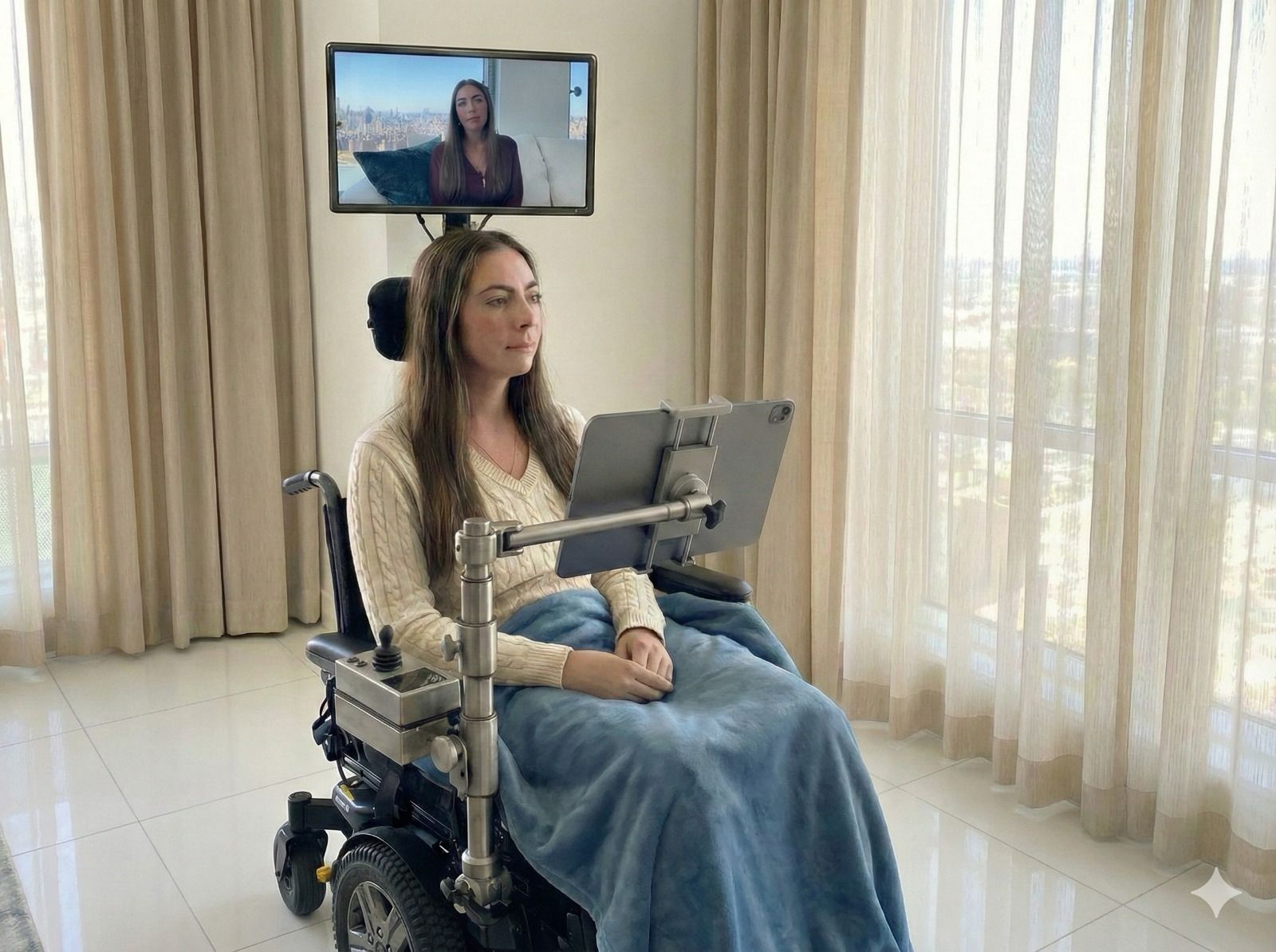
The technology stands to make a difference for the more than 100 million people worldwide living with conditions that severely limit speech. That includes people with ALS, those recovering from stroke, individuals with cerebral palsy, traumatic brain injuries, and people who are non-verbal autistic. For many, even a short delay in responding during conversations can lead to frustration, misinterpretation or social isolation – gaps SMF VoXAI is designed to close.
The system’s architect, Bernard Muller, said: “D-ID’s avatars don’t just make me visible – they make me present. When someone sees my avatar smile or show concern, they’re seeing me, not a disability. That changes everything about how I connect with my world.”
LaVonne Roberts, CEO of the Scott-Morgan Foundation, said the platform proves what becomes possible when the disability community leads development rather than being treated as test subjects.
“Two years ago, this would have been impossible. Today, a technologist who’s lived with ALS for 15 years and codes entirely through eye-tracking has designed an AI system that restores agency instead of replacing it. When you design with the people who need solutions most, you build what Big Tech couldn’t – technology that gives people back their voices, their presence, their lives.”
NVIDIA engineer Thorsten Stremlau said the collaboration reflects lessons learned from supporting iconic figures like Stephen Hawking and Dr Peter Scott-Morgan: “Technology should restore presence, not just function. With D-ID’s real-time video generation, users aren’t just speaking – they’re being felt in the moment. This realises Peter’s vision: technology that keeps people in their own lives, not watching from the sidelines.”
Click here to see how SMF VoXAI works

Keep community journalism free.
Jewish News is free for everyone. No paywall. No barriers. Just trusted journalism for anyone who wants to stay connected to Jewish life in Britain.
If you value that, please support us.
From as little as £5 a month, you can help keep our journalism free and accessible to all.
Every day, we report on the issues that matter to our community. We celebrate achievements, support charities, challenge antisemitism and ensure Jewish voices are heard more widely.
From as little as £5 a month, you can help us continue to:
- Report on the stories shaping Jewish life in the UK and beyond
- Bring our community together through shared stories, events and campaigns
- Celebrate the people, culture and moments that define our community
- Support organisations doing vital work across Jewish Britain
You can make a one-off donation or become a regular supporter. Every contribution helps keep our journalism free, independent and accessible to all.
If everyone who values Jewish News gave a small amount, it would make a real difference to our future.