Prefer Jewish News on Google
Israeli study defines new form of trauma among families of 7 October hostages
Peer-reviewed research introduces ‘Dynamic-Static Ambiguous Loss’ model to describe psychological toll of mass kidnapping
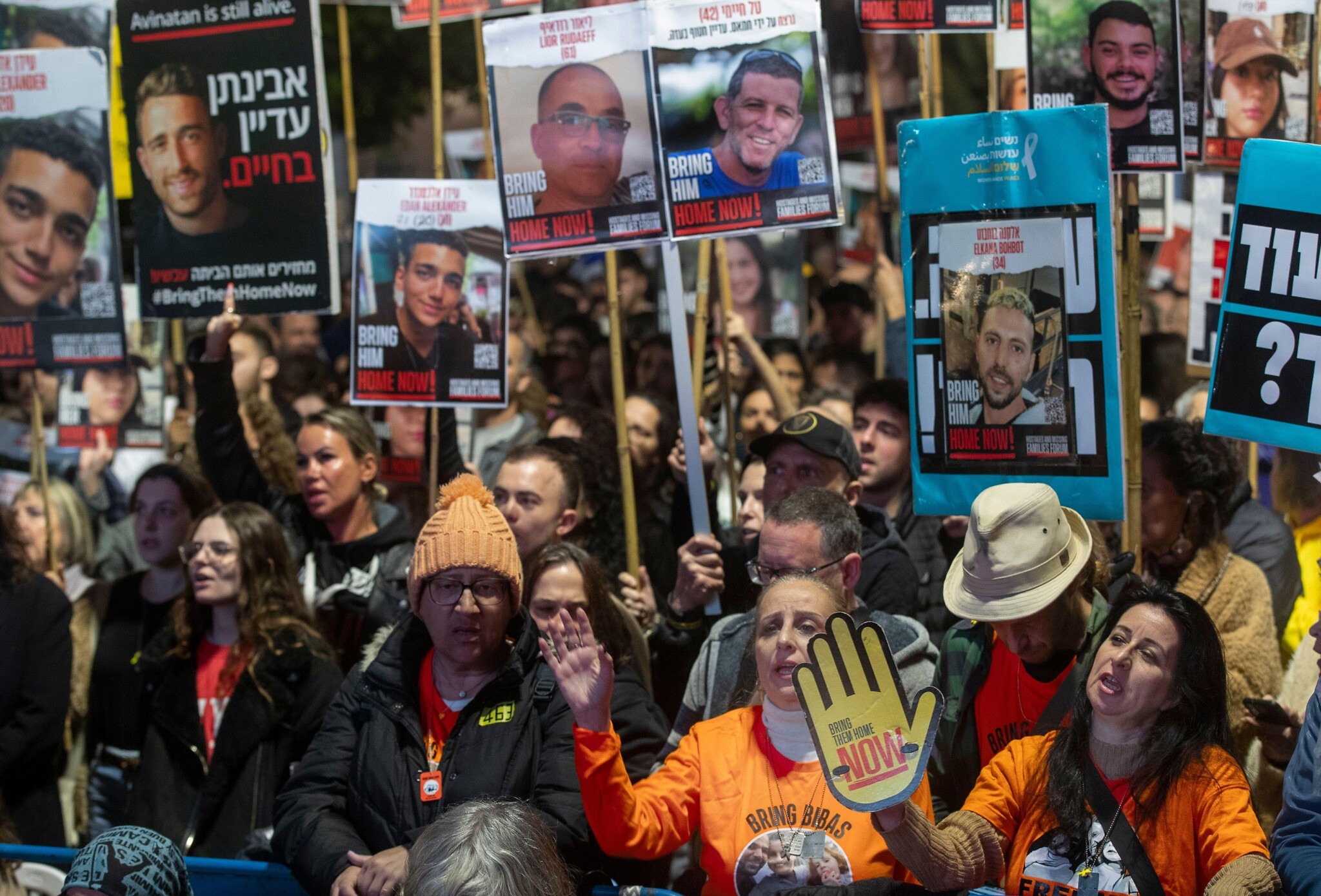
A new peer-reviewed study led by Israeli researchers has defined a unique form of trauma suffered by families of hostages taken during Hamas’s 7 October attacks, offering what experts call the first evidence-based framework for understanding the long-term psychological effects of mass kidnapping.
Published in the American Psychological Association’s journal Psychological Trauma: Theory, Research, Practice, and Policy, the paper was authored by Dr Einat Yehene and Shir Israeli of Tel Aviv-Yaffo Academic College, together with Prof Hagai Levine of the Hebrew University-Hadassah School of Public Health.
Drawing on in-depth interviews with relatives of those abducted from southern Israel, the researchers identified six recurring themes that shape families’ lived experiences. Central to their findings is a new concept, described as “Dynamic-Static Ambiguous Loss” – the condition of being trapped in emotional and practical paralysis while repeatedly swinging between hope and despair by new information, rumours, or official updates.
The authors argue that mass hostage-taking, unlike individual disappearances, triggers “multisystemic trauma” extending far beyond the affected families to entire societies. They say the phenomenon undermines trust in the state and transforms private suffering into a form of collective, national distress.
Dr Yehene, a rehabilitation psychologist and senior lecturer at Tel Aviv-Yaffo Academic College, said the study “provides a universal language to describe the profound and destabilising trauma of mass hostage-taking”, adding that such trauma must be viewed not only at the individual level but “within an ecological framework that includes the familial, communal and national levels”.



Prof Levine, an epidemiologist and head of the Hostages and Missing Families Forum health team, described large-scale abductions as “a public health emergency”. He said: ‘Healing cannot begin until all hostages – both those alive and those deceased – are released. The trauma is deeply intertwined, affecting individuals, families, and society as a whole.”
The research, supported by the UJA-Federation of New York, proposes that addressing the damage caused by mass kidnappings requires sustained state responsibility, transparent communication and social reintegration.
According to the authors, the findings offer a practical framework for humanitarian and mental health agencies working in conflict zones, as hostage-taking becomes an increasingly common tactic of war and terror.

Keep community journalism free.
Jewish News is free for everyone. No paywall. No barriers. Just trusted journalism for anyone who wants to stay connected to Jewish life in Britain.
If you value that, please support us.
From as little as £5 a month, you can help keep our journalism free and accessible to all.
Every day, we report on the issues that matter to our community. We celebrate achievements, support charities, challenge antisemitism and ensure Jewish voices are heard more widely.
From as little as £5 a month, you can help us continue to:
- Report on the stories shaping Jewish life in the UK and beyond
- Bring our community together through shared stories, events and campaigns
- Celebrate the people, culture and moments that define our community
- Support organisations doing vital work across Jewish Britain
You can make a one-off donation or become a regular supporter. Every contribution helps keep our journalism free, independent and accessible to all.
If everyone who values Jewish News gave a small amount, it would make a real difference to our future.