Prefer Jewish News on Google

Israelis keep having children. It might reshape the country
Israel's fertility rate is higher than that of any developed OECD country. What is happening in Israeli families that is not taking place elsewhere?
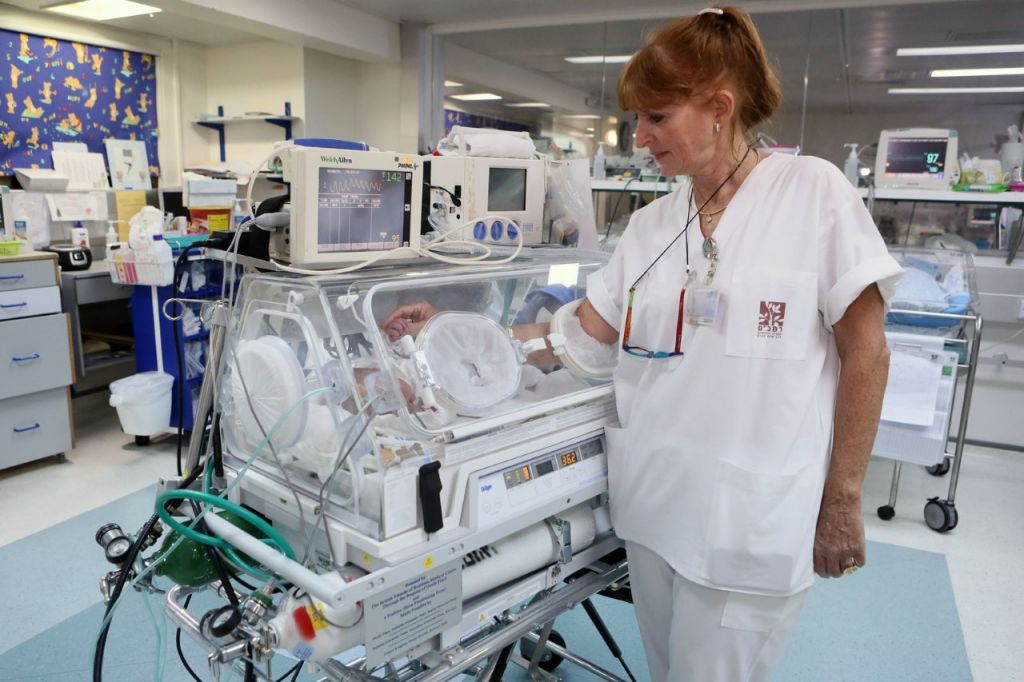
Israel’s high fertility rate is extraordinary not only because Haredi families are large, but because even secular Israelis have considerably more children than their counterparts elsewhere. That demographic strength may also become one of the country’s greatest challenges.
Israel is a demographic outlier.
In Britain, the average number of births per woman is 1.39. Even in the UK areas with the highest fertility, the figure is around 1.93. Israel’s national average, by contrast, is 2.87 – and even its lowest district, Haifa, records 2.03.
But perhaps the most remarkable figure is not Bnei Brak, the predominantly Haredi city where fertility exceeds six children per woman. It is Tel Aviv. Israel’s most secular and cosmopolitan city still averages 1.98 – higher than the national fertility rate of any developed OECD country.
So what is happening in Israeli families that is not happening elsewhere?
Part of the answer is religion. Traditional Judaism is strongly pronatalist, and Israel’s most religious communities have the largest families. But that alone cannot explain the Israeli exception. Fertility is comparatively high across Israeli society, including among secular Jews. The desire for children crosses religious, cultural and political boundaries.
Two other factors seem particularly important: resources and optimism. In modern societies, where people have considerable control over whether and when they have children, fertility begins to play a significant role in people’s minds. Do they want another child? Can they imagine a positive future for that child? And do they believe they have the resources to raise one?
Israel offers an interesting reversal of an older demographic pattern. In the past, large families were often associated with poverty, while wealthier people had fewer children. Today, given the same motivation, greater economic resources can make it easier to realise the ambition of having a larger family.
Israel’s rising living standards, employment levels and improvements in housing and educational opportunities have therefore helped sustain fertility. Strikingly, this has occurred alongside record levels of female participation in the labour force and social mobility – challenging the assumption that women’s economic and family lives are necessarily incompatible.
But money is only part of the equation. Israel also consistently ranks highly on measures of optimism, and that may matter enormously. Having children is, among other things, an expression of confidence in the future. Despite recurring war, security threats, political upheaval and economic pressures, Israelis continue to behave as though the future is worth investing in.
Yet Israel’s demographic strength also contains a significant challenge.
Some historic fertility gaps have narrowed dramatically. Differences between Ashkenazi and Sephardi Jews have essentially disappeared, while the gap between Jews and Arabs has also closed considerably. In 2024, fertility among Jews and their non-Jewish immigrant relatives stood at 2.94, compared with 2.59 among Arabs.
The more consequential divide today is within the Jewish population itself – particularly between Haredim and everyone else. Families in Tel Aviv may carefully plan for one, two or three children. Families in Bnei Brak may plan just as deliberately for five, six or more. Over time, those differences fundamentally alter the composition of Israeli society.
Haredim comprised around 13% of Israel’s population in 2020 and are projected to account for 24% by 2050. Among under-18s, their share could rise from 20% to 38%. These are not merely demographic curiosities. They carry profound implications for Israel’s labour market, education system, welfare state, politics and defence.
This is where a demographic success story becomes a policy challenge. High fertility can only remain an advantage if the society supporting it remains economically and socially sustainable. If rapidly growing sections of the population participate less in employment or military service while relying heavily on public resources, the arithmetic becomes increasingly difficult.
Nor can Israel assume its demographic exceptionalism will continue indefinitely. Fertility has already been declining gradually, and prosperity, social cohesion and confidence in the country’s future cannot be taken for granted.
Yeladim ze bracha – children are a blessing – goes the familiar Hebrew saying. Israeli society still appears to believe it. The question for the coming decades is whether Israel can build the social and economic model needed to sustain the society those children will inherit.
Professor Sergio DellaPergola is a demographer and statistician at the Hebrew University of Jerusalem, and Chairman of JPR’s European Demography Unit.

Keep community journalism free.
Jewish News is free for everyone. No paywall. No barriers. Just trusted journalism for anyone who wants to stay connected to Jewish life in Britain.
If you value that, please support us.
From as little as £5 a month, you can help keep our journalism free and accessible to all.
Every day, we report on the issues that matter to our community. We celebrate achievements, support charities, challenge antisemitism and ensure Jewish voices are heard more widely.
From as little as £5 a month, you can help us continue to:
- Report on the stories shaping Jewish life in the UK and beyond
- Bring our community together through shared stories, events and campaigns
- Celebrate the people, culture and moments that define our community
- Support organisations doing vital work across Jewish Britain
You can make a one-off donation or become a regular supporter. Every contribution helps keep our journalism free, independent and accessible to all.
If everyone who values Jewish News gave a small amount, it would make a real difference to our future.