Prefer Jewish News on Google
Israel’s next election will be fought over red lines
Elections are not only about the fate of one politician. They are about what a society is willing to legitimise
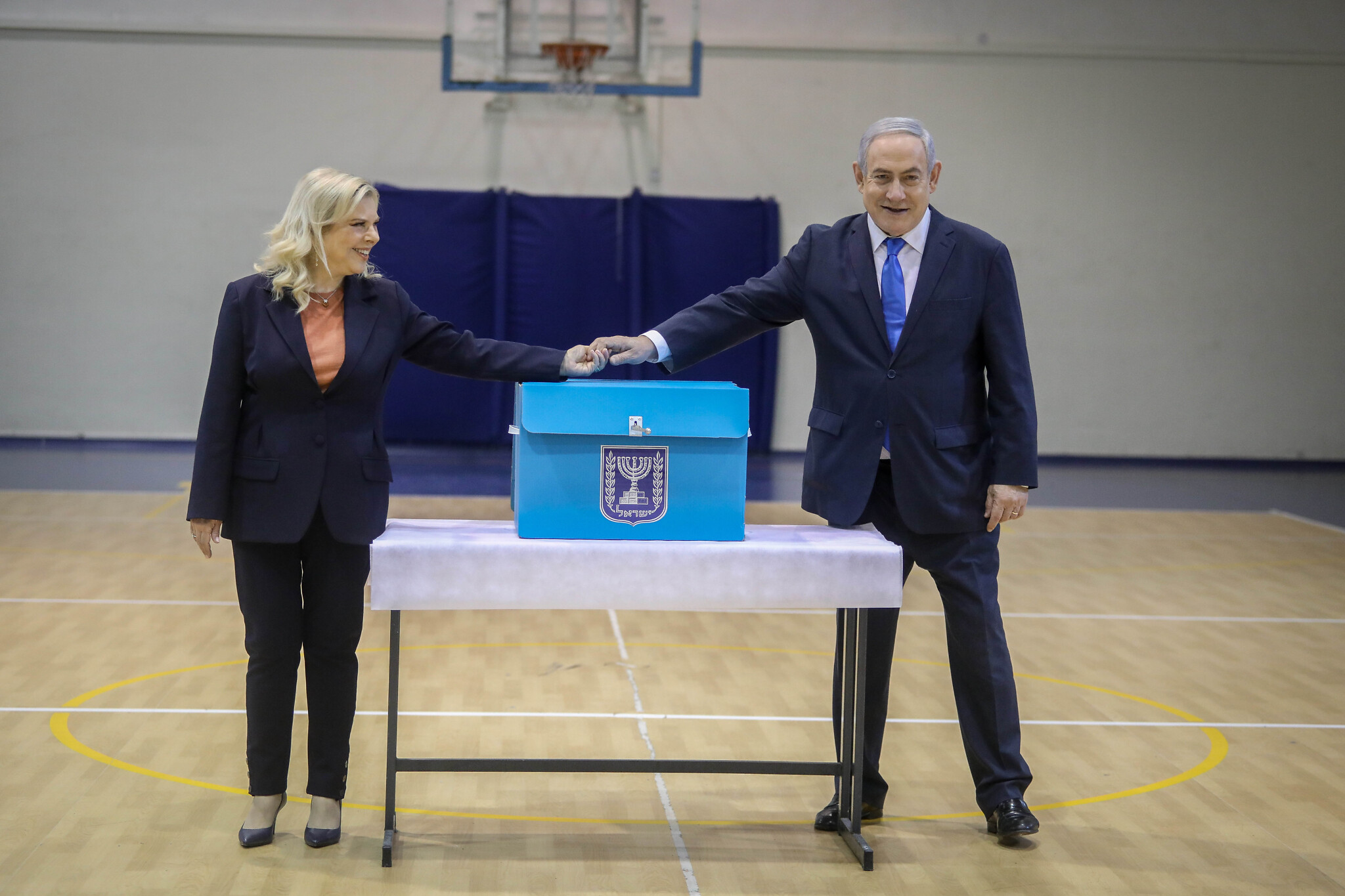
In the space of a year, proposals once considered fringe have moved into the centre of political life: a bill establishing the death penalty for Palestinians who kill Israelis, but not the other way around; legislation entrenching military exemptions for yeshiva students at a time of war; and coalition deals that channel vast public funds to sectoral interests while entire communities feel abandoned to violence.
Elections are not only about the fate of one politician (in the case of Israel, Netanyahu). They are about what a society is willing to legitimise. They are about which demands are rewarded, which grievances are ignored, and where the moral boundaries of the state are drawn. This year, two communities may once again determine those boundaries: Palestinian citizens of Israel and the ultra-Orthodox public.
A crisis of safety — and trust
Palestinian citizens make up roughly 20% of Israel’s population. Their participation — or non-participation — in this election could prove decisive.
The urgency is impossible to ignore. In the first 43 days of 2026 alone, 44 Palestinian citizens of Israel were murdered. Widely reported figures show that 253 people were killed in the Palestinian community in 2025, and 244 in 2023. In 2022, the figure stood at 109 — just before Itamar Ben Gvir entered the Ministry of National Security.
These are not abstract statistics. They reflect a collapse of personal security in towns and cities that have long warned of state neglect, under-policing and organised crime networks operating with impunity. In recent weeks, relatives of victims and civic activists have taken to the streets. They organised mass demonstrations and blocked major roads for hours. Red dye was poured into public fountains to symbolise bloodshed. Doctors stopped work. The message was stark: one person is murdered almost every day, and the government and police are not doing enough.
This is also where the death penalty bill becomes more than a headline. Israel has imposed the death penalty only once in its 78-year history: in 1962, on Nazi war criminal Adolf Eichmann. A new bill in the Knesset would introduce capital punishment for Palestinians who kill Israelis — but not for Israelis who kill Palestinians. It would codify discrimination into criminal law.
Jackie Khouri recently wrote in Haaretz that the protests do not prevent the next murder, and they do not change the government’s priorities overnight. But they may begin to amplify the voice of a community that wants and deserves to be considered equal in Israeli society. At the same time, they may begin to heal some of the wounds of an abandoned and isolated community. Many are hoping that this demand for safety, equality and justice will also translate into turnout at the ballot box.
The election campaign is also likely to bring an ugly, inflammatory atmosphere — one that once again questions the legitimacy of Arab representatives in the Knesset. Whether Palestinian citizens of Israel are further delegitimised or are able to mobilise around a basic demand for security and dignity, remains unknown and depends on many circumstances, but either way, it will bring about new developments.
The shared burden — and who carries it
If one red line concerns equal protection under the law, the other concerns equal responsibility. Both are now central to coalition talks, where ultra-Orthodox parties again hold considerable leverage. Past coalition deals have often redirected substantial funds to ultra-Orthodox priorities, and now – after months of war, economic pressure and repeated reserve call-ups – more Israelis are openly questioning the balance.
At the heart of this debate lies the long-running dispute over military service exemptions for yeshiva students. For years, exemptions were maintained through temporary laws and government decisions, many struck down by Israel’s Supreme Court for violating principles of equality. The current effort to create a permanent framework has become one of the most contentious issues in Israeli politics.
For many Israelis, especially after the trauma of 7 October and the war, the idea of a “shared burden” has acquired renewed urgency. When families are sending children to the front and reservists are repeatedly called up, tolerance for indefinite exemptions has eroded. Ultimately, the bill has become more than a coalition bargaining chip. It marks a deeper divide over national duty: whether military service should apply to all, or whether a compromise can be found.
Why this matters beyond Israel
This election will be shaped by security concerns — the war, the hostages, Gaza, and escalating violence in the West Bank. But it will also determine whether Israel reinforces democratic norms or weakens them; whether it deepens equal citizenship or entrenches division. Elections are moments when societies define what they are prepared to tolerate.
On Wednesday 18 February in Central London, New Israel Fund UK will host an evening examining these dynamics in depth. Ron Gerlitz and Mariam Kabaha of aChord will present new polling on Israeli attitudes towards democracy, the war and Jewish–Palestinian political partnership. They will be joined by Mikhael Manekin, Director of the Alliance Fellowship, and journalist Alona Ferber of Prospect.
In a moment when so much feels volatile, understanding the public mood inside Israel can teach us a lot about the present moment and of what’s still to come. Israel’s next election will not simply determine who governs. It will reveal which red lines still hold — and which have already been crossed.
Netta Cohen is a Fundraising Writer for New Israel Fund UK

Keep community journalism free.
Jewish News is free for everyone. No paywall. No barriers. Just trusted journalism for anyone who wants to stay connected to Jewish life in Britain.
If you value that, please support us.
From as little as £5 a month, you can help keep our journalism free and accessible to all.
Every day, we report on the issues that matter to our community. We celebrate achievements, support charities, challenge antisemitism and ensure Jewish voices are heard more widely.
From as little as £5 a month, you can help us continue to:
- Report on the stories shaping Jewish life in the UK and beyond
- Bring our community together through shared stories, events and campaigns
- Celebrate the people, culture and moments that define our community
- Support organisations doing vital work across Jewish Britain
You can make a one-off donation or become a regular supporter. Every contribution helps keep our journalism free, independent and accessible to all.
If everyone who values Jewish News gave a small amount, it would make a real difference to our future.