Prefer Jewish News on Google
Israel’s public spaces express our sorrow and our hope
Two squares in Tel Aviv have been focal points for the Jewish state over the last 30 years
I remember as if it were yesterday the moment, 30 years ago today, when the madrichim on my gap year programme in Israel told us that Yitzchak Rabin had been assassinated at a rally in Tel Aviv’s ‘Kikar Malchei Yisrael’ (Kings of Israel Square). Whilst we were unable to fully process the magnitude of the event, we knew that we were living through a moment that would change the trajectory of the history of our people.
The country’s mood changed overnight. We hadn’t appreciated how much hope we had all been holding until it was gone. Our carefree gap year which started against the backdrop of the recently signed Oslo Accord, became marred by bus bombings and extremist rhetoric. We became accustomed to a new reality, a disillusioned reality – more cynical, jaded and defensive. Kikar Malchei Yisrael became the focus for national mourning and rousing concert tributes with new music written to capture the moment and was soon renamed Rabin square to honour our fallen hero.
So much of the last 30 years has been shaped by that tragedy. The path not taken has slipped further and further from our grasp. A generational divide has emerged between those who experienced hope and those whose education about Israel has had to contend with much more complexity.
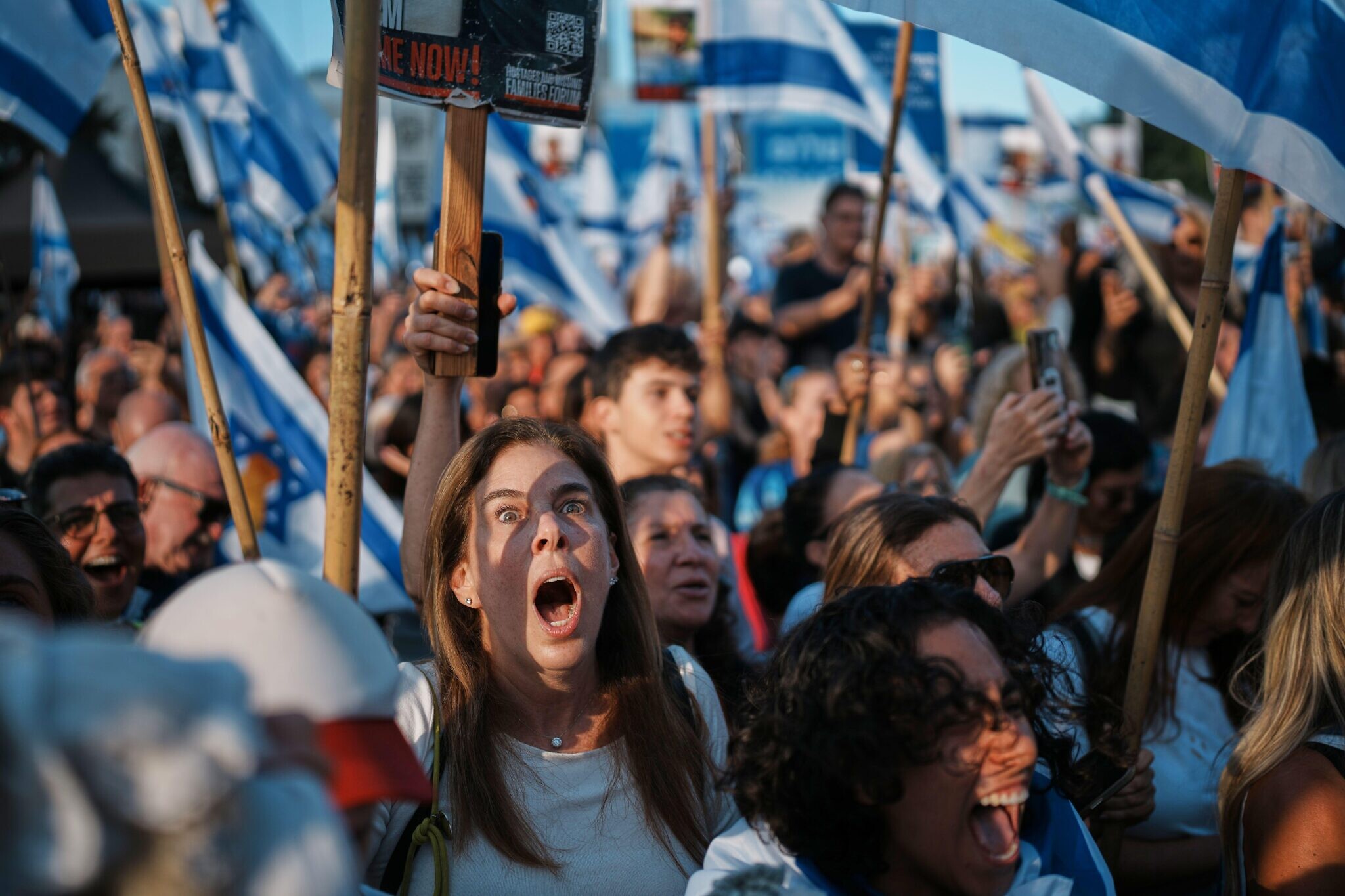
And yet, last month, on Hoshana Raba, the day before Simchat Torah in Israel, when we witnessed the miraculous return of all the living hostages, alongside the announcement of a ceasefire, we dared to raise our sights again. Around the world we were glued as one people to the livestream from Hostages Square.
This time, my eldest daughter on her gap year has been able to experience this historic turning point. And I felt a profound sense of ‘tikkun’, of repair, at this moment with the potential to restore some of what we lost. A new turning point in Israel’s history was again marked in a renamed square of Tel Aviv (from ‘Kikar HaBima; to ‘Kikar Ha Hatufim’, less than 1km from Rabin Square). Once again new music was written and performed there. Israel’s public spaces again have carried our history, through so much pain and so much togetherness.

Dr Micah Goodman, Israeli author and academic, has characterised the different phases of Israel’s history since the State was founded as two ‘Republics’: that of the secular, socialist, Eastern European founding fathers led by David Ben Gurion from 1948, and that of Menachem Begin which was more capitalist, traditional and diverse and which began after the euphoria of 1967 was followed by the disillusion of the 1973 Yom Kippur War.
Now, Goodman suggests, a new Israeli Republic is being born, founded by the heroes of 7 October and the survivors of Hamas’s terror tunnels. This Republic is more pragmatic and less innocent, as so many of the dreams of both the left and the right have been shattered during this war. However, it is one in which we already see the word ‘peace’ re-emerging. After 30 years in which it has been missing from public discourse it is beginning to tentatively make its way into speeches and conversations.
To make this ‘tikkun’ a reality we must join with the heroes of 7 October and start to build this new Republic together, guided by hope rather than fear. We, the global Jewish people, can also play our part alongside the citizens of Israel. The visions for Israel’s future may be many and varied. The pain that we have all experienced will continue to be part of Israel’s story. The risks and uncertainties will not disappear. But we must at last unite around a sense of positivity that we are working towards reclaiming the narrative of hope and the reality of a democratic Israel, that cares for all its citizens and that strives for peace, however long that takes. May we take the energy of this ‘tikkun’ and the history infused in the squares of Tel Aviv and use it to chart a course for this new Israel.
Joanne Greenaway is CEO of the London School of Jewish Studies (LSJS)

Keep community journalism free.
Jewish News is free for everyone. No paywall. No barriers. Just trusted journalism for anyone who wants to stay connected to Jewish life in Britain.
If you value that, please support us.
From as little as £5 a month, you can help keep our journalism free and accessible to all.
Every day, we report on the issues that matter to our community. We celebrate achievements, support charities, challenge antisemitism and ensure Jewish voices are heard more widely.
From as little as £5 a month, you can help us continue to:
- Report on the stories shaping Jewish life in the UK and beyond
- Bring our community together through shared stories, events and campaigns
- Celebrate the people, culture and moments that define our community
- Support organisations doing vital work across Jewish Britain
You can make a one-off donation or become a regular supporter. Every contribution helps keep our journalism free, independent and accessible to all.
If everyone who values Jewish News gave a small amount, it would make a real difference to our future.