Prefer Jewish News on Google

JLC and CST permitted to intervene in Palestine Action Supreme Court appeal
The UK's highest court is understood to be close to reaching a decision on whether the Home Secretary's proscription of PA as a terrorist organisation was lawful or not
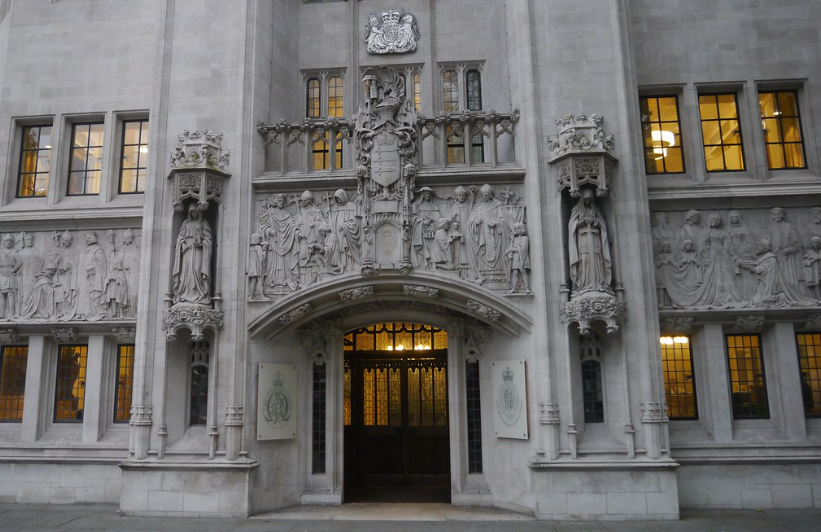
The Jewish Leadership Council and Community Security Trust have been granted permission by the Supreme Court to jointly intervene in the appeal relating to the proscription of Palestine Action (PA), with the two organisations describing “why the continued proscription of Palestine Action matters, not only for the Jewish community, but for society as a whole.”
In their submission, the JLC and CST, referred to jointly as the “Jewish Communal Organisations” or JCOs, described how “the UK’s Jewish community is especially vulnerable to Palestine Action (PA)’s violent activities. Prior to its proscription, PA’s target list expanded to organisations within the Jewish community. PA activists attacked a number of Jewish charities and Jewish-owned businesses in predominantly Jewish areas. This is why in the Home Secretary’s statement to Parliament announcing the decision to proscribe PA she justified it in part by reference to an ‘attack against a Jewish-owned business in North London’ which was ‘clearly intimidatory and unacceptable’.
The submission went on to state that “the JCOs seek to bring PA’s intimidatory and unacceptable attacks against the Jewish community to the attention of the Court. The Court of Appeal rightly concluded that PA is a violent organisation, concerned in terrorism, with a wide range of targets, that its activities are often undertaken covertly with no suggestion of restraint or proportionality, and that at the point it was proscribed it had an escalating trajectory of seriousness and an expanding focus.
“The evidence before this Court is that in the period leading up to its proscription, PA’s crosshairs moved from Elbit [an Israeli weapons firm], to Elbit’s landlords, insurers and bankers, to ‘tertiary’ targets chosen for ‘propaganda value’, including a focus on figures or institutions deemed by PA to be ‘Zionist’, which in practice incorporates important parts of the Jewish community. Because most British Jews and Jewish institutions have a connection with Israel, a campaign against institutions PA’s activists consider to be ‘complicit’ with Israel is, in practice, a campaign that threatens the mainstream Jewish community.”
The JCO’s submission, drafted by barristers Adam Wagner KC and Daniel Isenberg, went on to warn that “if the proscription of PA was held to be disproportionate and quashed, this would cause serious prejudice to the Jewish community. PA’s proscription has provided a security benefit to a wide range of Jewish institutions. The rights of those members of the Jewish community to hold lawful beliefs, and go about their private, cultural and religious lives, is a vital ingredient to the Court’s proportionality assessment.


The Supreme Court has granted permission to @CST_UK and Jewish Leadership Council to intervene in the appeal relating to the proscription of Palestine Action. Our intervention can be found in full here: https://t.co/YLdkwGUmHp pic.twitter.com/BNPsKGI2Qq
— Jewish Leadership Council (@JLC_uk) November 2, 2026
Originally founded in 2020, Palestine Action undertook hundreds of acts of sabotage, or “actions” against targets around the UK. It was proscribed as a terrorist group in July 2025, following an incident the previous month in which members of the group filmed themselves infiltrating the UK’s largest RAF base and damaging military aircraft, footage which was subsequently published on Palestine Action’s social media accounts.
In February 2026, the Divisional Court ruled that the Proscription of Palestine Action had been unlawful, after a legal challenge brought by the group’s co-founder, Huda Ammori. However, that decision was reversed by the Court of Appeal in June, with the Supreme Court, the highest judicial authority in the country, subsequently agreeing to hear the case. The decision from the court is expected in the next few weeks.
The JCO submission goes on to state that “PA is far more sinister in its aims, methods, and the consequences of what the Appellant euphemistically terms its ‘actions’ (read: ‘attacks’), than the Appellant admits. In some attacks, PA activists went armed with sledgehammers, axes, whips and incendiary devices. They sprayed security guards in the face with a liquid the guards were told was acid. They fractured a police officer’s vertebra with a sledgehammer. PA’s Underground Manual instructed recruits to “disrupt, damage or destroy”, to “think big”, to wear balaclavas and to leave behind “absolutely nothing apart from paint and destruction” [B/60/707]. The Appellant downplays and misdescribes these attacks, and calls the Underground Manual “tongue-in-cheek” (Ammori 2 §29 [B/58/686]): it is plainly not. Most importantly, she has never disowned any of it.
“On the other side of the equation, PA’s victims are precisely that. They include the Jewish charities whose offices were smashed and daubed on the anniversary of the Balfour Declaration; a Jewish-owned business in the heart of Stamford Hill whose windows were shattered and defaced weeks before the proscription decision; and the bust of the first President of Israel, ‘abducted’ and displayed headless on social media under the slogan ‘Smash Zionism’. The police have investigated PA attacks as hate crimes. The Appellant’s written case does not mention them. Against that backdrop, lifting the proscription on PA would re-arm and revitalise a sinister and dangerous movement, not merely re-license a protest group. Moreover, this would happen at moment when, on the Government’s own assessment, the national threat level stands at SEVERE and Jewish individuals and institutions face an elevated terrorist threat. The JCOs submit that the elevated national threat against the Jewish community should be important context when the Court considers proportionality.”
In a joint statement from the JLC and CST on Wednesday, the community organisations said:
“Before it was proscribed, Palestine Action’s violent activism spread from attacking companies they believed were linked to Israel, to targeting Jewish-owned businesses and premises in Jewish community areas, in its campaign against ‘Zionist influence’.
“We are intervening in this case to take a stand against Palestine Action’s use of political violence and terrorism. Our submissions explain why the continued proscription of Palestine Action matters, not only for the Jewish community, but for society as a whole.”

Keep community journalism free.
Jewish News is free for everyone. No paywall. No barriers. Just trusted journalism for anyone who wants to stay connected to Jewish life in Britain.
If you value that, please support us.
From as little as £5 a month, you can help keep our journalism free and accessible to all.
Every day, we report on the issues that matter to our community. We celebrate achievements, support charities, challenge antisemitism and ensure Jewish voices are heard more widely.
From as little as £5 a month, you can help us continue to:
- Report on the stories shaping Jewish life in the UK and beyond
- Bring our community together through shared stories, events and campaigns
- Celebrate the people, culture and moments that define our community
- Support organisations doing vital work across Jewish Britain
You can make a one-off donation or become a regular supporter. Every contribution helps keep our journalism free, independent and accessible to all.
If everyone who values Jewish News gave a small amount, it would make a real difference to our future.