Prefer Jewish News on Google
Katz backs move to ban climbing on Hyde Park’s Holocaust memorial garden
Lords agree to add the London garden to a draft list of protected memorials under the new Crime and Policing Bill
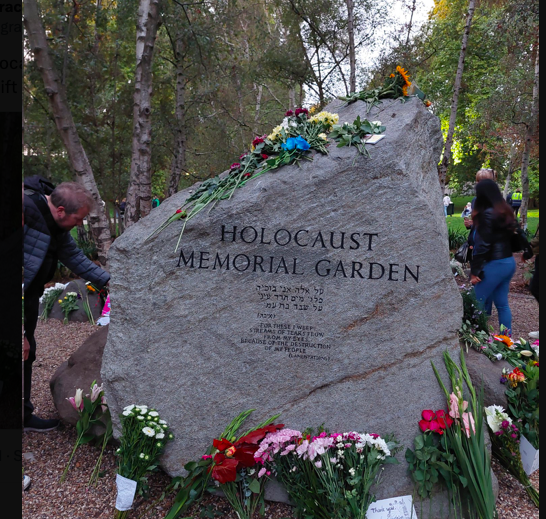
Climbing over Hyde Park’s Holocaust Memorial Garden is set to become a criminal offence, after the monument was recently covered up during a nearby demonstration.
Peers in the House of Lords have agreed to add the London garden, marked by boulders and birch trees, to a draft list of protected memorials under the new Crime and Policing Bill.
The legislation would make it illegal to climb the memorial without a “good reason,” carrying penalties of up to three months in prison and a £1,000 fine.
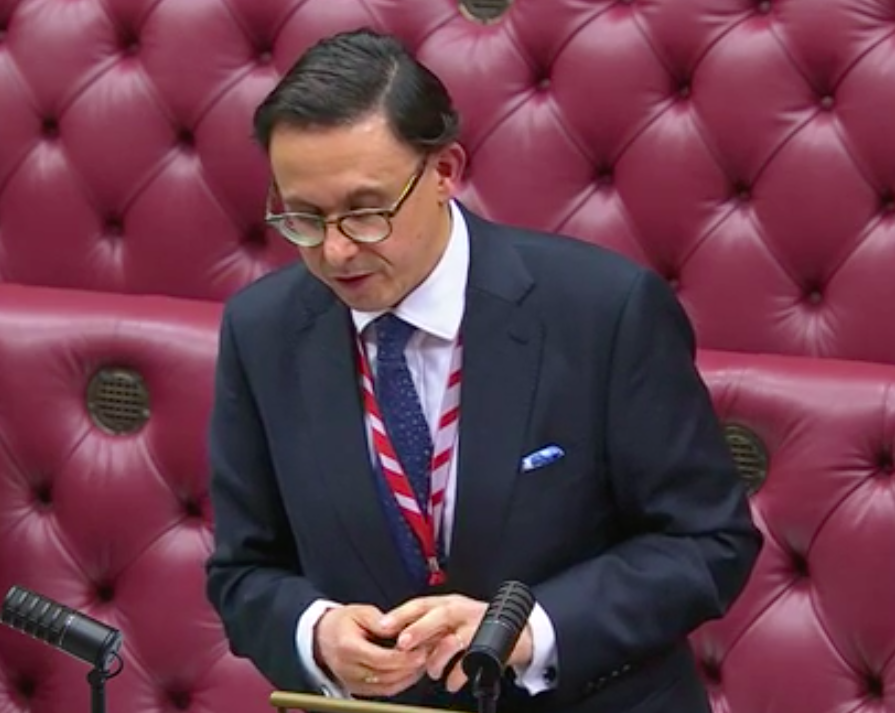
Lord Katz, speaking for the Government, said both the Holocaust Memorial Garden and the Monument to the Women of World War II in Whitehall were “culturally significant” and indicated ministerial support for their protection.
He added: “The Holocaust Memorial Garden in Hyde Park is, of course, designed to be enjoyed as a garden, and people are free to walk within it.”


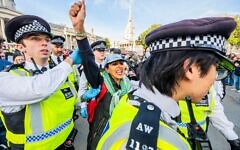
In addition, the Government has amended the Bill to ban protests outside the homes of public office-holders, including MPs, peers, members of the Senedd, and the mayor of London.
The Holocaust Memorial Garden joins a list of prominent memorials, including the Cenotaph in Whitehall, Birmingham’s Hall of Memory, the Liverpool Cenotaph, The Response in Newcastle, and the Portsmouth Naval War Memorial.
However, several properties are exempt from the ban, including Downing Street, the Palace of Westminster, Chequers, and Chevening House.
The law would also cover the statue of wartime prime minister Sir Winston Churchill outside Parliament, which was defaced with the words “Free Palestine” and “Never Again is Now” last month.
The Hyde Park garden, built in 1983, features a stone inscribed: “For these I weep. Streams of tears flow from my eyes because of the destruction of my people.”
Jewish peer Katz added:“I’ve given consideration to the practical issue of whether the police will be able to enforce this offence. The intention of the offence is to capture the act of climbing, and I’m confident it will not capture walking on an installation such as the Holocaust Memorial Garden.
“Further, there are, of course, other memorials listed in (the Bill) which have steps which may be sat on by members of the public, such as the Royal Artillery Memorial in Hyde Park. I am content that in enforcing this offence, police officers will use their discretion to consider whether an offence is committed.”
Lord Katz also stressed that the Bill “intentionally sets out a clear and fixed list of memorials, which provides certainty for the public, policing and the courts,” warning that adding further memorials could “undermine the clarity and consistency that the measure is intended to achieve.”
Lord Parkinson of Whitley Bay, who proposed the amendment, noted that the garden was covered in tarpaulin as recently as April 2024 due to concerns over possible antisemitic vandalism.
Several newspapers published photographs at the time showing the monument covered by a blue tarpaulin.
Peers also agreed to add the Monument to the Women of World War II in Whitehall, unveiled in 2005, to the list of protected sites.
Lord Katz said, “Harassment and intimidation must never be accepted as a part of a public office-holder’s role,” while acknowledging that “it is perfectly legitimate for campaigners during election time to doorknock and to speak to their local public office-holders about a different political opinion. Where this crosses the line is when these people choose to protest against the public office-holder at their home.”
The Bill faces further scrutiny before it can become law

Keep community journalism free.
Jewish News is free for everyone. No paywall. No barriers. Just trusted journalism for anyone who wants to stay connected to Jewish life in Britain.
If you value that, please support us.
From as little as £5 a month, you can help keep our journalism free and accessible to all.
Every day, we report on the issues that matter to our community. We celebrate achievements, support charities, challenge antisemitism and ensure Jewish voices are heard more widely.
From as little as £5 a month, you can help us continue to:
- Report on the stories shaping Jewish life in the UK and beyond
- Bring our community together through shared stories, events and campaigns
- Celebrate the people, culture and moments that define our community
- Support organisations doing vital work across Jewish Britain
You can make a one-off donation or become a regular supporter. Every contribution helps keep our journalism free, independent and accessible to all.
If everyone who values Jewish News gave a small amount, it would make a real difference to our future.