
 Prefer Jewish News on Google
Katz introduces new measures to address communal concerns over repeat pro-Palestinian protests
Jewish Labour peer outlines new clauses to the government's Crime And Policing Bill in the House of Lords
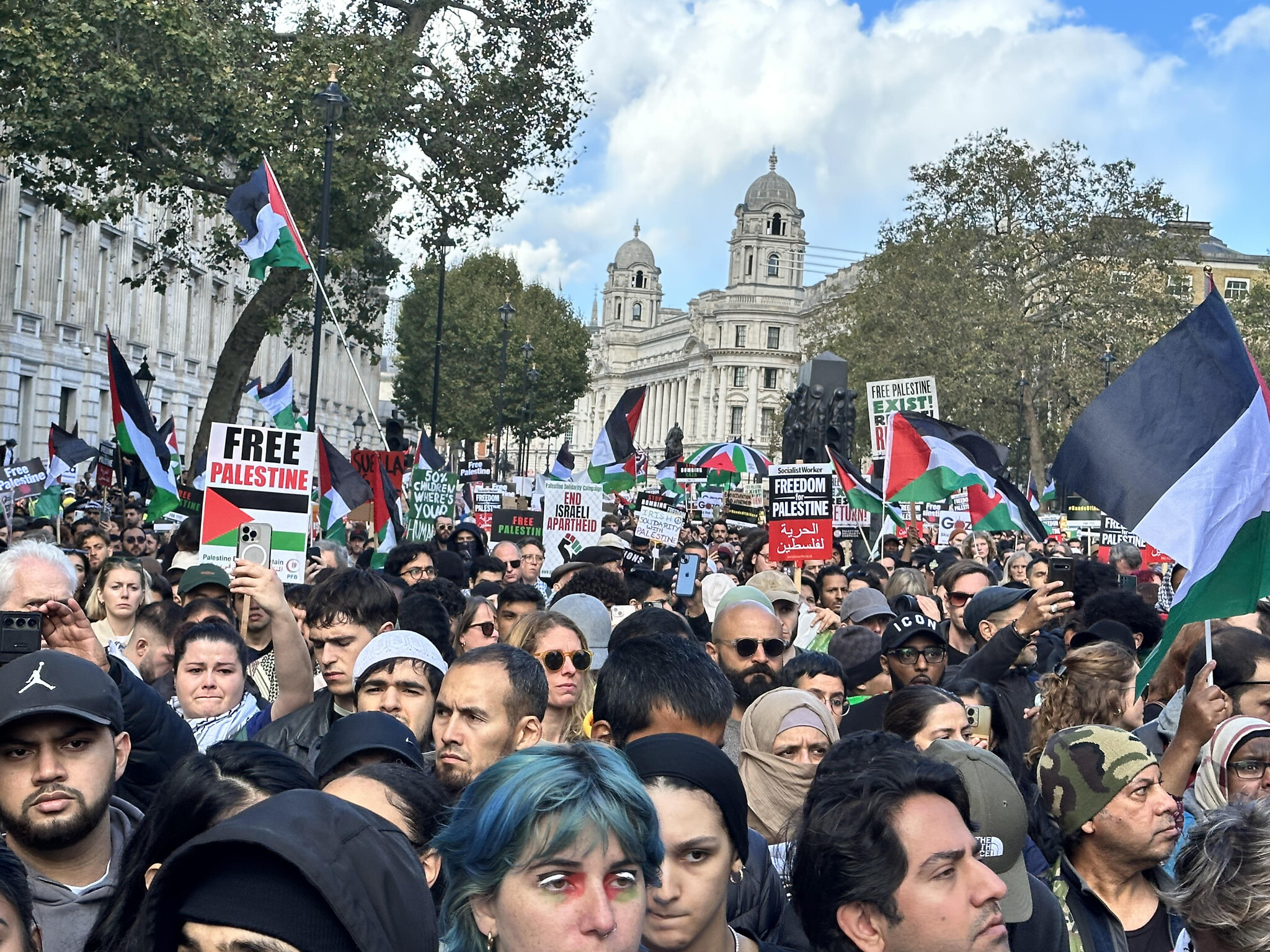
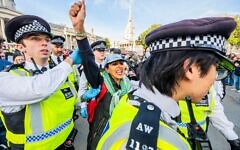
New Government clauses seeking to address anger and concern raised by the Jewish community on the impact of repeated pro-Palestinian protests often staged close to synagogues have been introduced in the House of Lords.
The proposals – promised by Prime Minister Keir Starmer as part of the government’s wider drive to stem the rising tide of antisemitic hatred – were introduced by Jewish Labour peer Lord Mike Katz as part of the Crime and Policing Bill.
Broadly welcomed by Jewish peers from across all political parties, they will allow police to take into account the cumulative impact of protests in an area, and also strengthen police powers to impose conditions on protests in the vicinity of places of worship.
During Tuesday evening’s debate, crossbench peer Lord Walney, who has long called for a tougher approach to extremist pro-Palestine activity, told the Lords he felt Starmer’s government still had much to do to prove it really did have the Jewish community’s back.

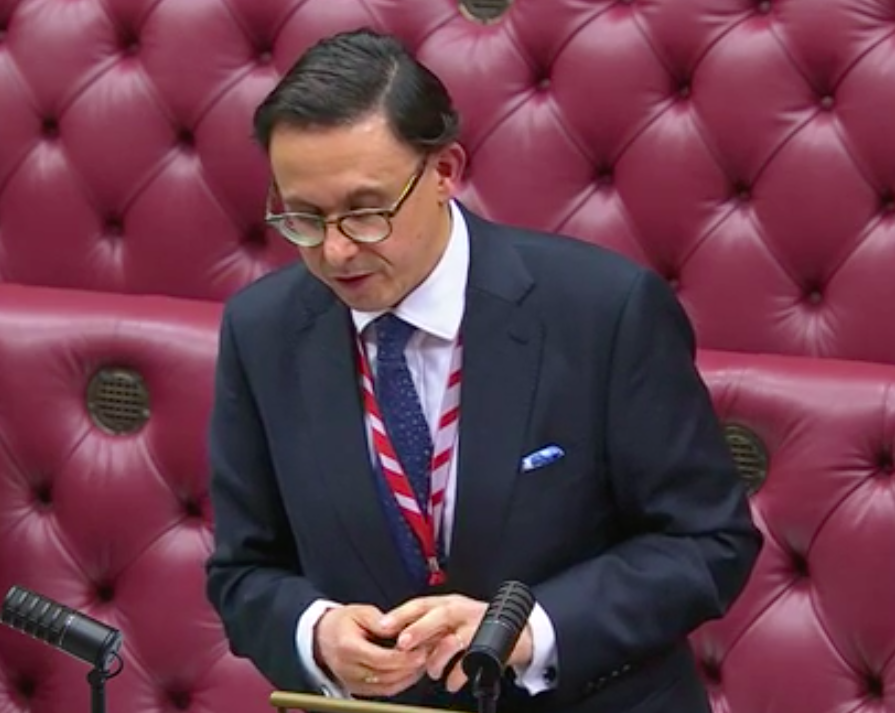
Following a marathon four-hour long debate, in which some peers attempted to raise concerns about infringements to the democratic right to protest, frontbench government whip Lord Katz told Jewish News: “For my part, I was proud to have the chance to reflect the lived experience of the British Jews over the past couple of years as I responded for the Government to the debate.
“As I said in the debate, the fear and intimidation they feel are real. We can’t, as a society, ignore these concerns and this Government is certainly acting on them.”
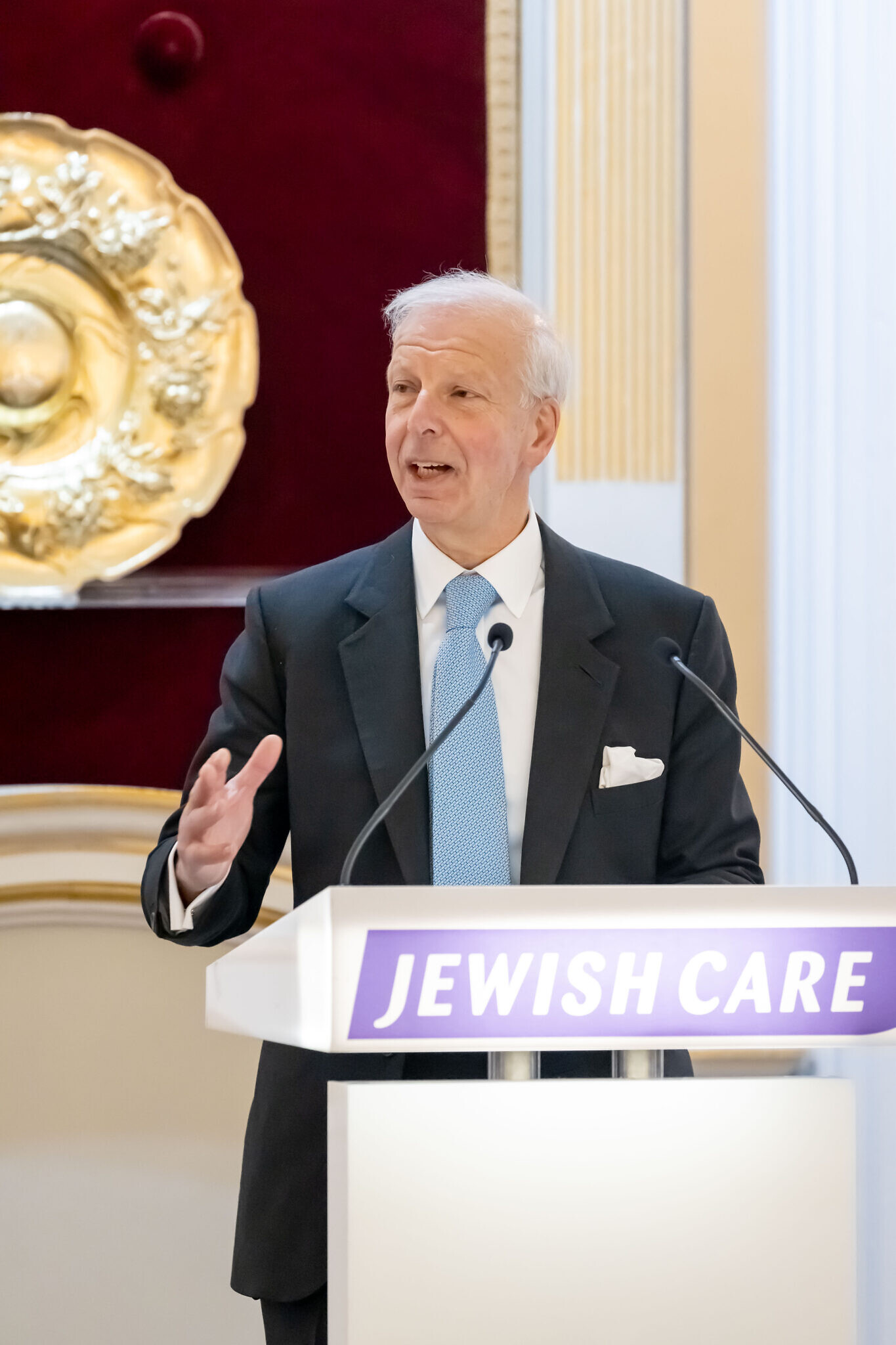
The Conservative peer Lord Leigh confirmed he was speaking in the Lords also as president of Westminster Synagogue.
“We have had two marches past us recently, both on a Saturday,” he said.
“We negotiated with the police to ensure they did not pass on a Saturday morning, when we had services, but they did pass by us at lunchtime, so we had to abandon our community lunch events.
“We were told we had to leave the building before we had the lunch that we had planned.
“On the second march, the demonstrators stopped some 20 metres away from our building and continued chanting while they stopped marching for some six minutes.
“It could be audibly heard from inside the building.
“I am sympathetic to the amendments that want to be specific about marches having to be further away from the building than just in the area.”
Leigh then added: “Every one of the marches demonstrating about Gaza has contained vile, antisemitic slogans.
“These chants are not the sorts of chants we would have heard on British streets over many years, or indeed centuries, in marches by people wanting to express a view.
“These marches are populated by some calling for the extinction of Jewish life in Israel.
“On their call for Palestine to be free from the river to the sea, I had to explain to my daughter, when we were in Manchester and heard these chants, that that meant the slaughter and eradication of Jews in Israel. Their chants for a global intifada, or even death to the IDF, are chilling.”
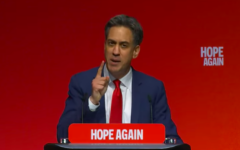
Former Labour cabinet minister Lord Peter Hain was among those to raise concerns about the move to enable police to impose curbs on repeat marches and demonstrations in the same area, following sustained pro-Palestinian protests over Gaza, branded the proposals “oppressive and unjust”.
The veteran anti-apartheid campaigner went on to claim legislative measures proposed by his own Government were “disproportionate, dangerous and profoundly undemocratic”.
Hain continued: “It is oppressive and unjust. Yet it won’t just be marches for Palestinian rights that are affected, the impact will be much more wide-ranging.”
He argued the police already had “a huge range of extensive powers to deal with hate speech, incitement to violence and serious threats” and warned the proposed measure would allow the state “to pre-emptively silence thousands of people based on an ill-defined and speculative concept of disruption”.
But supporting the provision, leading lawyer and independent crossbencher Lord Pannick said: “It will ensure that the police must take account of cumulative disruption when exercising their power to impose conditions on public processions and assemblies.
“The amendment will be, and is, particularly welcomed by synagogues and their members, whose access to and from Saturday prayers has been regularly disrupted by hostile, abusive and intimidating crowds of protesters.”
He added: “There is not just the right to protest but the right to go to a synagogue, to have access to a synagogue, to be able to leave a synagogue, and not to be deterred by hundreds of abusive protesters protesting in favour of a particular cause.”
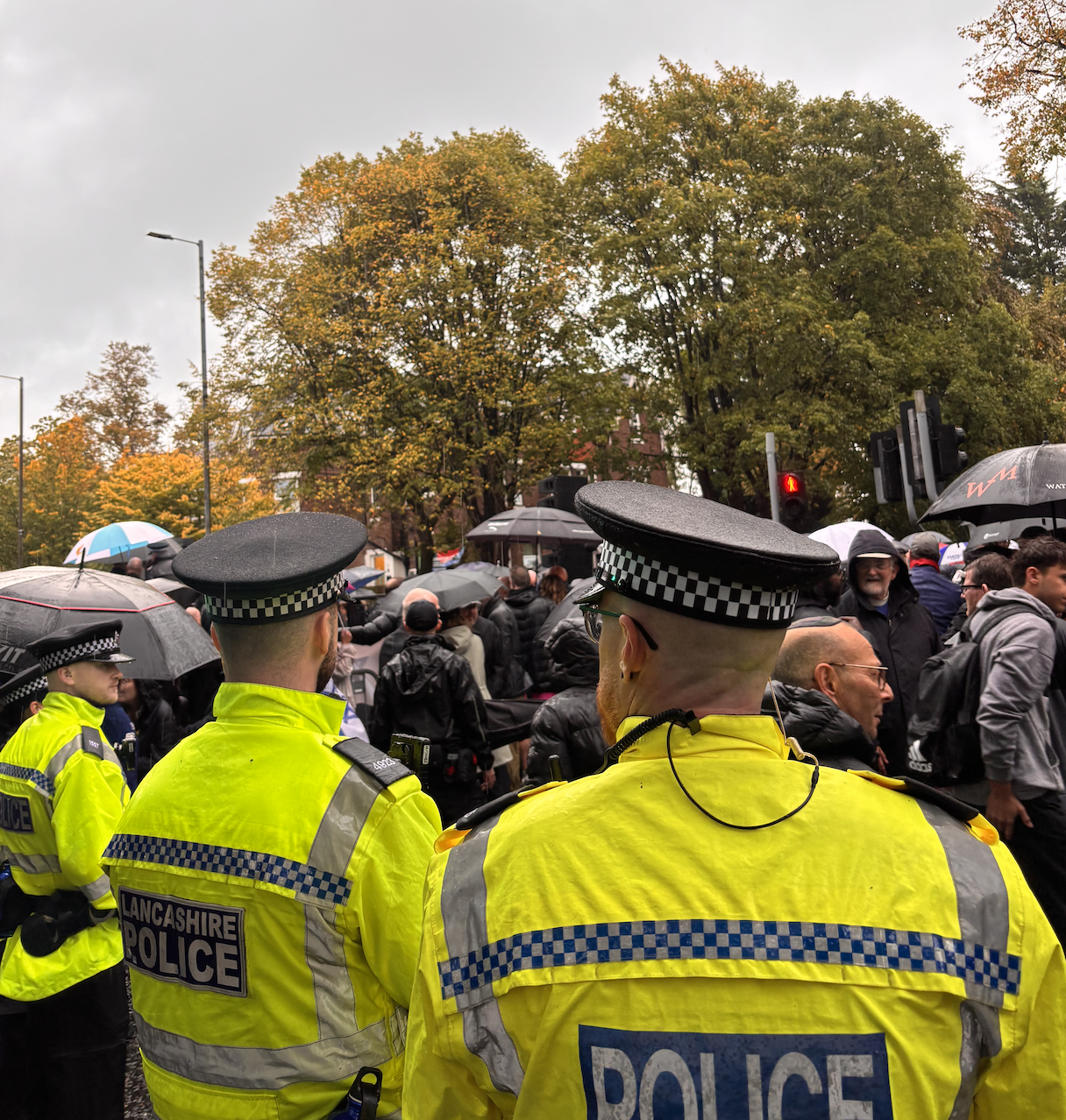
Pointing out it did not stop people demonstrating, he said: “Yes, protest, but you do not have to do it in the same place, along the same street, every week.”
Lord Katz also highlighted the pro-Palestinian protests held in the immediate aftermath of the antisemitic terror attack on a Manchester synagogue in October.
“This government is committed to upholding the democratic right to peaceful protest,” said the former Jewish Labour Movement chief.
“However, this must not come at the expense of the right of others to feel safe in their own neighbourhoods.
“Over the last few years, we have seen the impact of repeat protests on the life of some of our communities.
“We saw this in the wake of the antisemitic terror attack on the Heaton Park synagogue in Manchester on 2 October 2025, which resulted in the tragic murders of Adrian Daulby and Melvin Cravitz, as mentioned already by Lord Polak.”
The duty of police to take account of the cumulative impact of demonstrations sought “to help protect communities from repeated disruption caused by protests, especially where the same site has been targeted again and again”, Katz said.
The government minister added: “Let me be clear, this does not allow police to ban a particular protest outright, so long as the legislative threshold is met, conditions may be set, such as the start and finish times or the route.”
The crossbench peer Lord Walney urged the government not to soften its approach to tackling the problem of extremist protests, particularly for the Jewish community.
The former Labour MP also noted that Starmer’s government had much to do to convince the community it was really on their side, in the aftermath of the rising tide of antisemitic hate since October 7.
Responding to Katz, he said: “I do not need to tell my noble friend the Minister about the difficult position that much of the Jewish community in this country feel they are in, given the challenges that they face, but also in not necessarily always knowing that this Government have their back.
“There is real peril for the Government in saying to the Jewish community, ‘Yes, we hear you on cumulative disruption, and finally we are moving’, after years, but then not doing sufficient to make a genuine difference on protests.”
Lord Mendelsohn for Labour also noted:” The reason we are here is that we are facing the considerable problem of non-prosecutions.
“This is the type of thing happening in our society that is undermining democratic resilience and social cohesion, and which is particularly targeting the Jewish community.”
The Board of Deputies, Community Security Trust and Jewish Leadership Council have been among the communal organisations pressing the government to bring in tougher measures to tackle pro-Palestine demos, over the past two years.

Keep community journalism free.
Jewish News is free for everyone. No paywall. No barriers. Just trusted journalism for anyone who wants to stay connected to Jewish life in Britain.
If you value that, please support us.
From as little as £5 a month, you can help keep our journalism free and accessible to all.
Every day, we report on the issues that matter to our community. We celebrate achievements, support charities, challenge antisemitism and ensure Jewish voices are heard more widely.
From as little as £5 a month, you can help us continue to:
- Report on the stories shaping Jewish life in the UK and beyond
- Bring our community together through shared stories, events and campaigns
- Celebrate the people, culture and moments that define our community
- Support organisations doing vital work across Jewish Britain
You can make a one-off donation or become a regular supporter. Every contribution helps keep our journalism free, independent and accessible to all.
If everyone who values Jewish News gave a small amount, it would make a real difference to our future.





















