Prefer Jewish News on Google
King’s official role updated to reflect Britain’s multi-faith society
Buckingham Palace changes official description of the monarch’s duties, reflecting King Charles’ long-held commitment to protecting all faith communities
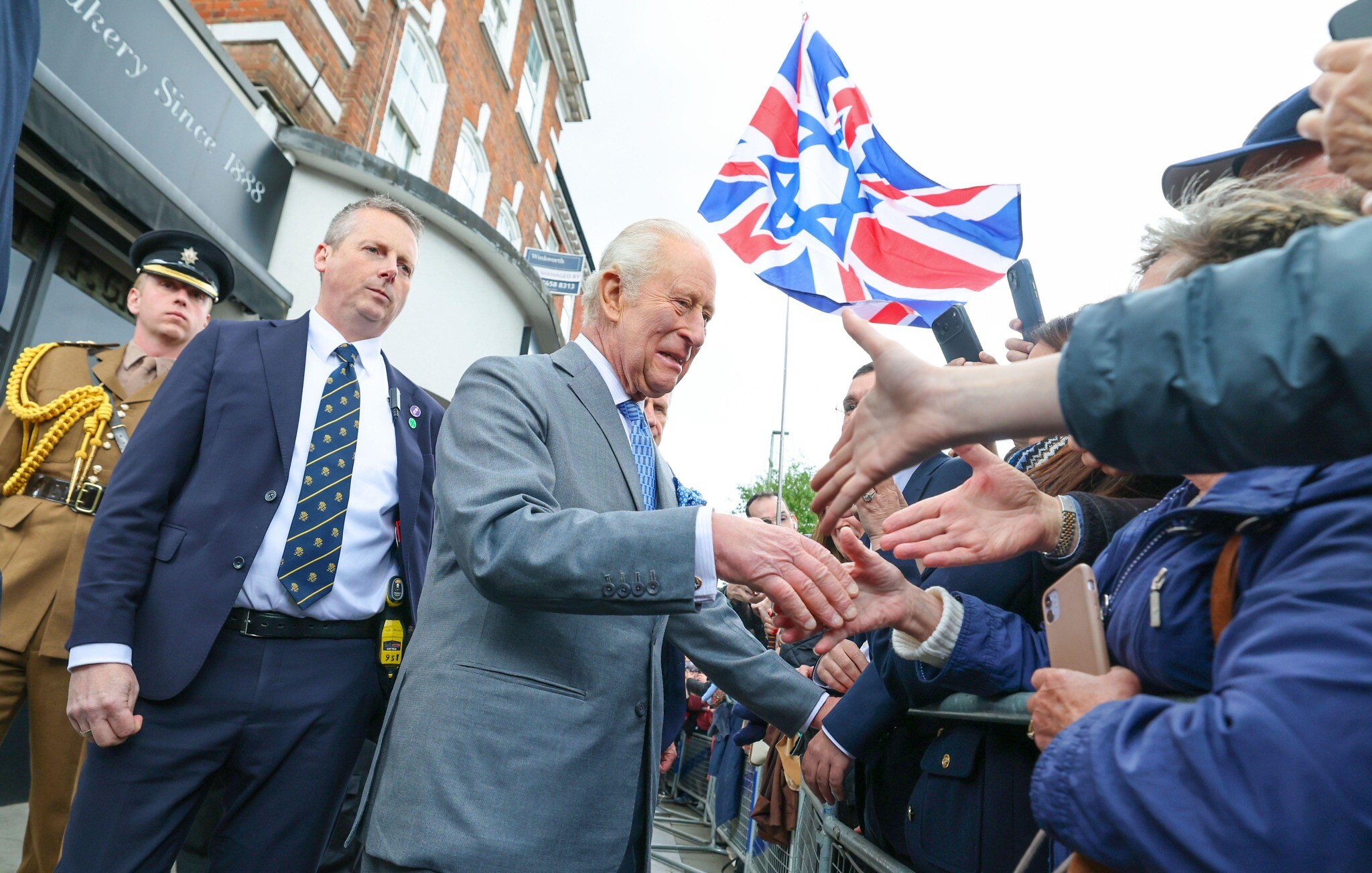
Buckingham Palace has updated the official description of King Charles’ role to recognise his responsibility to protect faith across Britain’s multi-faith society.
The revised wording appears in the newly published Sovereign Grant Annual Report and Accounts 2025-26, which states: “His Majesty is Supreme Governor of the Church of England and protects the space for Faith within the multi-faith nation.”
The wording replaces the description used in last year’s report, which referred to the monarch as “Head of the Church of England and Defender of the Faith.” The King’s constitutional role has not changed, and he continues to hold the historic title of Defender of the Faith.
The change reflects a position Charles has spoken about for more than three decades.
In a 1994 television interview while Prince of Wales, he said he saw himself as a defender of “faith” rather than solely “the Faith”, before later clarifying that his role was to uphold the Church of England while protecting the freedom of people of all religions. Following his accession in 2022, he told faith leaders at Buckingham Palace that the Sovereign has a duty to protect “the space for faith itself” alongside Britain’s religious diversity.


The King has long built close ties with Britain’s Jewish community. Last month, he visited Golders Green following the antisemitic terror attack in which two visibly Jewish men were stabbed, meeting community members at the Jewish Care campus. During the visit, he also met representatives from the Community Security Trust (CST), local rabbis and emergency service volunteers.
Throughout his public life, Charles has regularly attended Holocaust remembrance events, visited synagogues and Jewish organisations, and promoted dialogue between Jewish, Muslim, Christian and other faith communities. In 2021, he said: “Trying to build bridges between faith communities and to deepen mutual understanding has been a major part of my life’s work.” Earlier this year, he welcomed senior Jewish and Muslim faith leaders to Buckingham Palace following the signing of the Drumlanrig Accord, a landmark agreement intended to strengthen relations between Britain’s Jewish and Muslim communities.
The updated description does not alter the King’s constitutional responsibilities. Instead, it formally reflects the broader interfaith role he has championed throughout his public life while remaining Supreme Governor of the Church of England.

Keep community journalism free.
Jewish News is free for everyone. No paywall. No barriers. Just trusted journalism for anyone who wants to stay connected to Jewish life in Britain.
If you value that, please support us.
From as little as £5 a month, you can help keep our journalism free and accessible to all.
Every day, we report on the issues that matter to our community. We celebrate achievements, support charities, challenge antisemitism and ensure Jewish voices are heard more widely.
From as little as £5 a month, you can help us continue to:
- Report on the stories shaping Jewish life in the UK and beyond
- Bring our community together through shared stories, events and campaigns
- Celebrate the people, culture and moments that define our community
- Support organisations doing vital work across Jewish Britain
You can make a one-off donation or become a regular supporter. Every contribution helps keep our journalism free, independent and accessible to all.
If everyone who values Jewish News gave a small amount, it would make a real difference to our future.