Prefer Jewish News on Google
Leap of faith: Progressive Jews need to reclaim the Talmud
The Torah presents us with a multivocal tradition
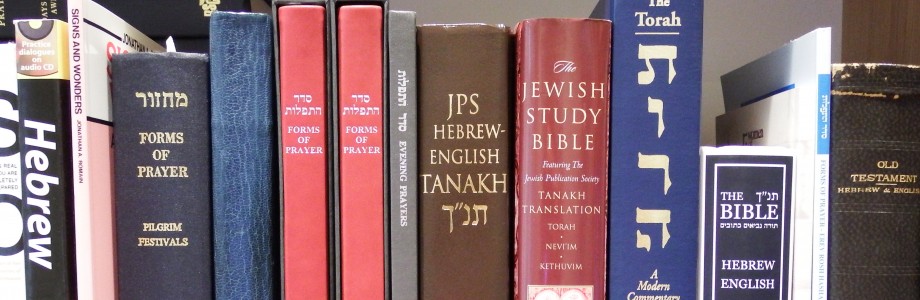
In the midst of the Covid lockdown, I was part of a group that launched the Alyth Chavruta Project – a course of Jewish learning that allowed members of Alyth Reform Synagogue to study traditional Jewish texts in pairs.
Since we were limited in how many could meet up in the same place, participants had the freedom to meet outside to study, or they could study together online or on the phone. Each pair would be sent the same text each week, and the whole group would then convene on Zoom to exchange ideas. It has continued to go from strength to strength. It was in this context that I was able to witness firsthand the power that Talmud study held for Progressive Jews.
In the 19th century, Progressive Jews were much less attentive to the Talmud than they were to the Hebrew Bible. But, by the time I was admitted to the Leo Baeck College in 2015, the study of rabbinic literature – and, at its core, the study of the Babylonian Talmud – was afforded pride of place in the curriculum. For the first three years of the five-year programme, I would spend seven and a half hours a week in the Beit Midrash (House of Study) with my fellow students, pouring over the Hebrew and Aramaic texts. But why is the Talmud such an important text for Progressive Jews to reclaim?
Progressive Jews should read the Talmud because it presents us with a multivocal tradition that is alive, constantly changing and rearranging itself in the light of contemporary challenges. The rabbis of the Talmud grappled with many of the same questions we do: Who counts as a Jew? How should we as Jews relate to non-Jews? How should we relate to other people? What are our obligations to our spouses and children? Is there anything that is worth dying for? What role does the Land of Israel play in the formulation our Jewish identities? Did God create us or did we create God?
As well as being challenged by many of the same issues we encounter as modern Jews, the rabbis of the Talmud also celebrated disagreement and diversity of interpretation.



In one famous, seemingly unresolvable disagreement between the Houses of Hillel and Shammai, the Talmud recounts that a divine voice came forth from heaven proclaiming: “Eilu v’eilu divrei Elohim Chayyim,” (these and these are the words of the living God).
The House of Hillel finally established the law, but the Talmud tells us that the reason their position was privileged was because they would teach both their statements and those of their opponents. And the Talmud continues to do this, often citing minority opinions and interpretations not followed by the majority.
While we may not agree with many (or any) of the conclusions of the rabbis of the ancient world, the document they produced was a blueprint – a blueprint for disagreement, evolution and renewal for each new generation of Jews.

Keep community journalism free.
Jewish News is free for everyone. No paywall. No barriers. Just trusted journalism for anyone who wants to stay connected to Jewish life in Britain.
If you value that, please support us.
From as little as £5 a month, you can help keep our journalism free and accessible to all.
Every day, we report on the issues that matter to our community. We celebrate achievements, support charities, challenge antisemitism and ensure Jewish voices are heard more widely.
From as little as £5 a month, you can help us continue to:
- Report on the stories shaping Jewish life in the UK and beyond
- Bring our community together through shared stories, events and campaigns
- Celebrate the people, culture and moments that define our community
- Support organisations doing vital work across Jewish Britain
You can make a one-off donation or become a regular supporter. Every contribution helps keep our journalism free, independent and accessible to all.
If everyone who values Jewish News gave a small amount, it would make a real difference to our future.