Prefer Jewish News on Google
Learning and legacy: unravelling a family’s migration and history
Gillian Mosely writes about her efforts to uncover the illustrious contributions of her forebears - in Spain, the Netherlands, the UK and America
Haham, Hazan, Ubercantor, Rabbi, Minister, Dayan, Knight, General, Professor. All are titles that have been used before the names of my ancestors. I’m exploring my heritage for a book idea, and it’s become obvious that themes implicit in our history have strong implications for today’s society. More widely, my family thrived and contributed to life in more than a dozen places.
But when I was growing up, it was my grandmother’s father’s family who dominated all such discourse, the De Sola’s. The name is in every English-language Sephardi prayerbook, the family’s contribution to Judaism and the Sephardim, laced through the history of Bevis Marks Synagogue, the oldest synagogue in Britain.
The De Sola’s alone were active in at least eight countries. We’re poster children for migration and status as refugees. And this has made me think carefully about concepts like resilience, home, identity, nationhood and the other. I cannot ignore our persecution during the Inquisition, 19th century pogroms, or the Holocaust. However, I also cannot ignore a legacy of overwhelming privilege, prosperity, and indeed service to society in every country we lived in.
My grandmother, Louisa De Sola, was born in Canada to Meldola De Sola, whose father Abraham, had left Britain in 1846 to become Rabbi in Montreal. Invited to address the US congress by Ulysses S. Grant, he was the first British rabbi to do so. He was also a noted scholar, writing widely on Jewish matters as well as on broader academic subjects ranging from zoology to cosmogeny to numismatics.
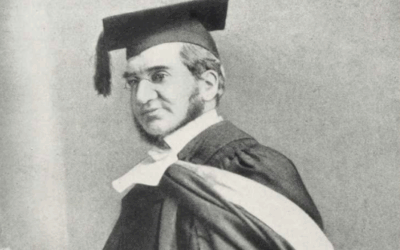
Abraham De Sola was sent to Montreal because his father Hazan David Aaron De Sola was still in position at Bevis Marks. D.A. De Sola had arrived in London in 1818, sent from Amsterdam to assist Haham Raphael Meldola. Himself from Livorno, Meldola had already instituted much change at Bevis Marks. This included improved relations between the Sephardi and Ashkenazi communities here, the institution of a choir at Bevis Marks, and numerous scholarly works on Jewish services and practices.
Marrying Meldola’s eldest daughter Rica, D.A. De Sola soon began to make his own pioneering contributions. In 1831 he preached the first sermon in English at Bevis Marks (previously delivered in Spanish or Portuguese,) and translated the Sephardi prayer book into English. The latter work was supported by Sir Moses Montefiore and several artefacts given by him to D.A. De Sola will be on display at the new Bevis Marks Museum when it opens. Like his father-in-law, De Sola was passionate about music, publishing a book on ancient Jewish melodies and composing a melody for Adon Olam, still sung today. One of his younger sons, Samuel De Sola, eventually succeeded him at Bevis Marks.
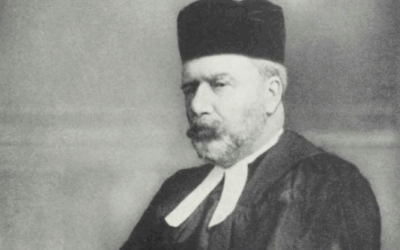
Information about these people is freely available online, with source material accessible at various libraries; and by and large the details of their lives have lived up to family lore. It was only when I started to think about writing about my ancestors (others as well as the De Sola’s) that clouds loomed. The first sign of trouble was when I discovered that the family tree I’d inherited (done prior to my birth,) tracing the family back as far as Spain in the 9th century, when the family name was Ibn Daud, had competition. Another I found online suggested the lineage could been traced to the 6th century, also Ibn Dauds in Spain.
This is where I need to say that I have spent more than twenty-five years making historical documentaries, and that history is my thing. I contacted David Mendoza (also a De Sola descendent) whose Sephardic Genealogical Society is in the process of raising funds for a wider online resource for Sephardi genealogy. The contradiction I’d encountered was common, David assured me. Aside from the writing project alluded to above, I am now talking to David and his colleagues about how we can solidify the De Sola family tree. I’ve not done genealogical work, but in addition to my decades helming history documentaries I spent several earlier years fact-checking for an encyclopaedia. The resource bases cross-over but are not entirely the same.
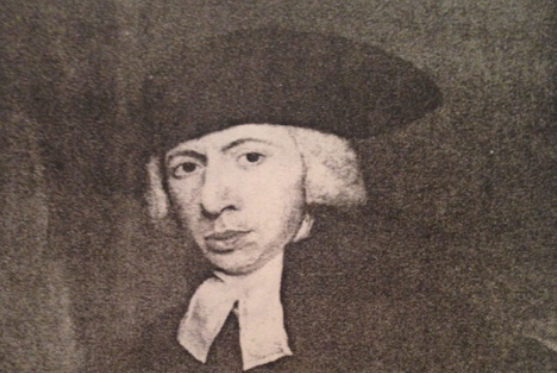
Abraham De Sola wrote a monograph about the family which goes further back detailing people like Benjamin De Sola, private physician to William V of Orange. I’m also interested in Isaac De Sola, who supposedly came to England from Amsterdam around 1670 as a lay preacher. Mendoza’s genealogy colleague in Amsterdam, Ton Tielen, has not been able to find information in the Dutch archives that backs this up, but Isaac is buried in the old cemetery in the East End, not too far from Abraham’s father, and I have a portrait of him, part of our collection of De Sola’s who lived in Britain.
Over time I hope to dig out documents attesting to the lives and endeavours of Benjamin, Isaac, and others. Over a thousand plus years, in addition to rabbis and dayanim, we held high office under the Moorish Caliphs, practised medicine and science, and wrote famous books on philosophy and astronomy, among other things.
In the meantime, the next step on my De Sola journey will be to spend time in Spanish archives pulling out everything I can about the De Sola’s and Ibn Dauds. What I already know is that there are at least three streets in Spain named after the De Solas – in Toledo, Barcelona and Rojales. A Spanish road trip clearly beckons. I can think of worse things.

Keep community journalism free.
Jewish News is free for everyone. No paywall. No barriers. Just trusted journalism for anyone who wants to stay connected to Jewish life in Britain.
If you value that, please support us.
From as little as £5 a month, you can help keep our journalism free and accessible to all.
Every day, we report on the issues that matter to our community. We celebrate achievements, support charities, challenge antisemitism and ensure Jewish voices are heard more widely.
From as little as £5 a month, you can help us continue to:
- Report on the stories shaping Jewish life in the UK and beyond
- Bring our community together through shared stories, events and campaigns
- Celebrate the people, culture and moments that define our community
- Support organisations doing vital work across Jewish Britain
You can make a one-off donation or become a regular supporter. Every contribution helps keep our journalism free, independent and accessible to all.
If everyone who values Jewish News gave a small amount, it would make a real difference to our future.