Prefer Jewish News on Google
Lihi Lapid’s new novel is a moving page turner about two families in crisis
The former 'first lady' of Israel started life as an outsider
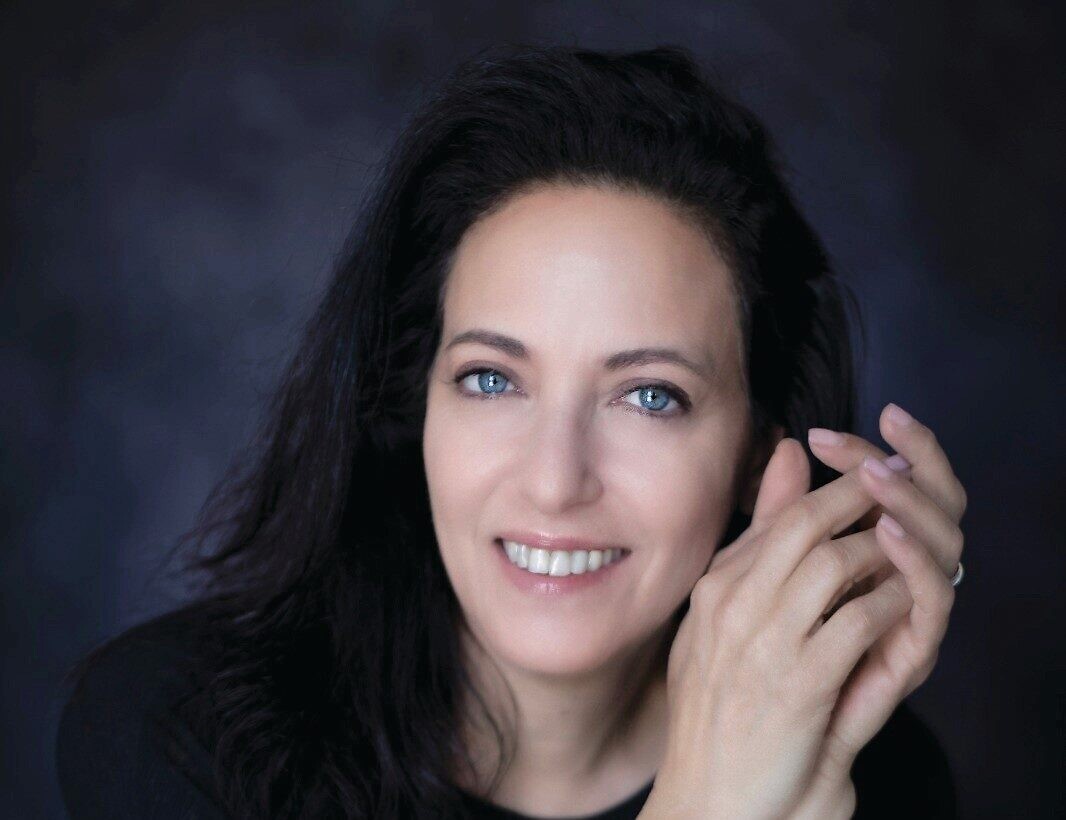
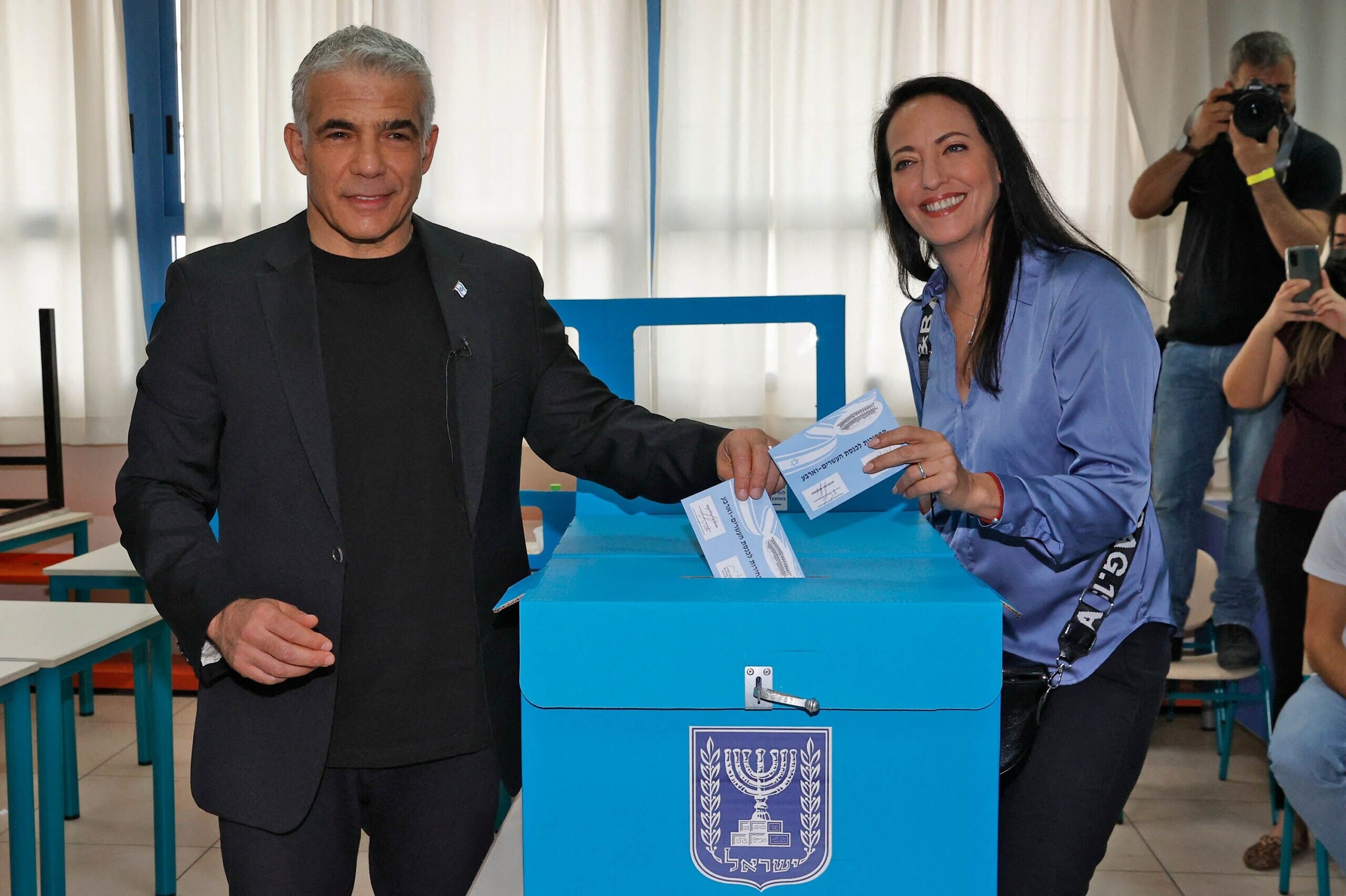
On the face of it, Lihi Lapid leads a charmed life. She is undeniably beautiful, a best-selling author and columnist, and – as a result of marrying the one-time TV star Yair Lapid, who was briefly Israeli prime minister and now leads the Opposition in the Knesset – is one half of the hottest couple in Israeli society.
And yet… Lihi Lapid has an absorbing and untypical back story. She started life in the desert town of Arad, which she wryly jokes is known primarily as the pitstop for bathroom breaks and a quick coffee for those on their way to Masada. Her parents moved the family to Ramat Hasharon, in the centre of the country, when Lihi was 11. And there she was catapulted into a “bourgeois” school where classmates’ parents were “CEOs, pilots or generals. My parents had a store” – and in fact her mother still runs it, selling Judaica.
So she knows very well what it is like to be an outsider and to live on the periphery of cool Tel Aviv, the focus of Israel’s cultural life. During her army service, when she worked as a photojournalist, she fell in love with Yair Lapid, who already had a failed marriage behind him, and a child. Yair Lapid also had a high public profile: his parents were the novelist Shulamit Lapid and the journalist-turned-politician Yosef (Tommy) Lapid.
That’s a daunting family for anyone to take on. But Lihi was determined to make her marriage work, both publicly and privately. She began writing a column with a pointed feminist slant for the newspaper Yediot Ahronot, and published a collection of those columns entitled I Can’t Always Be Wonderful. She wrote a well-received book, part memoir and part fiction, Women of Valour; and now she has written a fascinating novel, On Her Own, published in the UK this month.
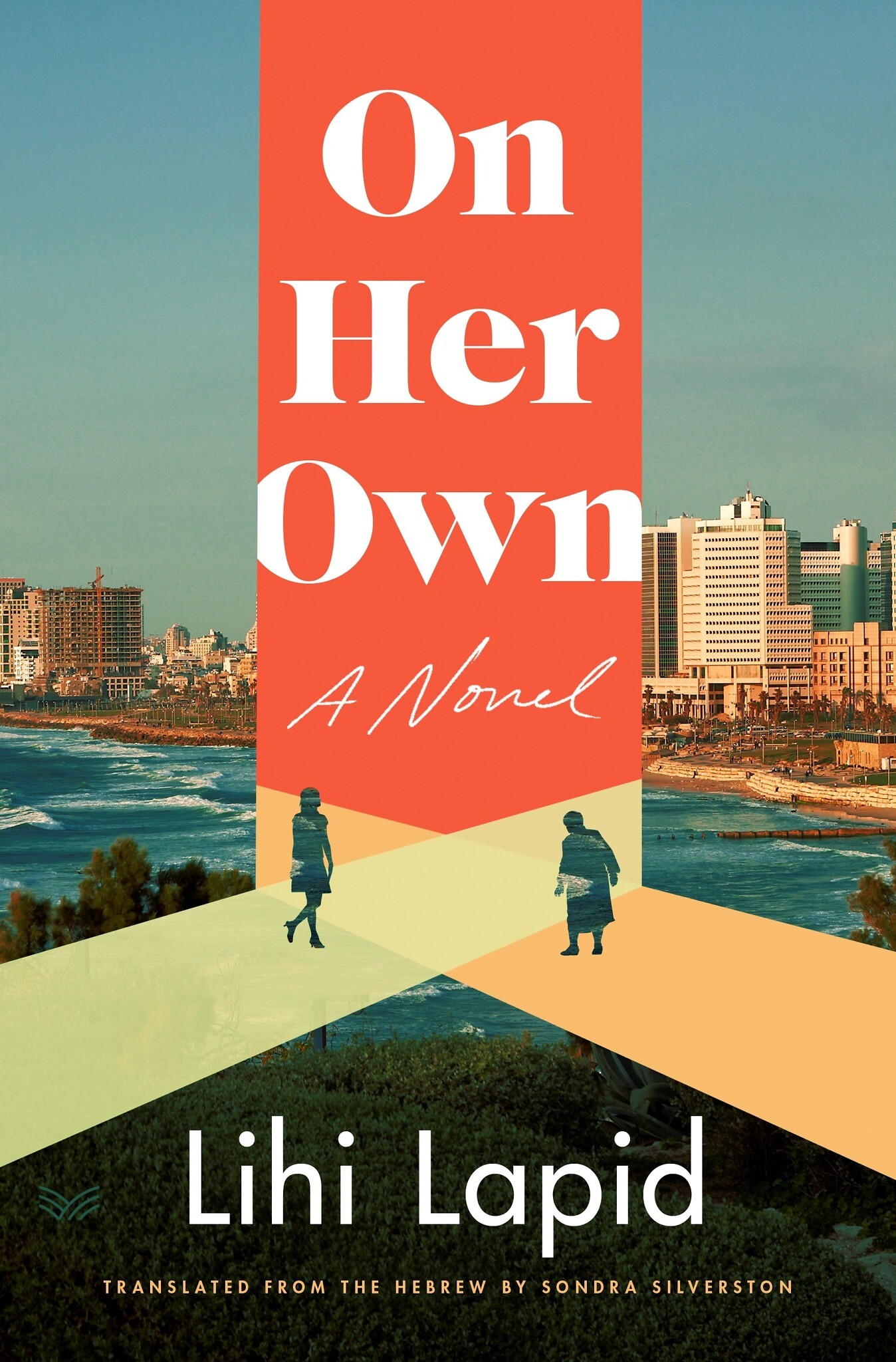 On Her Own (entitled – Strangers – when first published in Hebrew in 2022) is (mainly) the story of two women – one, Nina, an 18-year-old from just such a desert town as Lihi’s own birthplace, and the other the aging Carmela, who lives in extensive squalor in a Tel Aviv apartment. Nina is the daughter of a single mother, the Russian immigrant Irina, and, like all daughters, says Lihi, “believes she knows better than her mother”. Nina gets involved with the repellent criminal Johnny Shmueli and sees something she shouldn’t. When she ends up in the badly-lit stairwell of Carmela’s apartment building, Carmela initially mistakes the teenager for her own granddaughter, Dana.


Nina quickly realises that the mistake is the result of Carmela’s growing dementia – but buys into the error anyway, as a way of hiding from Johnny Shmueli while she works out what to do next. In reality Dana lives in America, and is the daughter of Carmela’s surviving son, Itamar, and his wife Na’ama.
The timespan of the book runs from Pesach to Israel’s Yom Hazikaron, or Memorial Day, the focus for Carmela to mourn her son Uri who died in combat 30 years previously. Lihi had just returned from a morning of political services and commemorations on Yom Hazikaron when we spoke – and clearly this was a Memorial Day like no other for her and thousands of Israelis.
Her book – for which she is currently working on a TV miniseries script – is launching in Britain and America against the febrile background of the October 7 war. Lihi has been front and centre in her support for the hostage families, desperately seeking morsels of news about those held captive by Hamas.
“Yesterday was my birthday,” she says. “I went to the sea with some friends. And I said, you know, if we walk along the shore for a few hours, we will get to Gaza. It is so close, and they — the hostages — are so close.”
Most of all she is agonising about the young women held captive in Gaza. She recalls a conversation she with a mother of a hostage, when the Israelis had been held for three months. Lihi did not at first realise the significance of this, until the mother said “after three months, they can’t carry out an abortion.” So this is yet one more of the unspoken traumas in Israeli society, the knowledge that many of the young women hostages are likely to have been raped and become pregnant by their captors.
“I am very disappointed by world bodies such as the Red Cross and United Nations Women,” says Lihi. “When there was the case of Malala (Yousafzai), who was shot by the Taliban because she wanted an education, we [in Israel] were all for her. But for our women?” She says she had believed that “women’s rights were above politics”, but there is a clear sense that is no longer the case.
Lihi and Yair have a son and a daughter; Yael, their daughter, is autistic and non-verbal. As a result of her daughter’s condition, Lihi Lapid became involved with the charity Shekel, which works with profoundly disabled people. In the immediate aftermath of October 7, Shekel, where Lapid is now president, opened its day care centres and did its best to offer some kind of alternative stability to those who had been evacuated from their homes in the north and south of Israel.
Israeli society was, and is, “devastated” by October 7, she says. “I like to compare us to David and Goliath. We in Israel think of ourselves as tiny David, but the world seems to think of us as the ugly giant, Goliath.” She expresses fear for what the Hamas attacks have done to Israel’s chances of making peace with its Arab neighbours, noting that “it will take time for Israel to trust again”.
The title of her book could almost be said to reflect Israel’s position right now.
On Her Own, by Lihi Lapid with translation by Sondra Silverston, is published by HarperVia, a division of Harper Collins, at £15.97

Keep community journalism free.
Jewish News is free for everyone. No paywall. No barriers. Just trusted journalism for anyone who wants to stay connected to Jewish life in Britain.
If you value that, please support us.
From as little as £5 a month, you can help keep our journalism free and accessible to all.
Every day, we report on the issues that matter to our community. We celebrate achievements, support charities, challenge antisemitism and ensure Jewish voices are heard more widely.
From as little as £5 a month, you can help us continue to:
- Report on the stories shaping Jewish life in the UK and beyond
- Bring our community together through shared stories, events and campaigns
- Celebrate the people, culture and moments that define our community
- Support organisations doing vital work across Jewish Britain
You can make a one-off donation or become a regular supporter. Every contribution helps keep our journalism free, independent and accessible to all.
If everyone who values Jewish News gave a small amount, it would make a real difference to our future.