Prefer Jewish News on Google
The friends who shouldn’t be – but have come together for peace
The Israeli and the Palestinian who are working together to promote reconciliation have written a book about their journey
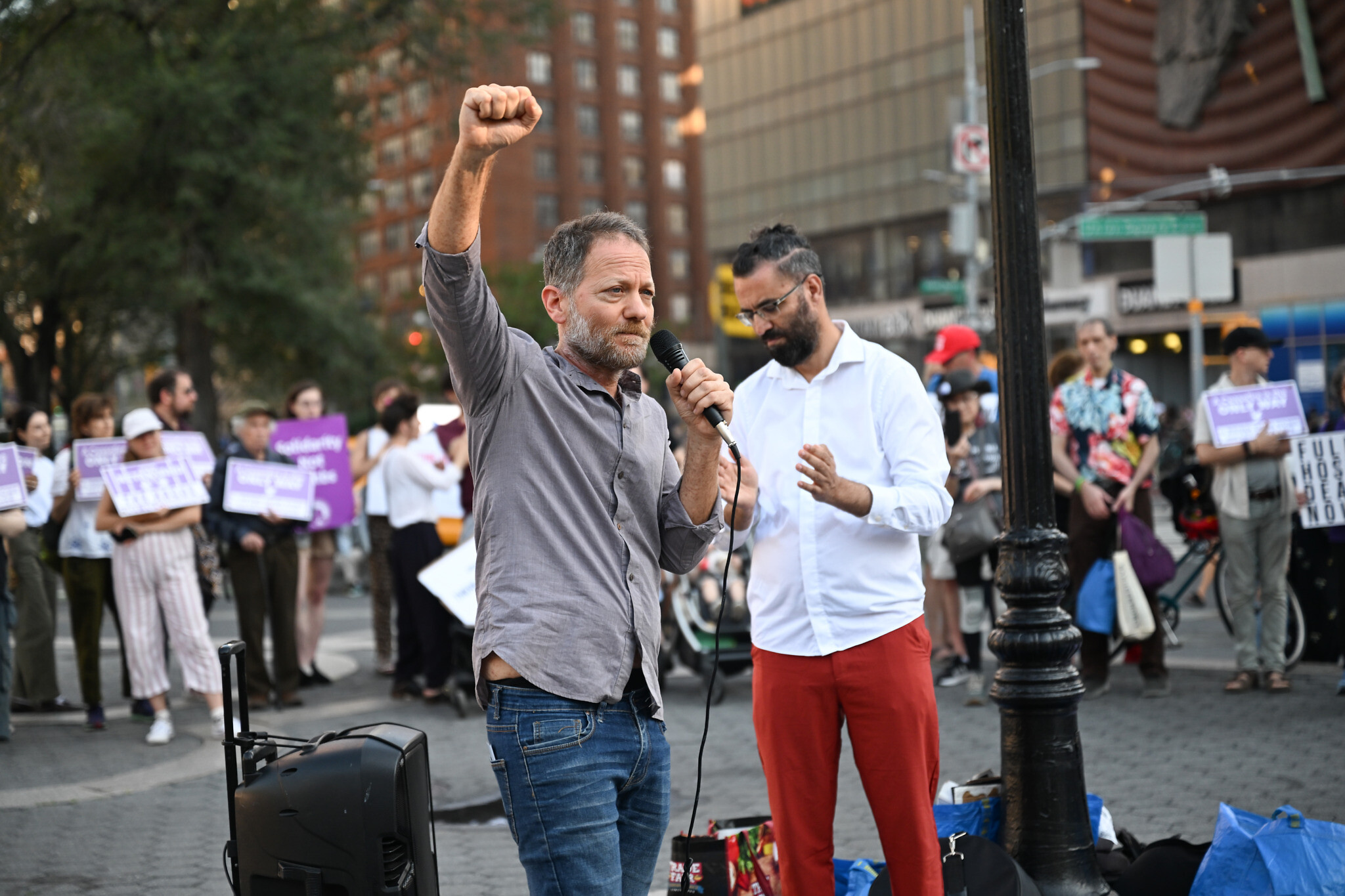
Maoz Inon and Aziz Abu Sarah are unlikely friends and colleagues. When Aziz, who is Palestinian, was ten, his older brother Tayseer was killed during the First Intifada by Israeli soldiers. On 7 October 2023, Maoz’s Israeli parents were killed by Hamas terrorists in their home on Netiv HaAsara, a moshav on the Gaza border. Three days later, Aziz reached out to Maoz, offering his condolences.
Although they had met briefly ten years before through their work in interfaith tourism, Aziz’s words were more than a message of condolence, writes Maoz in their book, The Future is Peace – they shone a light into the darkness. The gesture triggered a commitment for these two decades-long peace activists and tourism entrepreneurs to work together towards peace-making and reconciliation and, in the process, they have forged a bond of brotherhood.
The Future is Peace chronicles their eight-day journey across Israel and Palestine, undertaken in August 2024, during which they confront and explore each other’s personal, professional and national histories, including their respective losses and pain. The first step on the path to peace is listening to the other side’s story, they say in the introduction: “It sounds simple, but… it is often the most difficult step to take.” The book, rooted in history, mythology and theology, covers a different geographical location each day, including Tel Aviv, the West Bank and Nazareth. It is a candid, moving and inspiring account that offers a toolkit for bridging the divide; a reminder that “each one of us has the agency to change the future.”
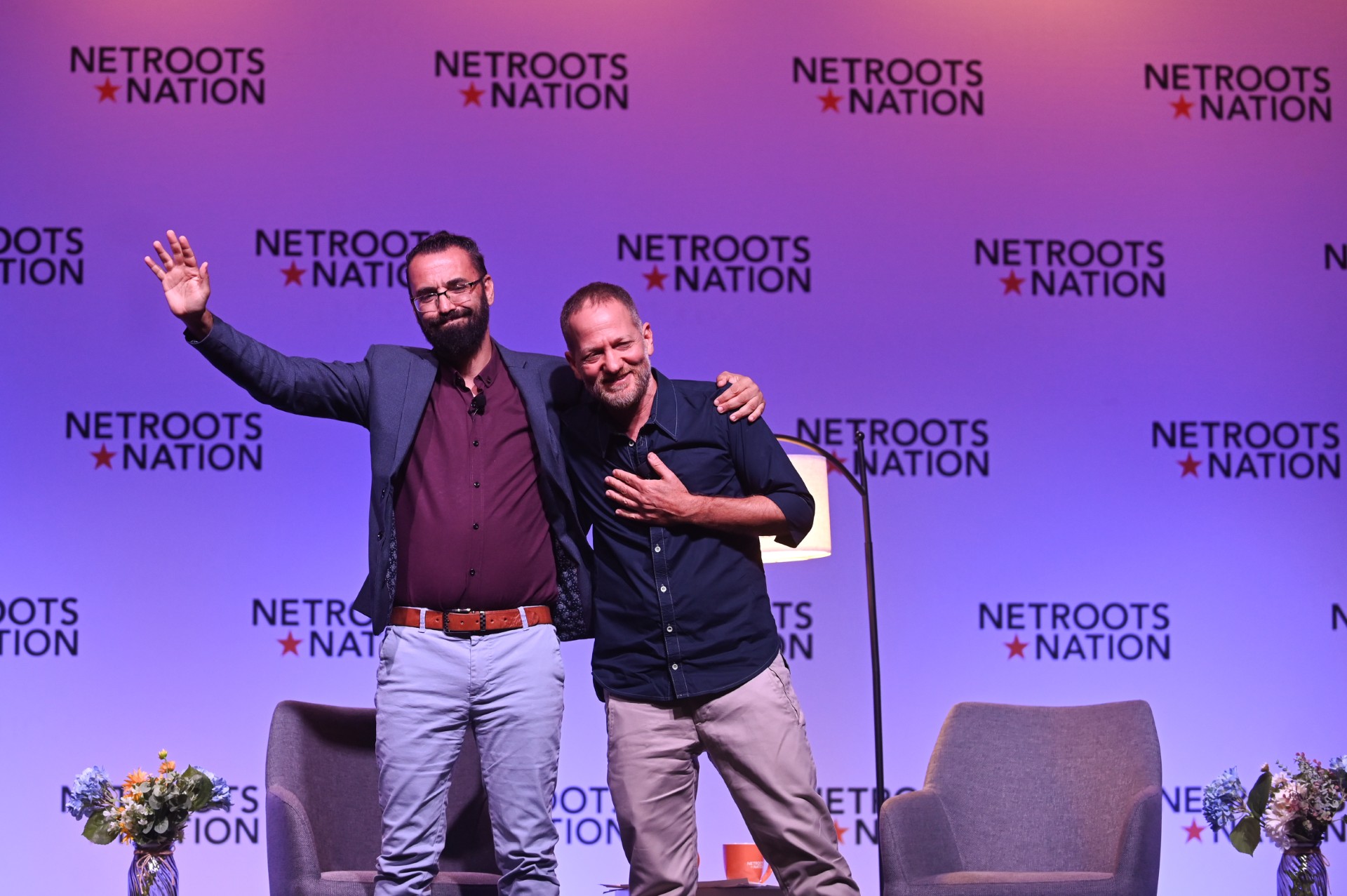
Usually, at the beginning of any interview or public speaking event, the two men embrace each other, “to prove we’re on the same side of equality, dignity and humanity,” explains Maoz (50). As we’re speaking via Zoom – Aziz (45) from the US and Maoz from Israel – this is obviously impossible but their synergy is apparent and the conversation moves effortlessly.
“Today, I need his hug more than usual,” Maoz says. Both admit it has been a difficult day: four Israeli soldiers died in Lebanon and the cousin of one of their friends and fellow peace activists was killed by the IDF. “We are living in a broken, devastating reality,” Maoz continues. “But being here with you and with each other, we believe that, more than ever, we must create hope.”


Underpinning the book is the belief that peace is possible. “It can happen in our lifetime or sooner than we can imagine, even within the next few years,” says Aziz. The manifestation of their unwavering commitment to create a better future for Israelis and Palestinians is their organisation InterAct, which aims to achieve peace and reconciliation by 2030 through education, dialogue and shared experiences.
“The UK and Northern Ireland are an example of one the world’s intractable conflicts which achieved peace – almost 30 years ago with the Good Friday Agreement,” he says. “If you asked somebody in 1995/6 if they believed an agreement would be reached, I can guarantee you – and I’ve spent a lot of time in Northern Ireland and the UK – that everyone would have said no. So, what we want people to take out of this book is that not only is it possible, but it’s also possible when you believe – and participate – in making it happen. If you think it’s impossible, it’ll never happen.”
The men refer to themselves as realists. They say that ongoing wars and conflict do not achieve long-term peace. But, I suggest, some might argue that they are dreamers. “Yes,” Maoz answers, “we are dreamers but dreamers with a plan. Those who believe that bombs will bring quiet and that war will bring security are naive because that has failed throughout history, not only here in Israel and Palestine.”
Aziz grew up in Bethany, a small Palestinian village in East Jerusalem and Maoz on Kibbutz Nir Am, inside the Gaza envelope, moving to Netiv HaAsara when he was fourteen. Their formative years were different, but they have a shared background of creating businesses in tourism as an act of peace-making. Maoz was the founder of the Abraham Hostels and the Fausi Azar guesthouse in Nazareth, now a cultural centre, and Aziz co-founded Mejdi Tours, a socially conscious travel company which created global, multi-narrative tours.
“When people look at an industry like tourism, they think of it as leisure, as fun,” Aziz explains. “And what we did was switch that. I think this is how people need to start thinking, in whatever business you are in, whatever talent you have. Think of how you can bring peace-making to what you do, how to make it a part of the values of your work and in every aspect of your life.”
 But peace-making comes at a high personal cost. For Aziz, it caused strain on his marriage and Maoz gave up running his businesses. Where are the boundaries? Maoz laughs before replying. “You touched on [something] because it’s very difficult to balance family life and our peace mission. I struggle but I try to spend as much time as I can with my family.”
The Future is Peace is not a book of political analysis. “We didn’t want to do that. There are tons of those,” says Aziz. “We wanted to write the book as a story. We wanted to go through this journey together and [recount] the [experience] as accurately as possible. And in it, we obviously share the history of the conflict.”
“I want to add that in many of the stories, we show the power of empathy and of solidarity,” says Maoz. “That this is the cure for anger, revenge and dehumanisation. And Aziz is the best example of that. He describes how his Ulpan teacher transformed his life at 18. She was the first Jew who treated and acknowledged him as a human being. Until then, Aziz thought that all Jews and Israelis were settlers or soldiers who wanted to kill him or displace him, his family and friends. But a small gesture of empathy, of recognition changed his life, leading him to become a prominent peacemaker.”
There is an Islamic proverb by Omar ibn al-Khattab, Aziz says, which he references in the book. “It basically says you cannot testify to somebody’s character unless you have travelled with them at least three days. And that is very true. We got to learn and understand each other more, as well as connect better with each other’s families. I think all these [elements] are very important when building a partnership and a brotherhood.”
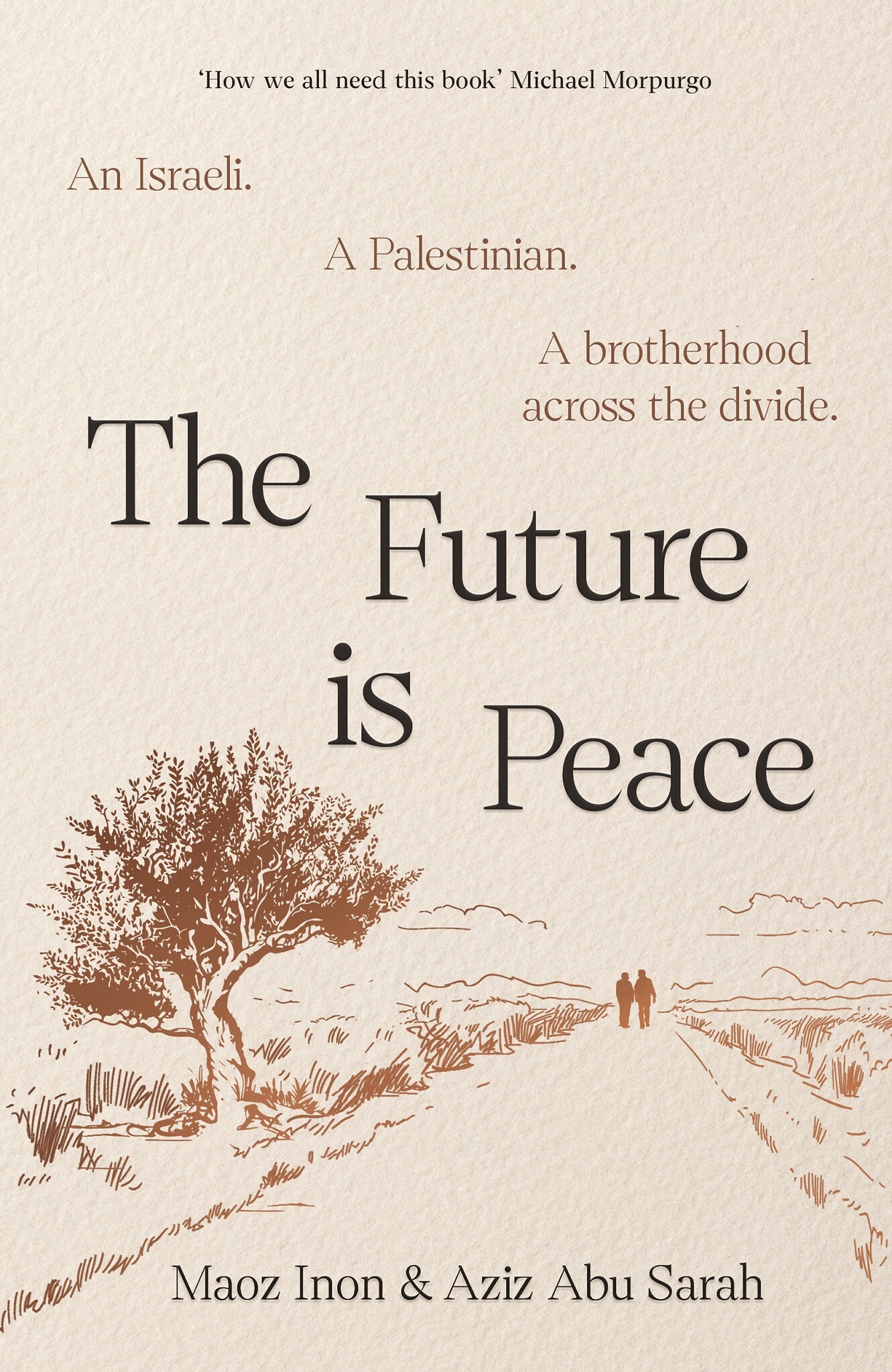
The Future is Peace (Canongate) by Aziz Abu Sarah and Maoz Inon is published on 23 April
Aziz and Maoz will be speaking at various locations in the UK in May, including at JW3. Click here for more details.

Keep community journalism free.
Jewish News is free for everyone. No paywall. No barriers. Just trusted journalism for anyone who wants to stay connected to Jewish life in Britain.
If you value that, please support us.
From as little as £5 a month, you can help keep our journalism free and accessible to all.
Every day, we report on the issues that matter to our community. We celebrate achievements, support charities, challenge antisemitism and ensure Jewish voices are heard more widely.
From as little as £5 a month, you can help us continue to:
- Report on the stories shaping Jewish life in the UK and beyond
- Bring our community together through shared stories, events and campaigns
- Celebrate the people, culture and moments that define our community
- Support organisations doing vital work across Jewish Britain
You can make a one-off donation or become a regular supporter. Every contribution helps keep our journalism free, independent and accessible to all.
If everyone who values Jewish News gave a small amount, it would make a real difference to our future.