Prefer Jewish News on Google
Seinfeld scriptwriter Peter Mehlman has penned a novel
The writer is as funny as the characters he creates
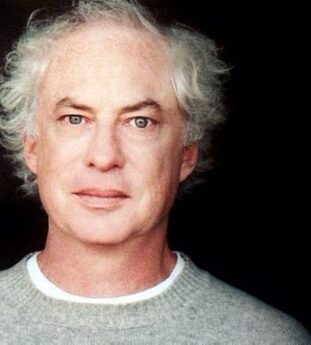
Peter Mehlman’s new novel started life as a film script. This is perhaps unsurprising given he is a Seinfeld writer who worked on the iconic show for almost its entire run and invented immortal Sein language like “shrinkage”, “double dipping” and “yada yada”.
Setting aside creators Larry David and Jerry Seinfeld, perhaps no writer in the show’s history understood quite what the show should be as much as Mehlman did and plenty of his episodes tend to place near the top of any rankings of the sitcom’s best.
The book, Deep Down Iola, is “a serious departure and very fantastical”, he says. It is about a girl in Alabama with “an extraordinary talent for talking kids off this ledge at a boarding school”. The story concerns how she obtained this ability in a previous life and feels a far cry from the Seinfeld focus on the minutiae of everyday life. The screenplay was optioned and David O. Russell was very interested but “things, as they do in Hollywood, fell apart”. Mehlman turned it into a novel since his career started in journalism, explaining: “I really do prefer to write full sentences.”
The transition to television was serendipitous. He had a share in a summer house in The Hamptons and met Larry David briefly in the late 1980s. The pair got along and, 18 months later, when they ran into each other in Los Angeles, David said: “You know I’m doing this little TV show with Jerry Seinfeld, maybe you could write a script.”
Mehlman had never written a script and so submitted a New York Times Magazine essay about walking the streets of Manhattan attempting to spot a celebrity in the immediate aftermath of a breakup. Seinfeld was so impressed with the bittersweet piece that Mehlman was handed the task of writing the show’s first freelance episode and the story became legendary amongst journalists keen to make a similar move into TV.



The writer misses the ability to shape the culture that came with working on arguably the definitive piece of 1990s culture and feels there is no space for a similar behemoth given the fragmentation brought about by streaming. He laments the state of the country in a broader sense and misses the heady days of lockdown when he “wasn’t invited to weddings and barmitzvahs”.
He says: “I can’t think of one good thing that’s going on. All of the worst instincts of humanity have been brought to the surface by Trump and the internet. I think we all assumed this country was full of racism and hatred but now it’s right out in the open. Things are really, really, really bad.”
As if things weren’t bleak enough, last year saw his mother pass away at the age of 101 and the South California wildfires wreak havoc in his neighbourhood. With regards the latter, Mehlman was fortunate and feels a sense of survivor guilt: “I got unbelievably lucky. The two houses within fifteen feet of where I’m sitting now burned down to the ground. My house survived it… That day somebody sent me a picture of my house in the foreground and the fires leaping out of the house next door so I spent six hours pretty sure my house was going to burn… Then I got a video of somebody driving on the street and my house was still there.”
Despite all this, he hasn’t lost his sense of humour, concluding the story with a punchline: “Those were the worst six hours of my life since the last time I attended the Emmys.”
Which unexpectedly brings us back to television. He recently bumped into his old boss at a restaurant and had an idea he felt would be just right for Curb Your Enthusiasm were it still on the air. “There was this woman who had been putting signs up all over the neighbourhood for her lost dog. Four weeks later the signs were still up and I ran into her and thought of Larry because he would say something to her.”
David laughed hard at the impersonation that followed, in his signature flat New York tone: “You know, maybe it’s time to take them down. The dog’s gone.” There is no longer the outlet but the Curb star confessed he “would have done that idea in a second”.
At least plenty of Mehlman’s ideas were used for David’s first masterpiece during that “wonderful detour” in his career that lasted close to a decade. He seems genuinely incredulous at the show’s staying power and received the ultimate compliment recently when he was approached by a veteran in his local coffee shop who had experienced incomprehensible horrors. He told Mehlman: “I had major PTSD and Seinfeld really helped me out.” Such is the power of one particular old sitcom and in the writer’s words: “That’s as good as it gets. It’s even better than the money… I’m just kidding.”
Kidding is what he does and so it is not a shock that he has turned his hand to stand-up in recent years. At one show, he told a joke that is nothing more than a play on words: “Isn’t it better that the Palestinians are occupied rather than just sitting around doing nothing?” An audience member misunderstood and started shouting that Mehlman was “in favour of genocide” before being removed from the venue. There was, however, a happy ending: “This was one of the rare moments where you get your faith back in humanity. Two guys from the audience offered to walk me to my car… They figured he could be waiting outside and I wouldn’t even know what he looked like.”
He was blown away by the gesture and, predictably, conveyed his gratitude with a joke, saying to the pair: “Jesus, you guys aren’t even packing heat (carrying a firearm).”
It might be in a novel, a television script or plain old conversation but it seems Mehlman, like Jerry in one of the great Seinfeld episodes he penned, just can’t help being funny.
Deep Down Iola is published by The Sager Group.

Keep community journalism free.
Jewish News is free for everyone. No paywall. No barriers. Just trusted journalism for anyone who wants to stay connected to Jewish life in Britain.
If you value that, please support us.
From as little as £5 a month, you can help keep our journalism free and accessible to all.
Every day, we report on the issues that matter to our community. We celebrate achievements, support charities, challenge antisemitism and ensure Jewish voices are heard more widely.
From as little as £5 a month, you can help us continue to:
- Report on the stories shaping Jewish life in the UK and beyond
- Bring our community together through shared stories, events and campaigns
- Celebrate the people, culture and moments that define our community
- Support organisations doing vital work across Jewish Britain
You can make a one-off donation or become a regular supporter. Every contribution helps keep our journalism free, independent and accessible to all.
If everyone who values Jewish News gave a small amount, it would make a real difference to our future.