Prefer Jewish News on Google
London vigil hears testimonies of settler violence ahead of Human Rights Day
Jewish-Palestinian movement’s London supporters detail West Bank harassment as rights group warn of worsening abuses
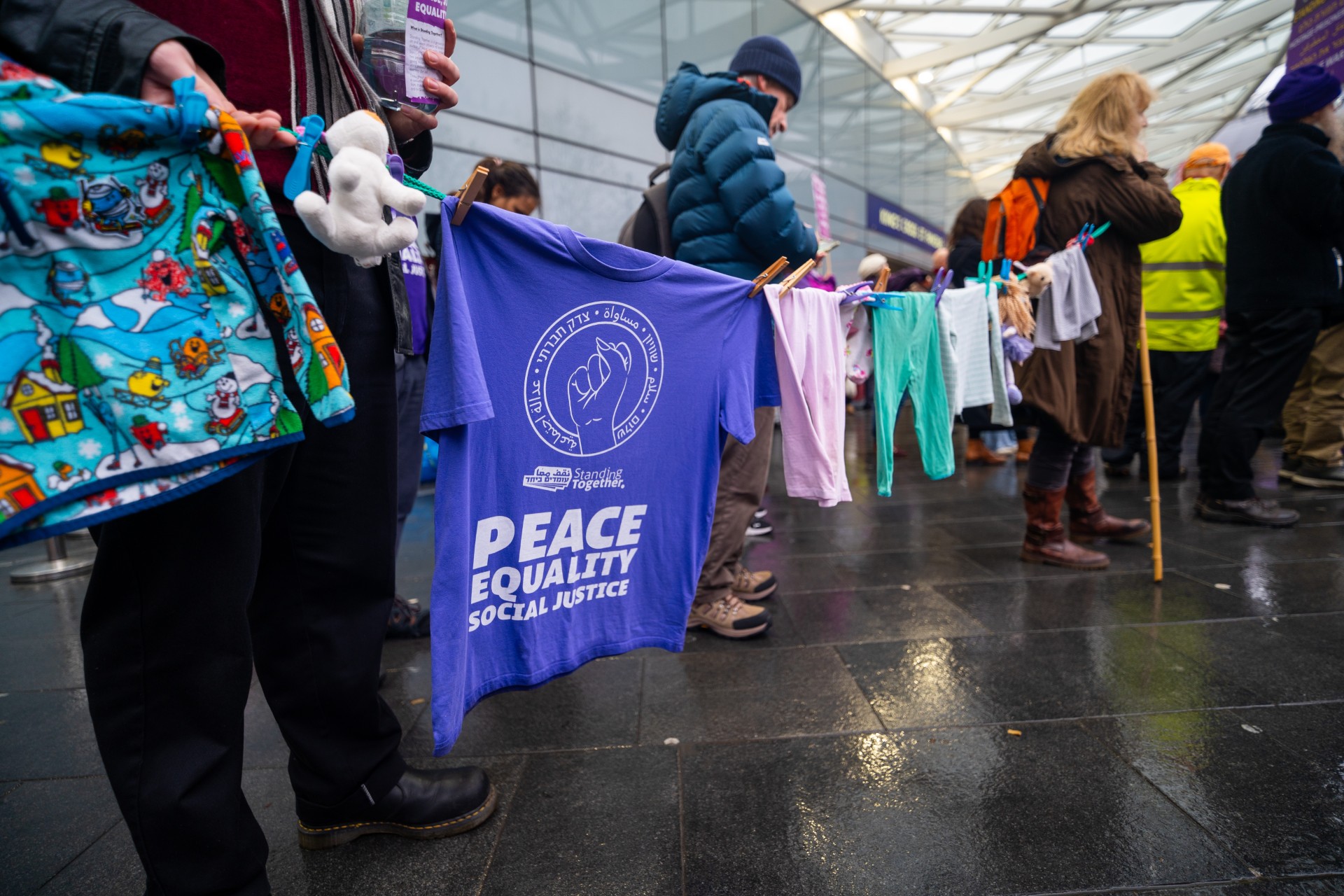
Supporters of the Jewish-Palestinian grassroots movement Standing Together gathered at King’s Cross on Sunday, hearing stark testimony of escalating settler violence during this year’s West Bank olive harvest as they marked Human Rights Day.
Londoner Marcia Gamsu described joining Rabbis for Human Rights, Standing Together activists and international volunteers in Qarawat Bani Hassan to support Palestinian farmers whose groves have faced increasing attacks. She recounted how a drone monitoring the group crashed and injured an Israeli volunteer before two armed settlers in army fatigues arrived, pointed rifles at the activists and fired into the air.
“When the settler fired his gun, I was really frightened,” she said, adding that the incident – later filmed by volunteers – might otherwise have been misreported. The village mayor told the group such harassment was “a daily experience” for residents.
Speakers said one of the settlers involved was dismissed from reserve duty, while the other received only a warning, which they argued reflected systemic failures by police and the army to curb violence.
Gamsu said the biblical symbolism of the olive branch now felt “inverted”. “It signals the end of destruction and the return of life. Now it feels as though this symbolism has been turned into power and violence.”


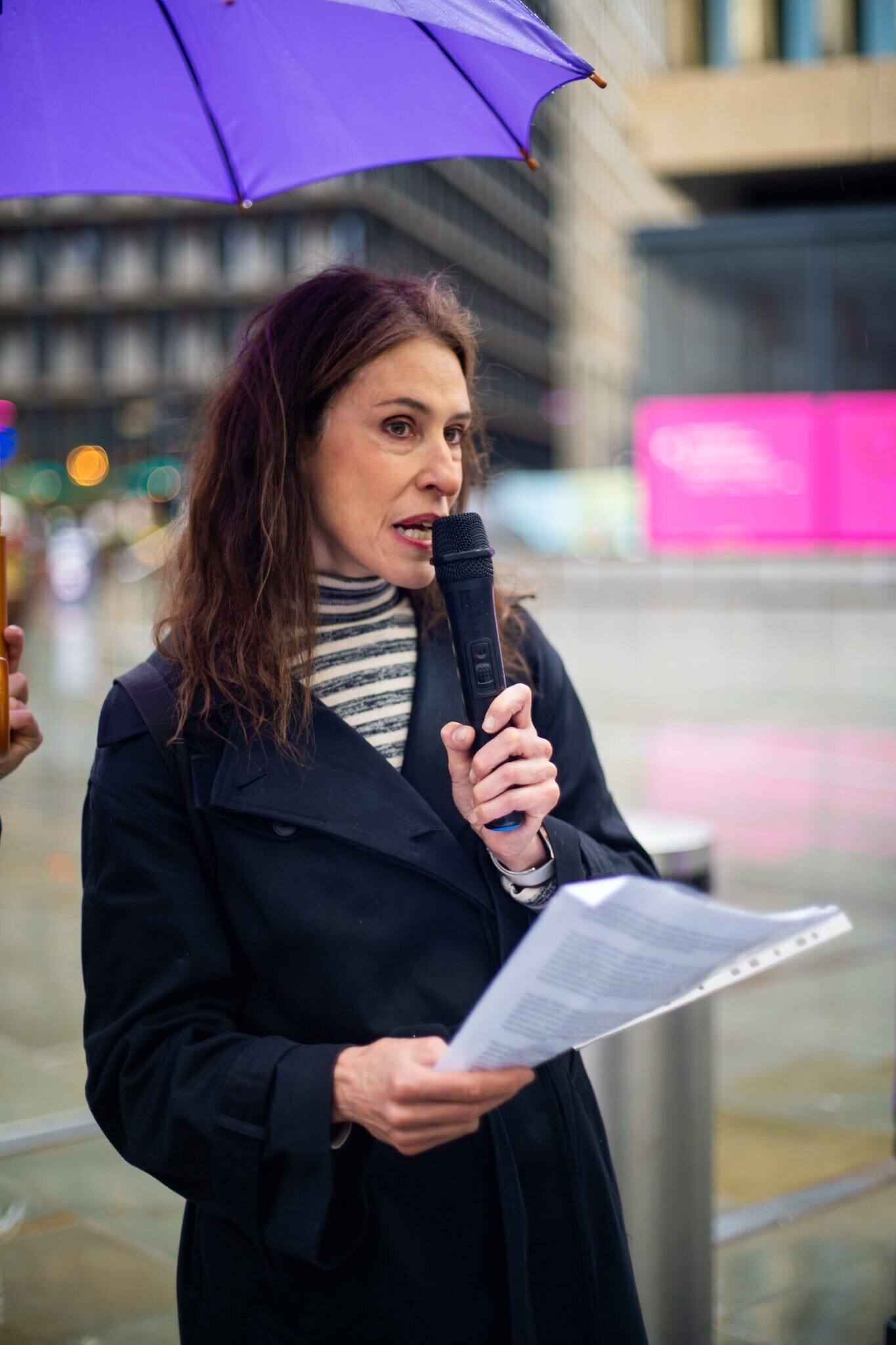
Poet Jane Liddell-King, who read from her work, spoke of the seasonal link between the olive harvest and Chanukah’s theme of olive oil as a source of light.
Marking the approach to Human Rights Day on 10 December, speakers invoked the Universal Declaration of Human Rights and its relevance for Israelis and Palestinians.
Yaniv Aknin, an Israeli from Tel Aviv now living in London who served seven years in the IDF, said he was “shocked and alarmed” by Israel’s trajectory. “We keep deteriorating, in Gaza, the West Bank and East Jerusalem, and also internally towards Israel’s citizens, primarily but not only non-Jews,” he said. Protecting human rights, he argued, “makes a society stronger”.
“No hope but peace,” he added. “No hope unless Israelis and Palestinians realise they must work together to end the conflict. Or the conflict will end us.”
Dr Jasr Kawkby, a Palestinian doctor from Gaza based in London, emphasised that the Universal Declaration was shaped “after the Holocaust, the greatest single crime against humanity”, arguing that its principles require solidarity with “those whose rights to life, dignity and freedom have been violated” – including Israelis killed on 7 October and Palestinians suffering in the war.
He accused Israel of violating “nearly all” human rights principles under its current “extremist and war criminal” government, while stressing that these universal standards apply equally to Palestinians. “Our resistance must remain rooted in human rights,” he said, calling for a reckoning with “the reckless leadership of Hamas”.
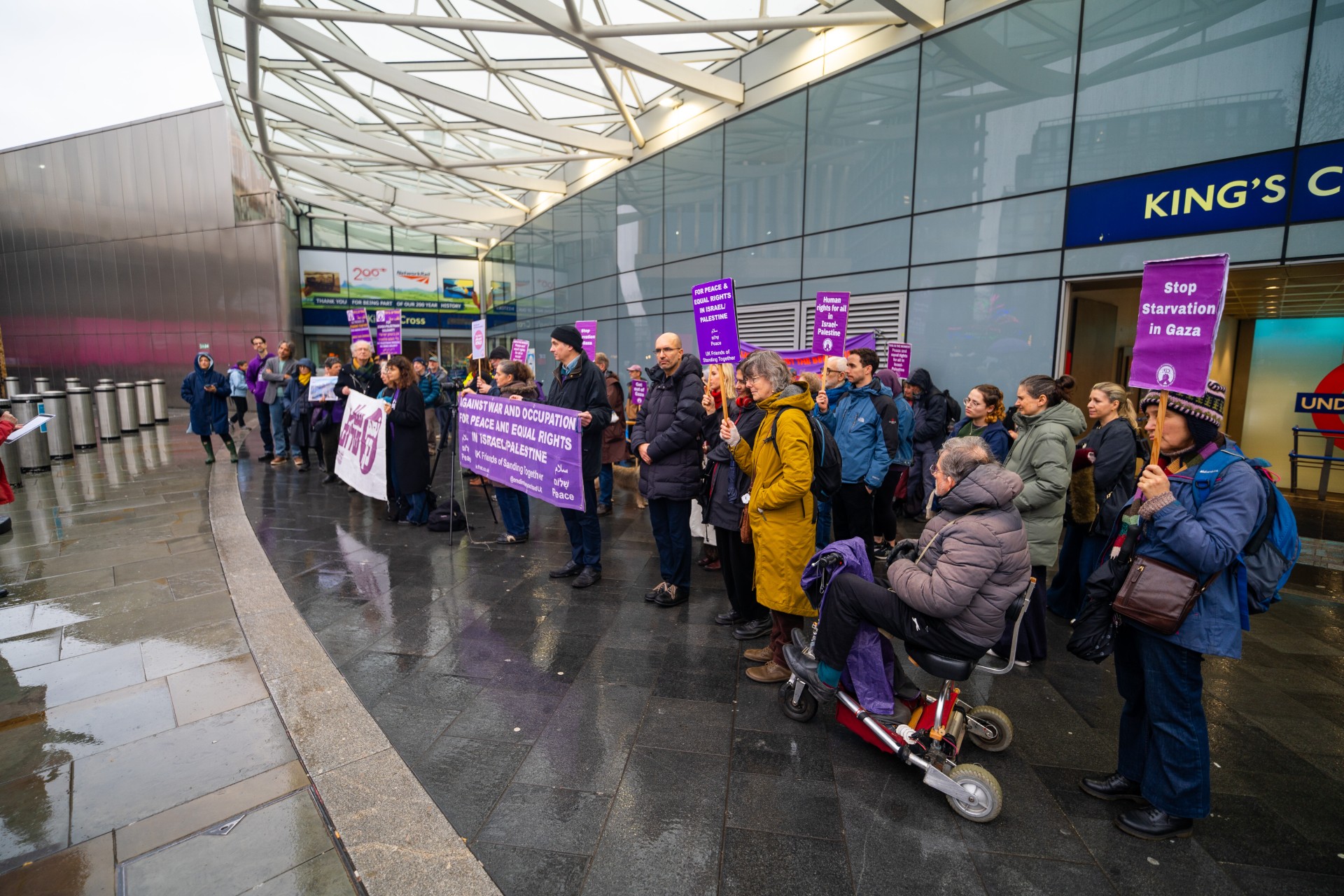
Abraham Dein
Envisioning a future shared by both peoples, he urged “broad Palestinian, Israeli and Jewish alliances” committed to equality and freedom for all “living between the river and the sea”.
FoST has held monthly vigils since February 2024, sharing testimonies, poems and songs by Jewish and Palestinian speakers. Standing Together – Israel’s largest Jewish-Palestinian grassroots movement – campaigns for an end to occupation, full equality, and a political resolution to the conflict.
This year’s Human Rights Day theme, Everyday Essentials, highlights how basic acts – such as movement, family life and access to clean water – depend on fundamental rights.

Keep community journalism free.
Jewish News is free for everyone. No paywall. No barriers. Just trusted journalism for anyone who wants to stay connected to Jewish life in Britain.
If you value that, please support us.
From as little as £5 a month, you can help keep our journalism free and accessible to all.
Every day, we report on the issues that matter to our community. We celebrate achievements, support charities, challenge antisemitism and ensure Jewish voices are heard more widely.
From as little as £5 a month, you can help us continue to:
- Report on the stories shaping Jewish life in the UK and beyond
- Bring our community together through shared stories, events and campaigns
- Celebrate the people, culture and moments that define our community
- Support organisations doing vital work across Jewish Britain
You can make a one-off donation or become a regular supporter. Every contribution helps keep our journalism free, independent and accessible to all.
If everyone who values Jewish News gave a small amount, it would make a real difference to our future.