Prefer Jewish News on Google
In Depth: The challenges Jews face, from London to New York
Jewish News speaks to Leo Pearlman in London and David C Kaufman in New York about shared challenges for Jewish communities

In the fairly recent past, it was not uncommon for American Jews to look at the challenges being faced by their co-religionists in 21st century Europe – particularly in the UK – and treat these with an air of dismissal, even a vague contempt. The American Jewish community was far bigger and seemed culturally embedded in a way that other diaspora communities, even older ones, could not hope to match. The everyday challenges faced by Jews in Britain, for example, seemed not to apply across the Atlantic.
That is no longer the case. In the last few years – but particularly since 7 October 2023 – certain truths have become apparent to many Jews in both places. The first is that the UK and the US face certain shared challenges with regards to antisemitism. The second is that both Jewish communities seem completely unable to create a concerted strategy to combat that surge in Jew-hatred.
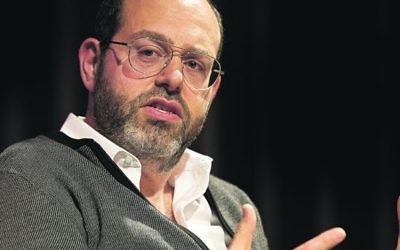
Jewish News sat down with two Jews – one British, one American – both forthright in their view of the issues faced by communities on either side of the Atlantic. Leo Pearlman is a prominent UK film, TV and music producer, while David C Kaufman is a New York based journalist.
As Leo outlines, the issue in the arts world in the UK over the last two years had been particularly stark.
“I think 7 October kind of stripped away a lot of illusions, a lot of things that we were pretending to ourselves and to one another,” he says.

“Because the shift since 7 October certainly hasn’t been subtle in the arts and media scene. I would say it’s been seismic.
“Before, I think any of us who’ve worked in the industry for long enough, we kind of knew that antisemitism at least had the good grace to hide behind polite euphemisms – ‘Anti-Zionism’, ‘inclusivity’, ‘equity’. 7 October just kind of allowed everyone to be explicit. Thousands upon thousands of people within our industry signing letter after letter, condemning the State of Israel, condemning the only Jewish state, but not a single word – I really mean, virtually not a single word on 7 October or in the days that followed.”
He describes how “something that was incredibly noticeable to all of us was this deathly silence from people who previously you had thought of as being colleagues, allies, whatever description you want to use. And this realisation that when you reached out to have what you thought were pretty benign conversations about support, you were shut down almost instantaneously.”
He is clear in his diagnosis of the situation.
“I would say that what we’re witnessing is not about Gaza; it’s about which minorities deserve empathy. and which don’t. And I think that certainly in London, it’s become clear that in cultural spaces, at least, diversity and empathy includes everyone except for Jews.”
At the same time, major media publications in America are following a path trodden decades ago by the Guardian in the UK – moving from a broadly supportive view of Israel and Zionism to the exact opposite. The New York Times, for example, has run fawning interviews with a rogues gallery of anti-Israel extremists over the last two years, including one individual who response to Hamas terrorists live-streaming their massacre on 7 October was to tweet, ‘can someone please tell the freedom fighters in Palestine to flip their phones and film horizontal.’
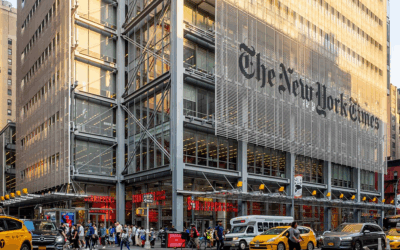
David, a former editor at the New York Post, says that “the irony is that the pro-Palestinian crowd actually believes the New York Times is pro-Israel. They actually say the New York Times has blood on their hands, and it couldn’t be more incorrect.”
24 hours after we speak, hundreds of ‘pro-Palestine’ activists announced they would not write for the NYT over the ‘the anti-Palestinian bias in the paper’s op-ed pages’.
“I think part of the issue is a generational shift”, Kaufman says.
The New York Times is the prime example, but you have lots of other companies, particularly, say, Conde Nast, which owns Vogue, and The New Yorker and Vanity Fair… you see lots of articles talking about Palestinian suffering, and queers for Palestine, and constantly finding way after way after way to elevate, regurgitate and almost manufacture stories that will highlight Palestinian suffering, but you see none of that on the other side when it comes to Jews and to Israel.
“There’s almost a silence and unwillingness to sort of humanise Israelis, Jews, and Israel, because the people at the top are terrified of their younger, woker, 20-something-year-old, junior editorial people staff who are going to complain and say ‘my company is pro-Israel, my company is pro-genocide, and we’ll put this on Twitter, we’ll put this on Instagram, we’ll put this into Reddit’.”
Pearlman believes that in many ways “New York and the US in general is experiencing a lot of the things that we went through during the Corbyn years, which effectively enabled there to be this rise in the watermark in [terms of what] was and wasn’t acceptable”.
He cites Louis Theroux’s recent podcast interview with Pascal Robinson-Foster, the frontman of punk-rock duo Bob Vylan. In June, Robinson-Foster made headlines due to a set at Glastonbury where he ranted about a “Zionist” former producer he had worked with and led the crowd in chants of “death to the IDF”. The BBC’s Executive Complaints Unit would subsequently state that “the content of this act, taken in the round, can fairly be characterised as antisemitic.”
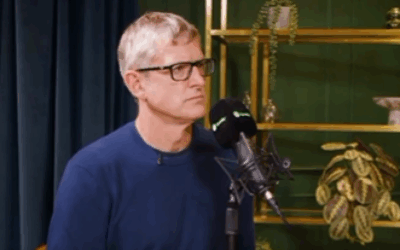
Theroux “didn’t just platform him”, Pearlman said.
“He didn’t just allow him to go unchallenged through a series of excuses and explanations – very poor ones – for why what he said, he would do again, and it wasn’t hate crime, et cetera, et cetera.
“He [Theroux] actually intellectualised the antisemitism, in a way that was truly chilling, far more frightening, actually, than the idea of a punk rock band shouting some stuff on a stage in Glastonbury.”
But the BBC response to that has been non-existent, despite the fact that Theroux continues to be a regular contributor.
“John Torode, as an example, was fired from his job [as a presenter for BBC’s Masterchef] for apparently using a racist word in private some six, seven years ago”, Pearlman says.
“And yet, to the best of my knowledge, I have not heard the BBC yet comment on Louis Theroux… So, yeah, the dual standard is frightening”.
Kaufman believes the situation in the US is similar.
“Pre-Trump, but even still today, if you were to use that kind of language for any other minority group, there would be an immediate backlash, and there would be immediate, general clamour for consequence”, he says.
“And when it comes to Jews, there’s just no demand for consequence. I mean, people are allowed to sort of just do what they want. There’s this very laissez-faire attitude towards the not-so-casual anymore antisemitism that’s percolating through the culture.”
Something both find exceedingly hard to understand is the polling ahead of New York’s Mayoral election. The frontrunner, Zohran Mamdani, is longstanding vehemently anti-Zionist activist, who repeatedly refused to condemn the phrase “globalise the intifada”, and footage of whom from 2023 recently resurfaced in which he claimed that “when the boot of the NYPD (New York Police Department) is on your neck, it’s been laced by the IDF”. Yet a significant percentage of Jews in New York have indicated that they will still vote for Mamdani – a markedly different situation than in Britain under Corbyn, when British Jewish support for Labour languished in the single figures.
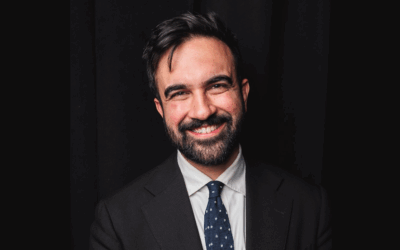
“The shocking thing to me about this is that British Jews have always had this perception of American Jews being loud, proud, outspoken, especially New York Jews”, says Pearlman, describing the city as a place “where you can wear your kippah in the street, Magen David around your neck, and you’ll get high fives for doing so… the comedy, the culture, the food, the theatre.”
Seeing polls which suggested more than 30% of New York Jews would vote for Mamdani, he said, felt “seismically shocking to me as a British Jew, because I always looked at the Americans and were like, well, they’re the ones who will always stand up.”
Kaufman, who is Jewish, African-American and gay, sees a fundamental difference in how many American Jews view themselves.
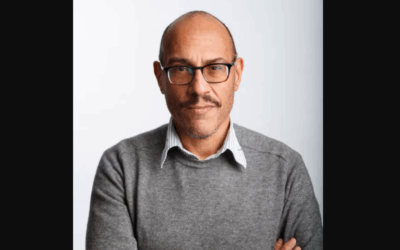
“I speak as somebody who has a lot of different identities”, he says.
“No Black person in America – no matter how assimilated, how accomplished or how wealthy – no Black person in America would believe or think for a second that they’re exempt from racism. They understand that the dynamics of racism are just bigger than them. You can’t control how and what racists think about you. You just have to sort of deal with it and defend yourself and take the proper actions.
“But so many American Jews bafflingly believe, for some reason, that they can exist exempt from antisemitism, so that if they are the right kind of Jew, if they say the right thing, or parrot the right party lines – if they’re vocally anti-Zionist, that they will not have to experience the vitriol that those of us who are pro-Israel experience.
“I think, also, there’s this feeling amongst American Jews that if only we do this, they will hate us less. No. There’s nothing you can do to make them hate you less. They hate you because of who you are, and you cannot do anything about that.”
In a way, he explains, the US Jewish community has been a victim of its own success.
“American Jews do exist with a certain level of privilege, power and control”, Kaufman says, “in the sense that most American Jews have been highly in control of their own lives, of their own businesses, of their own families, of their own careers, of their own places and positions within society, and they’ve been able, , to succeed that way.
“Suddenly, you’re telling these people that all of that, on a certain level, was a sham, was a facade…and we as a community have not done our job to adequately prepare, because we’re not acknowledging it. Because we refuse to say it, we are not really giving the community tools in order to deal with this.”
The political situation in both countries remains shaky as well, alongside massive surges in antisemitism.
Pearlman believes that since 7 October, successive British governments have done “virtually nothing” to stop the “exponential” rise in Jew-hate. He contrasts that with the approach to a far-right march which was set to be held last month through Tower Hamlets, the borough containing the largest Muslim community in London.
“It was clearly a march planned only to provoke, no doubt about it,” he says.
“I have no issue whatsoever that the police decided to ban this march. In fact, I think they’re absolutely right to do so. They just said, ‘you can’t go and do it in the largest Muslim community borough in London. That’s unacceptable’. And they were right.
“However, the light this shines upon the Mayor’s office, the government, the Crown Prosecution Service, the Met Police, on the fact that for two years, Jews in this country have been begging, pleading, crying for somebody to do something about the fact that central London is a no-go zone for the vast majority of Jews. We’ve been begging for those marches to be managed. We’ve seen Jews be told that it is provocative to go near those marches if you are wearing a Magen David.
“The march in Tower Hamlet is rightly banned, because it would provoke a reaction, not the opposite way round. I think the quote from the from the Met Police was that there was ‘a serious chance of, of disorder’.
“So, in fact, what we’re saying is, if Jews were slightly more violent, if Jews were going to turn up and counter-protest and cause a disruption and throw things or burn things – examples that we’ve all seen on our streets – then maybe the marches would have been cancelled. But what we’ve been lied about is the fact that there was nothing that we could do.
“I take a look at the politics of this country, and I think about this idea of equality. All we see is selective enforcement of empathy. That’s all it comes down to. Starmer can talk now about zero tolerance. The reality is that tolerance for antisemitism has been written into the new moral hierarchy – Jewish fear just doesn’t count. It doesn’t register.”
Kaufman agrees, but also details how in New York, there has been an active effort to pit Jews against each other on the issue of antisemitism.
“Yesterday 650 rabbis came out and said that Mamdani basically poses a threat to Jews in New York City, but Mamdani doesn’t just pose a threat to Jews in New York”, he says.
“Mamdani has singularly positioned Jews against each other in order to promote his agenda. He has only, recruited Jews to speak against other Jews to prove that he’s not antisemitic. So some Jews are saying Mamdani’s antisemitic. He trots out ‘Jews For Mamdani’ to say, ‘I’m not antisemitic, because these Jews say I’m not’. We don’t see Mamdani, marshalling Black people – ‘Blacks for Mamdani’ – in order to disprove blacks who might think he’s racist. We don’t see Mamdani marshalling ‘Gays for Mamdani’ to disprove LGBT people who might think he’s homophobic, despite the fact that he is from the most homophobic country in the world [Uganda] and owns property there and vacations there. Only Jews does Mamdani pit against each other in order to prove that he’s not antisemitic.
“As far as I’m concerned, that is the antisemitism. His double standard, his willingness to exploit Jewish vulnerability in order to prop up his own candidacy. If he gets into office, this will then now become institutionalised. And that’s what makes him so dangerous, I believe, to Jews all over the world.”
Pearlman sees parallels in the Mamdani situation and what happened with Jeremy Corbyn as Labour leader from 2015-2020. The concept of the Overton Window is the spectrum of ideas considered political acceptable to the mainstream population at a specific time. The window shifts, meaning that ideas that may have been unacceptable in general society a few years before are now tolerated, and vice versa.
“The platforming and the legitimisation of certain voices is exactly what happened under Corbyn; you started to get the people who were at the extreme fringes stood in places that they would never have had access to”, he says.
“That is a frightening prospect for New York, and for everyone.”
Ultimately, they both express significant dissatisfaction with the current slate of Jewish professional organisations, who they believe have failed to rise to the challenges faced by Jewish communities. Pearlman says frankly that they are “not fit for purpose”.
“For the first year, post-7 October, every conversation one would have with a communal organisation was, well, ‘how do we talk about being Jewish without talking about being Zionist’,” he says
“I was like, what…are you talking about? The two are intrinsically linked. We are not Jewish without our connection to our homeland, and to the only Jewish state. And the sooner that you own that narrative, the sooner that you plaster it across the poster that you put up, the better. Because [otherwise] you’re playing into the trap that they’re setting for you. You’re basically saying, ‘I’m going to be careful around you’. Don’t be careful!”
He sees part of the issue as being that “from a UK perspective, the traditional community organisations are, by their very nature, broad tent, they are built to speak for all Jews, they’re representative of the entire community.
“So, even if you have a small but very vocal percentage, who are progressive reform, left-wing Jews who will speak out against Israel – and if not directly against, then never in favour of – they end up being a vocal voice within that communal organisation.”
He views communal leaders as being hamstrung by that reality; “ultimately, you are not able to speak to your own beliefs, you are having to represent this broad church.”
Pearlman believes that “at a time like this, the majority of the community, who speak for, I believe, our community’s future, they need a very different kind of voice. That voice needs to be grassroots-driven, activist-driven, it needs to lack fear of consequence, it needs to be about Jewish pride.”
Kaufman, similarly, is “not optimistic about the American Jewish system, the American Jewish leadership. I think a lot of them are just waiting for the war to end to go back to the way things were before.
“The bigger problem is that these organisations have spent the last 30 years championing the interests of every other minority group besides themselves… as Leo was saying, the loudest voices in the room dominate. So even if you have a Jewish group where 98% believe that we should have a pro-Jewish focus first, a pro-Israel focus first, that 2% will dominate because people are afraid to tell them to shut up. So I, again, I think that until we have a demand from the Jewish community, by the Jewish community, to the Jewish community, to prioritise ourselves, that won’t happen.”
How should one engage the Jewish leadership to make changes? Kaufman is very frank.
“You demand the changes, and if they don’t make the changes, you don’t fund them”, he says.
“As far as I’m concerned, no Jewish organisation in America today should be funded by Jewish philanthropists if they’re not prioritising Jews, prioritising combating antisemitism, prioritising combating anti-Zionism. There must be a Jewish-first approach to everything the Jewish institutions do today in America, because we have to take care of ourselves. Nobody’s coming to rescue us.
“I wrote a piece recently; it said folks are wondering, ‘when this is over, how do we bring back these allies – Black groups, and gay groups and feminist groups who so betrayed us. How do we bring them back to the table and re-engage with them?’ We don’t bring them back to the table, you know what I mean? We make a new table, and we put ourselves at the head of this table…being philanthropic, thinking about the rest of the world, caring for our neighbours – these are Jewish principles, we must honour those, they’re very important. But we have to start with ourselves first. We can’t do good in the world as Jews if we are hiding the fact that we’re Jews.”
Pearlman has one final point to add.
“There is a philosophical shift that is required”, he says.
“I think for a long time, traditional communal organisations have understood Jewish resilience to be about survival. That’s been the baseline. ‘How do we survive?’ We have to see a shift in that philosophy. It’s not about how we survive in this next phase of diaspora jury. It’s got to be about how we thrive.
“And to thrive, you have to be proud and loud; proud about your identity, and proud about your history. And I think that philosophical shift is something that, for those traditional community groups, organisations, is almost impossible to imagine them finding.
“So it has to come from somewhere else.”

Keep community journalism free.
Jewish News is free for everyone. No paywall. No barriers. Just trusted journalism for anyone who wants to stay connected to Jewish life in Britain.
If you value that, please support us.
From as little as £5 a month, you can help keep our journalism free and accessible to all.
Every day, we report on the issues that matter to our community. We celebrate achievements, support charities, challenge antisemitism and ensure Jewish voices are heard more widely.
From as little as £5 a month, you can help us continue to:
- Report on the stories shaping Jewish life in the UK and beyond
- Bring our community together through shared stories, events and campaigns
- Celebrate the people, culture and moments that define our community
- Support organisations doing vital work across Jewish Britain
You can make a one-off donation or become a regular supporter. Every contribution helps keep our journalism free, independent and accessible to all.
If everyone who values Jewish News gave a small amount, it would make a real difference to our future.