Prefer Jewish News on Google
Morocco hosts landmark Holocaust education forum for Arab educators
EXCLUSIVE: Regional conference brought educators together to tackle Holocaust denial, preserve heritage and build anti-hate networks
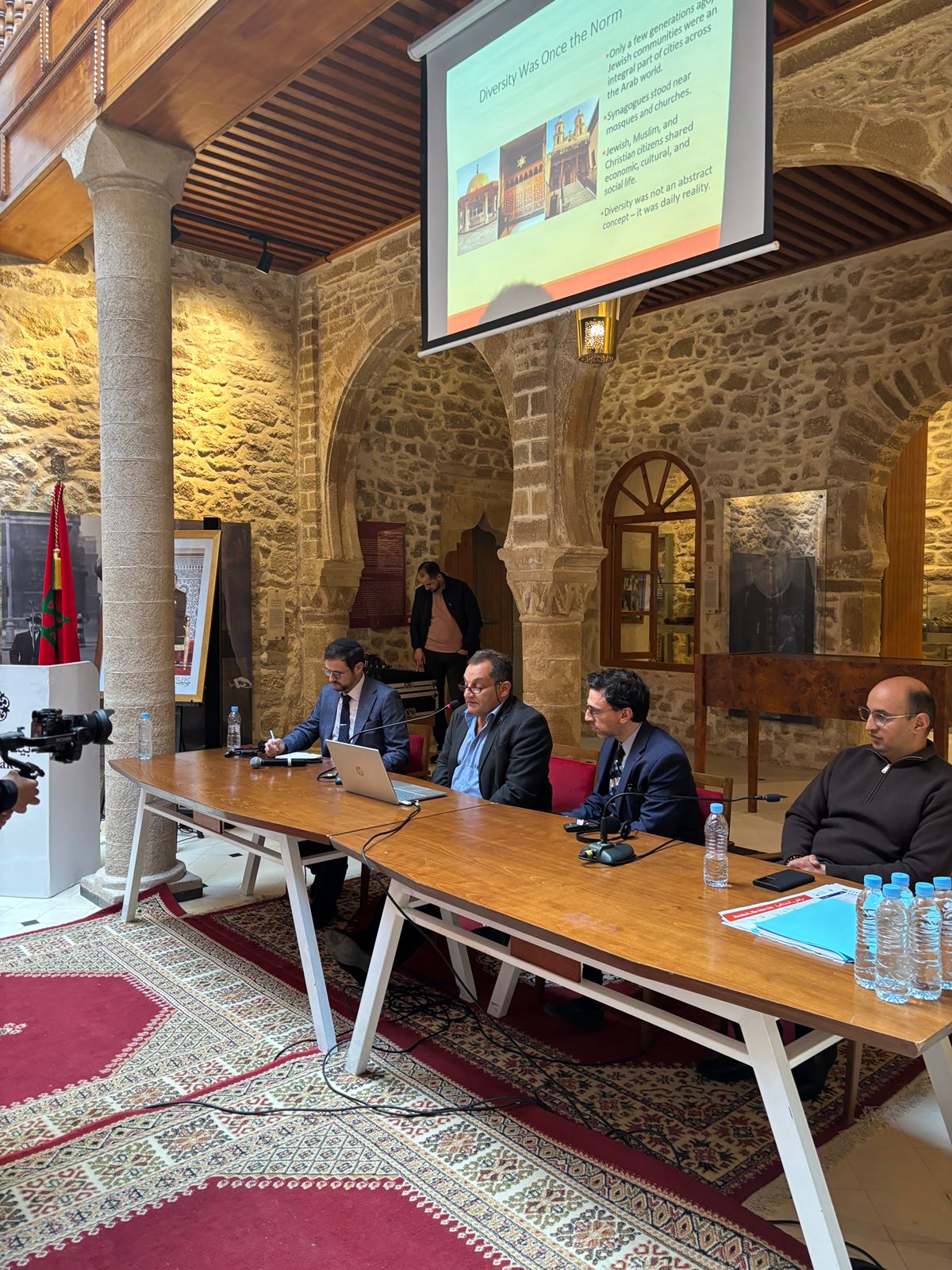
A landmark conference in Morocco has brought together educators and civil society figures from across the Arab world in a rare effort to strengthen Holocaust education and confront hatred through shared history.
The programme, funded by the Claims Conference, was organised by the American Jewish Committee, the American Sephardi Federation and Association Mimouna.
It began online before moving to Morocco, with the in-person programme running from Wednesday 25 to Thursday 26 March in Essaouira, followed by a final day on Friday at the Casablanca Jewish Museum.
Sessions in Essaouira were held at Bayt Dakira, a Jewish heritage and memory centre widely seen as a symbol of Muslim-Jewish coexistence.
Around 25 participants travelled from outside Morocco, alongside 20 from within the country, according to El Mehdi Boudra, executive director for the Association Mimouna.


Participants included educators, academics and NGO figures from Morocco, Tunisia, Egypt, Syria, Azerbaijan and the United States.
Boudra told Jewish News: “We are trying to plant the seeds for Holocaust education. We are trying to make sure to have the allies, and to build a long-term process for people to be interested in Holocaust education.”
The programme included panels on Holocaust history in the Muslim world, genocide prevention, preserving minority heritage, Holocaust teaching for secondary schools, and the Yazidi genocide in Iraq.
Boudra said one key outcome was the continued development of a Holocaust curriculum tailored to Arab and Muslim contexts, created in partnership with the US Holocaust Memorial Museum.
“We have created our curriculum in the context of the Arab world,” he said. “It’s the first curriculum created for Muslims, on the Holocaust.”
He said some participants are already taking the work back into their own settings, including educators in Essaouira developing a Holocaust module for local secondary schools.
Further teacher visits to Nazi camps in Poland and Germany are also planned.
Participants said the conference also created a rare space for open dialogue across religious and national divides.
Samir Air Oumghar, a senior lecturer at Cadi Ayyad University in Marrakesh, said the experience highlighted “the immense cultural diversity that characterises our world”.
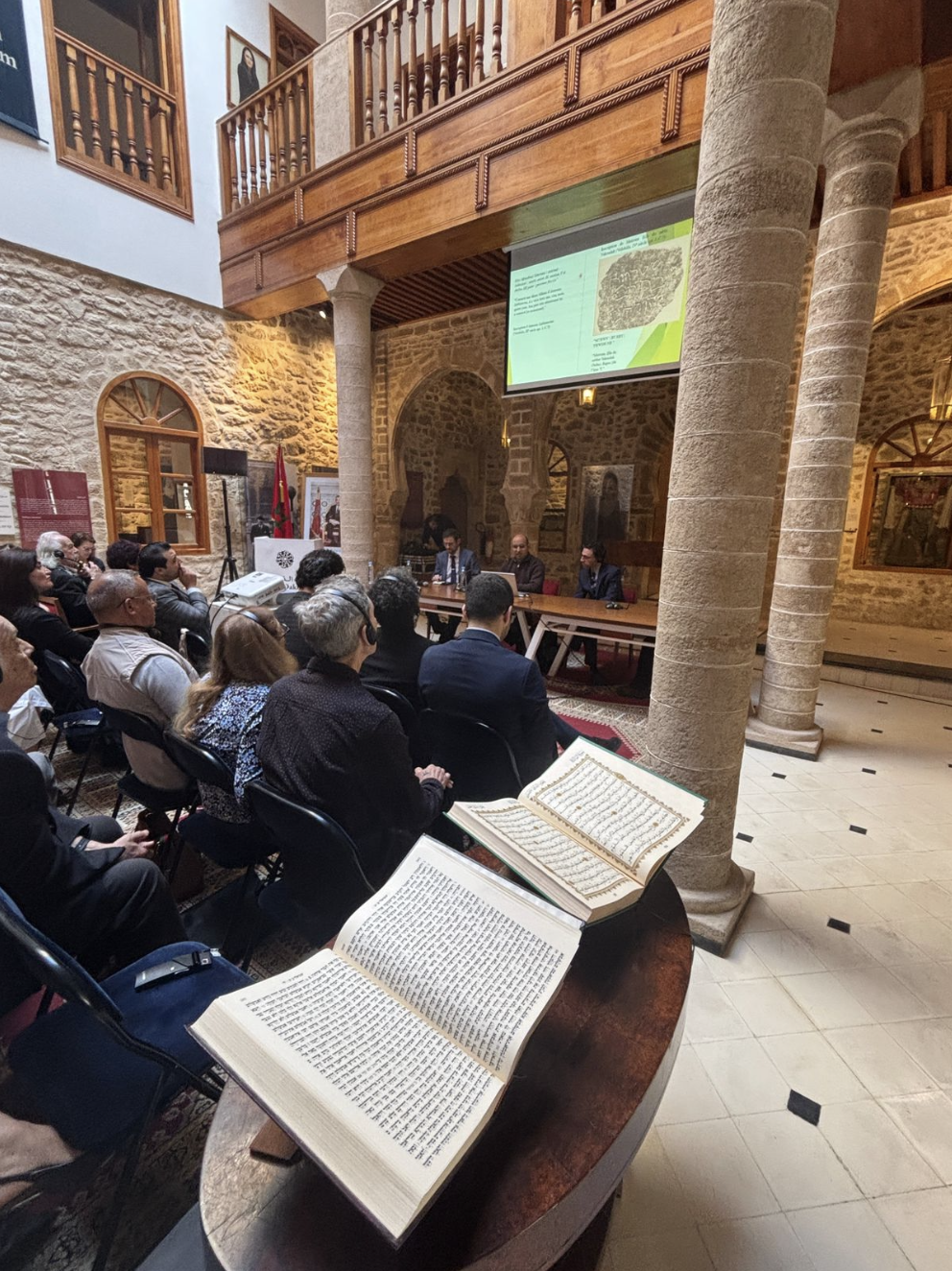
“This conference raised awareness of the persecution and violence suffered by minorities throughout history,” he said, adding that participants spent time together “without the slightest ideological or religious tension… the human dimension took precedence over everything else.”
He said the programme reinforced the importance of “dialogue and listening to one another in order to reject all forms of religious and cultural intolerance”.
Dr Suha Hassen, a scholar at George Mason University in the US said the conference demonstrated how coexistence can move beyond theory.
“The conference offered me a valuable lens on coexistence – not just as an abstract concept, but as something actively practised,” she said.
“Dialogue… creates space to listen across differences, disrupt processes of dehumanisation and othering, and humanise perspectives that are often misunderstood.”
Kalid Loul, a US-based participant, said holding discussions in Arabic was particularly significant.
“What made this conference especially unique was the opportunity to engage in these conversations in Arabic,” he said. “Language is not simply a tool of communication – it is a gateway to understanding, empathy, and access.”
He added that Holocaust education should be understood as both a Jewish and a universal responsibility.
“While it is essential to honour the fact that Jews were the principal target… the lessons of the Holocaust extend beyond any one community,” he said.
For the Jewish organisations involved, the conference also carried symbolic weight at a time of deep regional tension.
Ari Gordon, Director of Muslim-Jewish Relations at the AJC, said the strongest message to emerge from the gathering was “hope”.
“People from countries across the region, some of which don’t have diplomatic relations with Israel, some of which have varying relations with each other, can come together to think about how to find a way to learn the lessons of the past, to build a better future together?” he said.
Gordon said one of the biggest barriers discussed was the politicisation of Holocaust memory.
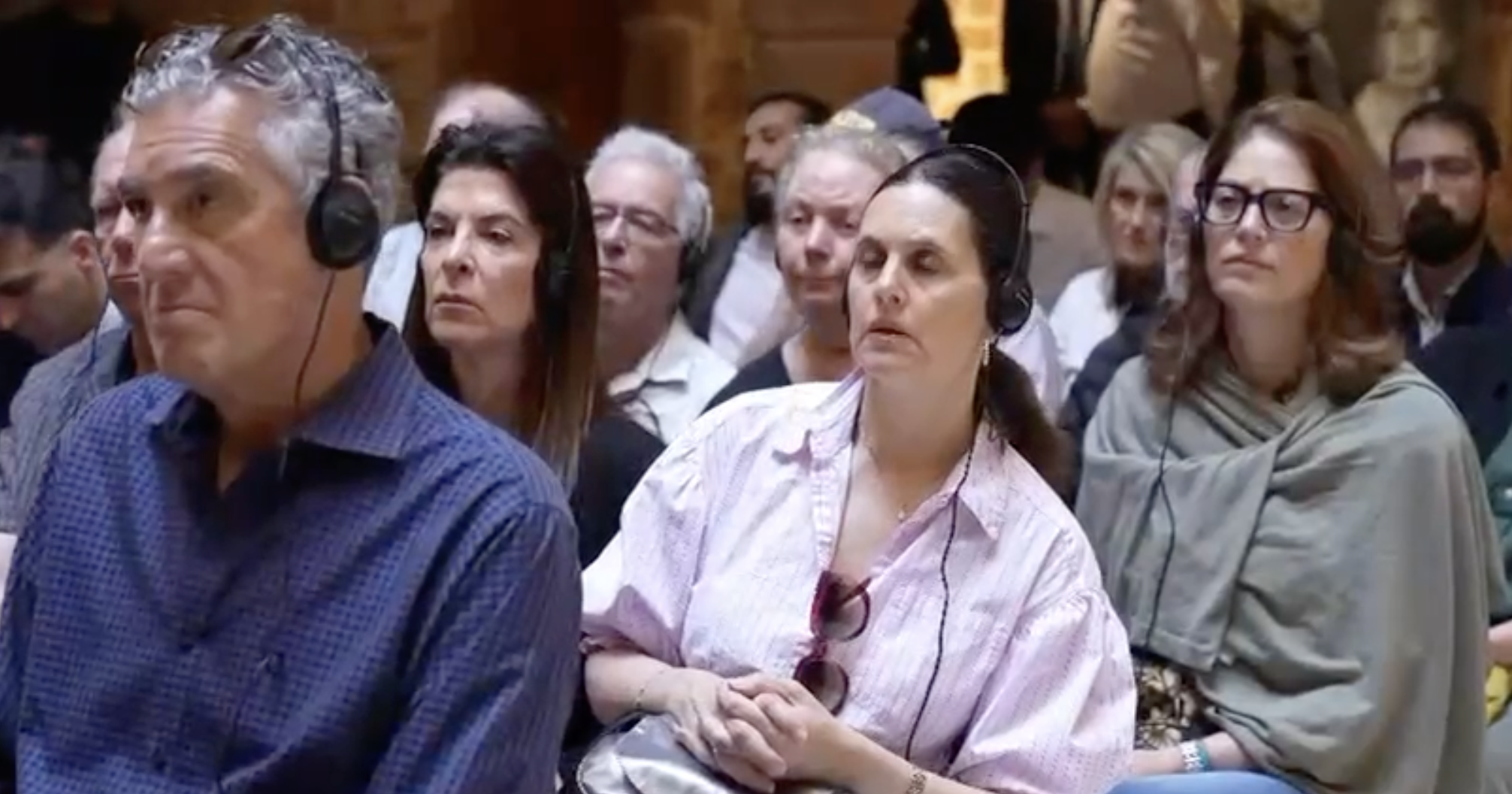
“One barrier is how the Holocaust is so politicised, and anything to do with Jews and antisemitism sometimes immediately goes into the Israeli-Palestinian conflict file in people’s minds,” he said.
He added that the Holocaust should neither be stripped of its Jewish dimension nor taught only as a Jewish story.
“If you don’t tell the Jewish parts of the story and how antisemitism was a primary ideology for the Nazis, you’re not really talking about the Holocaust,” he said.
“But if you tell it only as a Jewish story… you’re also not giving it its fair due as just a story of human history.”
Jason Guberman, director of the American Sephardi Federation, said the gathering reflected years of careful relationship-building.
“Since 2007, when ElMehdi Boudra and the late Laziza Dalil organised what the New York Times described as a ‘first of its kind in an Arab or Muslim nation’, Mimouna has been at the forefront of educating about the Shoah in Arabic,” he said.
He added: “Our Conference was a first of its kind to engage educators from Iraq, Syria, Azerbaijan, Morocco, Tunisia, Egypt, and other countries in a high-level discussion in Arabic about the Holocaust.”
Guberman said Morocco was chosen because it offers a living model of coexistence.
“We overcame myriad challenges, especially the logistics of gathering participants despite the ongoing regional war, in Morocco because Moroccanity is a multifaceted model for coexistence that is very much needed right now,” he said.
Benjy Rogers, AJC’s director of Middle East and North Africa initiatives, said the conference also aimed to build long-term regional connections.
“One of the biggest things you get from programmes like this is the ability to build out a network,” he said. “How do you create the connections necessary to be able to do more, to be able to go further?”
Organisers hope the initiative will continue beyond Morocco, with a second phase potentially taking place next year in another country in the region.
“The goal is not to have that only in Morocco,” Boudra said. “The goal is to start planting the seeds.”

Keep community journalism free.
Jewish News is free for everyone. No paywall. No barriers. Just trusted journalism for anyone who wants to stay connected to Jewish life in Britain.
If you value that, please support us.
From as little as £5 a month, you can help keep our journalism free and accessible to all.
Every day, we report on the issues that matter to our community. We celebrate achievements, support charities, challenge antisemitism and ensure Jewish voices are heard more widely.
From as little as £5 a month, you can help us continue to:
- Report on the stories shaping Jewish life in the UK and beyond
- Bring our community together through shared stories, events and campaigns
- Celebrate the people, culture and moments that define our community
- Support organisations doing vital work across Jewish Britain
You can make a one-off donation or become a regular supporter. Every contribution helps keep our journalism free, independent and accessible to all.
If everyone who values Jewish News gave a small amount, it would make a real difference to our future.