Prefer Jewish News on Google
Mother of British teen killed in Tel Aviv bombing reluctantly accepts killer’s release to save hostages
Ashraf Zughayer, who arranged the bombing that killed six people, including 19-year-old Jesner, served just 22 years of six life sentences
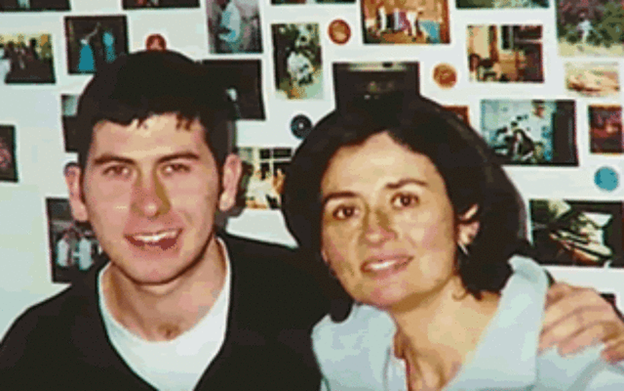
The mother of Yoni Jesner, the Scottish teenager killed in a 2002 suicide bombing in Tel Aviv, says she feels a “surreal sense of disbelief” at the release of the terrorist who masterminded the attack.
Ashraf Zughayer, who arranged the bombing that killed six people, including 19-year-old Jesner, was released from prison on 25 January after serving just 22 years of six life sentences.
Zughayer drove suicide bomber Muhammad al-Ghoul from East Jerusalem to Tel Aviv, dropping him at the Allenby Street bus stop moments before the attack that killed Jesner.
His release came as part of the Israel-Hamas ceasefire deal. He was given a hero’s welcome in East Jerusalem, paraded through the streets on the back of a car and draped in Hamas flags as crowds cheered.
Yoni’s mother, Marsha Gladstone, has shared her family’s anguish about the decision, telling Jewish News: “We feel a surreal sense of disbelief that this is even possible, that this person can be out and about, enjoying the freedom he stole from our beloved son. That 22 years later he is a free man. It’s shocking and sickening.”


But reflecting on the broader implications of the hostage-prisoner exchange, Gladstone, who was not notified by the Israeli government about Zughayer’s release, added: “I understand there is a greater duty at play here. That we need the hostages home and the price to pay is an awful one. If the loss of Yoni can somehow contribute to something good, even all these years later, to bringing home the hostages to their families, then that is at least a small comfort to me in this crazy world.”
In a moving column for The Free Press, headlined ‘The Terrorist who murdered my cousin now walks free’, Yoni’s cousin, Rabbi Gideon Black, who narrowly survived the bus bombing, expressed his anguish at seeing
Zughayer walk free. Black wrote: “More than two decades later, emotional scarring from that bombing – which I survived by the slightest margin – is still etched into my soul. So are the physical scars on my torso… Time, it turns out, does not heal all wounds… The freeing of the man responsible for that attack cuts at the scar tissue and forces me and every other Israeli into an impossible corner.”
Reflecting on the 2002 attack, Rabbi Black recalls: “The moments after the explosion are still vivid in my mind –the shattered glass, the heap of skinless bodies at the front of the bus, the few silent seconds as an aura of death hung in the air before it gave way to piercing sirens and screams. Most of all I remember Yoni, in life so strong and brave, on the floor next to me with a mortal head wound. The first paramedic to treat us on the sidewalk cried out to Yoni, “Al tamut, al tamut!” (‘Don’t die, don’t die!’)”
The Israeli hostage/Hamas prisoner swap has reignited fierce debate in Israel over the risks of releasing convicted terrorists. Rabbi Black acknowledged this dilemma, stating: “We must move mountains to bring them home, even as we fear that those very mountains may bury our loved ones in the future.”
Rabbi Black’s fears are not unfounded. The 2011 Gilad Shalit deal saw the release of more than 1,000 Palestinian prisoners – including Hamas leader Yahya Sinwar, who orchestrated the 7 October massacre.
“We dare not leave the hostages in Gaza,” Black warned. “We dare not free the terrorists and endanger our people for years to come. Truly, a deal with the devil.”
Yoni Jesner and his family saved the lives of four people by donating his organs following his death, including a Palestinian girl who received Yoni’s kidney.

Keep community journalism free.
Jewish News is free for everyone. No paywall. No barriers. Just trusted journalism for anyone who wants to stay connected to Jewish life in Britain.
If you value that, please support us.
From as little as £5 a month, you can help keep our journalism free and accessible to all.
Every day, we report on the issues that matter to our community. We celebrate achievements, support charities, challenge antisemitism and ensure Jewish voices are heard more widely.
From as little as £5 a month, you can help us continue to:
- Report on the stories shaping Jewish life in the UK and beyond
- Bring our community together through shared stories, events and campaigns
- Celebrate the people, culture and moments that define our community
- Support organisations doing vital work across Jewish Britain
You can make a one-off donation or become a regular supporter. Every contribution helps keep our journalism free, independent and accessible to all.
If everyone who values Jewish News gave a small amount, it would make a real difference to our future.