
 Prefer Jewish News on Google
National Library of Israel to host 1,000 interactive life stories in landmark AI project
New partnership will use conversational video AI to preserve testimonies from Israelis, giving voice to diverse personal stories worldwide
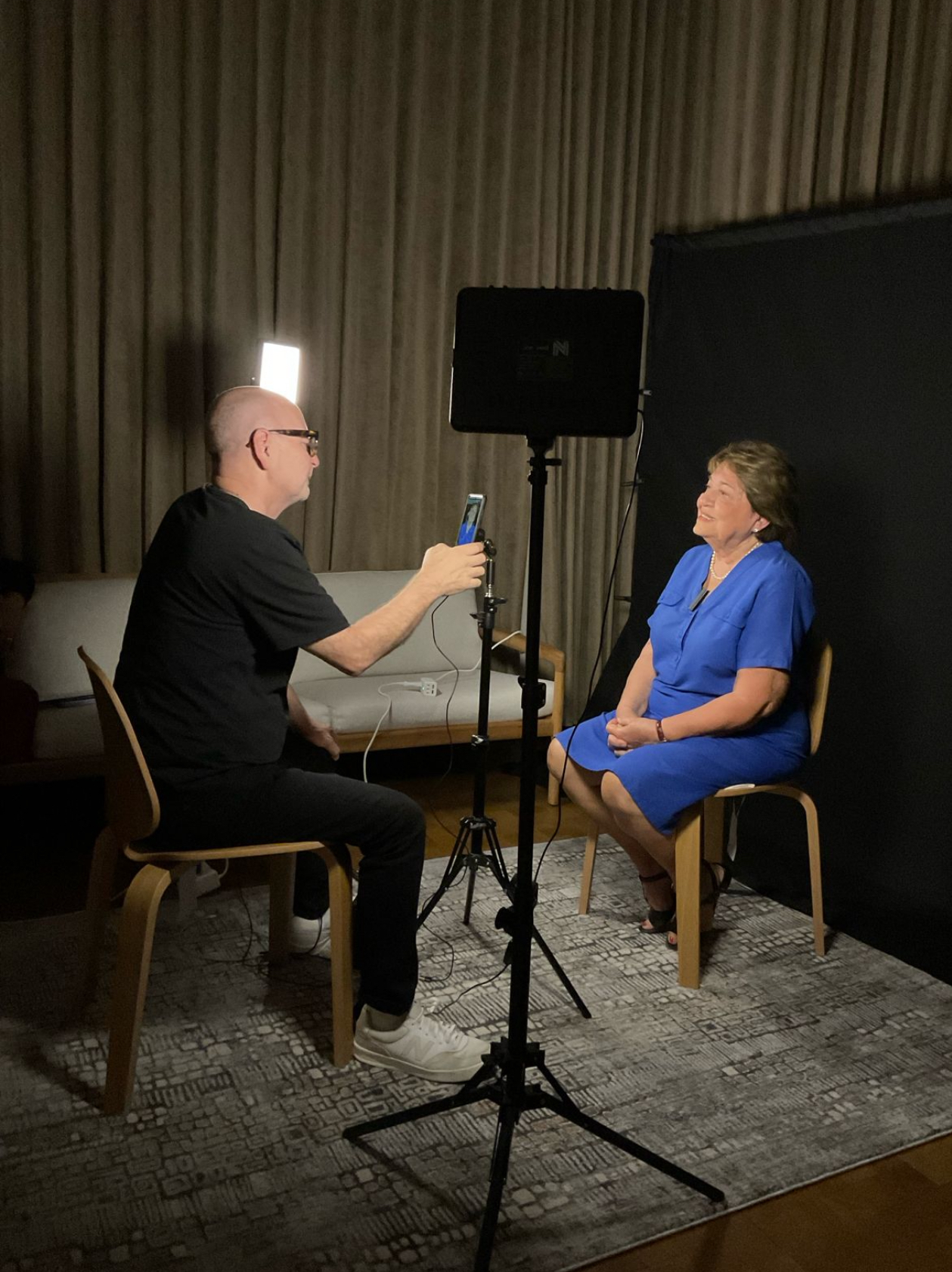
“At the moment, our story seems to be told by others. This project is about Jews telling their story in their own words.” With that aim, Stephen Smith and his wife, Heather, are launching a storytelling initiative they believe will reshape how Jewish identity is recorded and understood.
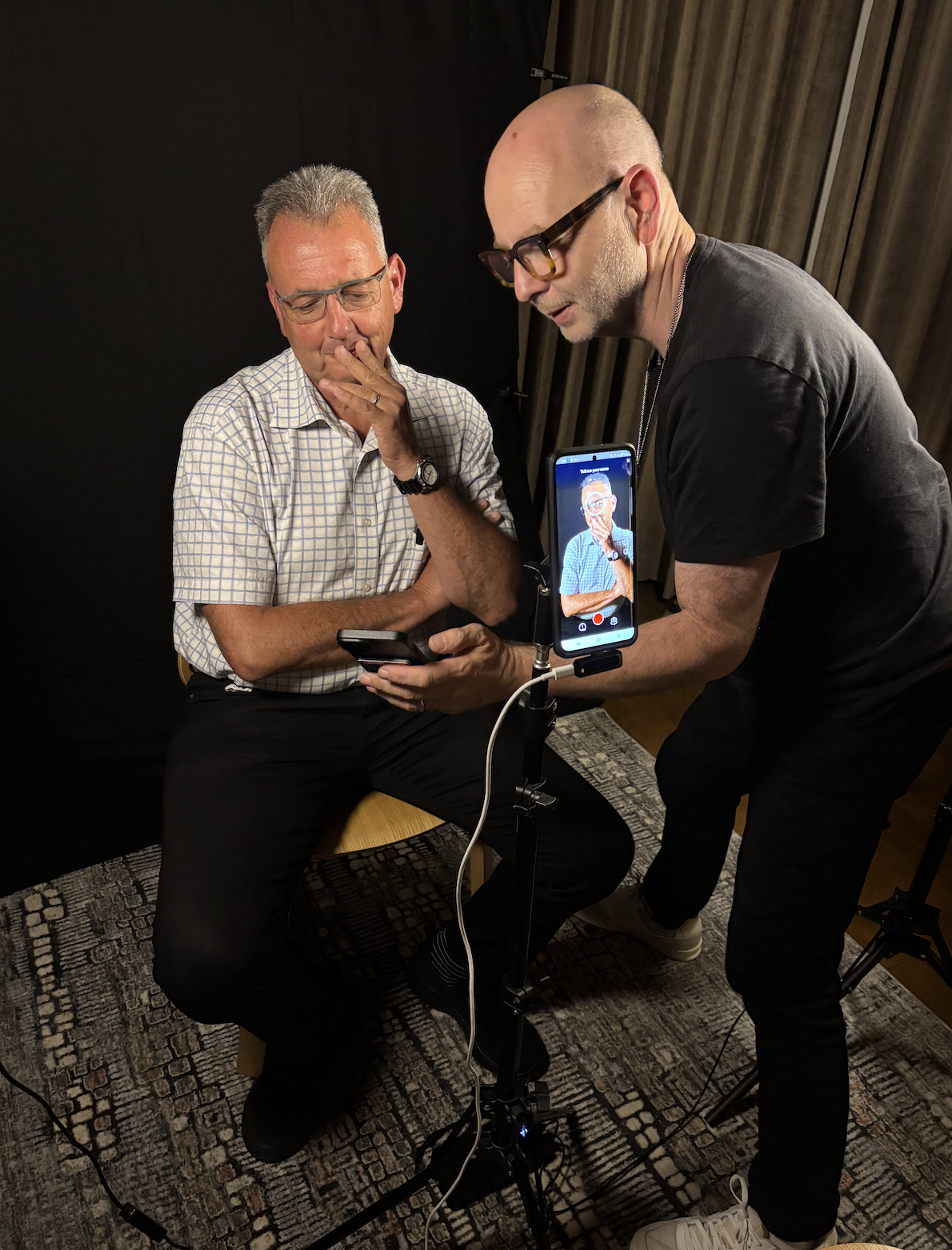
The couple, known internationally for pioneering the first interactive Holocaust survivor holograms, have now turned their focus to the everyday lives of Israelis. Earlier this month, the National Library of Israel signed a Memorandum of Understanding with Our Jewish Story, the organisation the pair co-founded, to house 1,000 interactive video testimonies. Recorded through a bilingual app powered by conversational AI, the archive will allow users not just to watch interviews but to engage with them, asking questions and receiving authentic answers from pre-recorded material.
Unlike generative AI, the technology cannot invent responses. Instead, it is carefully designed to pull from genuine video segments while maintaining strict verification standards. Each testimony is encrypted, watermarked, and signed off by the participant, while sensitive sections can be locked for preservation but withheld from public access. “It’s story first, supported by technology,” says Smith. Heather adds: “When I can ask my own question, I feel more connected. That’s when the story lives in my psyche.”
The project’s first phase, titled Our Israel Story, is focused on capturing the breadth of Israeli society. “We want a more refined and personal understanding of who Israelis are rather than what Israeli is,” Smith explains. “People talk about Israel in the abstract, but who are Israelis? Where do they come from? What are their journeys?”
The range of voices already included highlights that diversity. One striking testimony is from Ruth Solomon, who began life in Kashmir and only reached Israel in her sixties after a family history marked by loss and survival. Another comes from Sheikh Abas, a Muslim leader from Akko, whose reflections on Israel and its complexities Smith describes as “profound”. The archive will also include accounts from Druze, Christians, Baha’is and migrant workers whose daily lives are lived in Hebrew. Smith recalls the surprise of watching a group of Southeast Asian domestic workers chatting over coffee in Jerusalem. “The only language they had in common was Hebrew,” he says. It was an anthropological moment. These are the kinds of stories people don’t expect, but they are part of the fabric of Israel.”


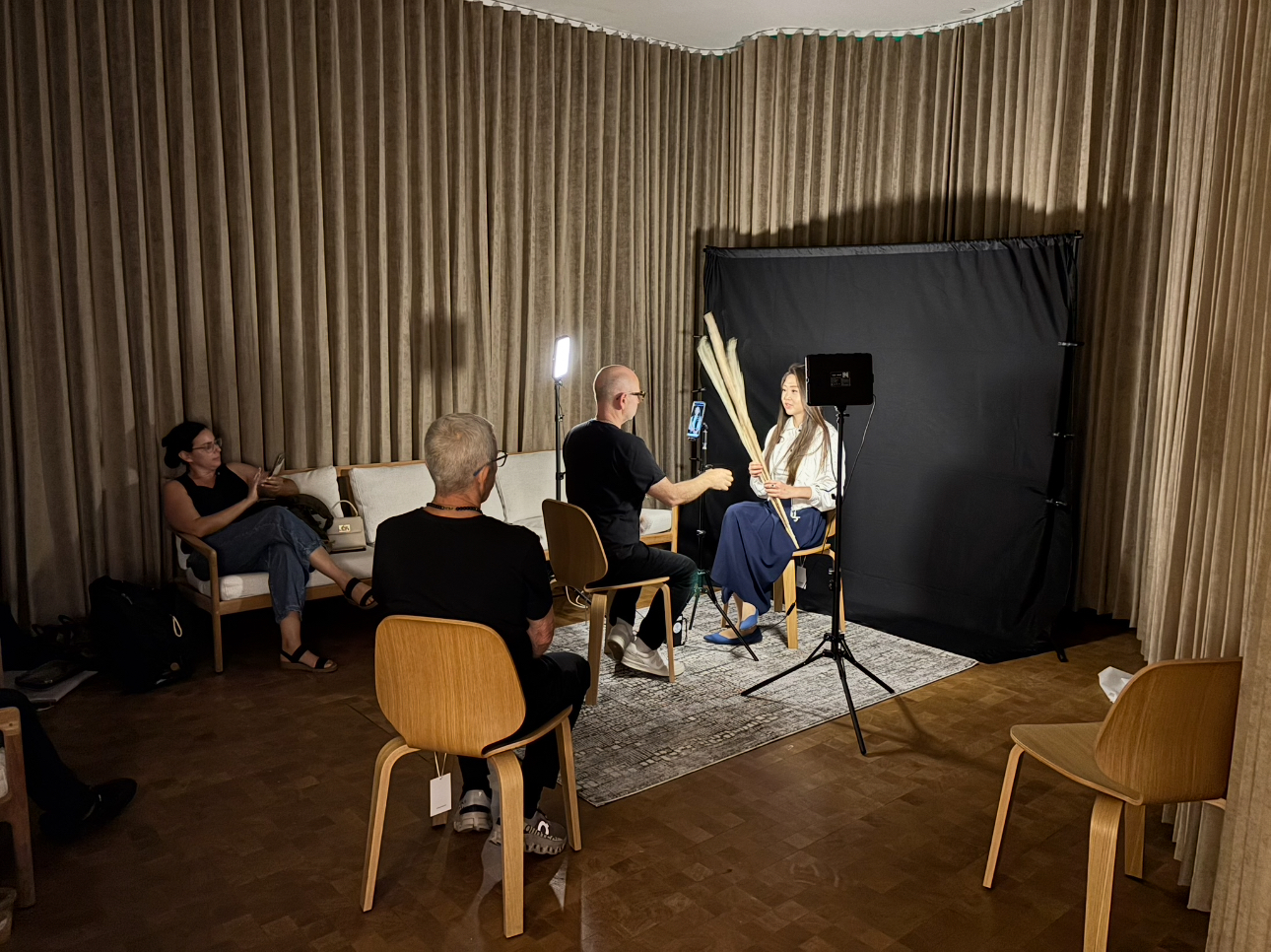
To build the first 1,000 interviews, Our Jewish Story is working with institutions across the country. Ben-Gurion University will host a digital storytelling course where students can learn to collect testimonies, while Kibbutz Lohaemi HaGetaot will serve as a hub for northern Israel. The project is only partially funded, but Smith insists this is just the beginning. “The archive itself will ultimately be tens of thousands of interviews,” he says. “Wherever Jews live, and wherever they intersect with society, we want their voices preserved.”
The app, currently in beta and set for public launch on 1 January, will initially function in Hebrew and English, with Arabic, Russian, Spanish, French, and German to follow. Users worldwide will be able to access the stories free of charge, while schools, synagogues, and community institutions will be invited to create their own channels by subscription, allowing them to collect and curate their own local stories. In the United States, the iCentre, a major Israel education provider, will begin curating content from the project into lesson plans for schools and camps.
For Heather Smith, the roots of the initiative lie in her earlier work with Holocaust survivors. She recalls how Q&A sessions after lectures always left audiences frustrated when time ran out. “What if you give people the opportunity to have that experience, but for as long as they want to?” she asks. That insight became the basis for conversational video technology: creating the sense of a personal exchange while ensuring that only genuine, unaltered testimony is presented. “Every single one of us is shaped by the generations before us,” she says. “We wanted these conversations to continue and be authentic to the individual who lived that experience.”
Integration into the National Library of Israel is key to the project’s credibility and preservation. Once catalogued, the testimonies will appear alongside the library’s books, photographs, and archives, making them discoverable for researchers worldwide. “Preserving it like this makes it part of the story of the Jewish people,” Smith says.
The long-term ambition is global. Communities from London to Latin America will eventually be able to open their own channels, ensuring that Jewish life in all its variety is documented. As Smith puts it: “What we’re building is a global platform by which Jews can be heard for who they are, not what they are perceived to be.”
Visit their website at ourjewishstory.org

Keep community journalism free.
Jewish News is free for everyone. No paywall. No barriers. Just trusted journalism for anyone who wants to stay connected to Jewish life in Britain.
If you value that, please support us.
From as little as £5 a month, you can help keep our journalism free and accessible to all.
Every day, we report on the issues that matter to our community. We celebrate achievements, support charities, challenge antisemitism and ensure Jewish voices are heard more widely.
From as little as £5 a month, you can help us continue to:
- Report on the stories shaping Jewish life in the UK and beyond
- Bring our community together through shared stories, events and campaigns
- Celebrate the people, culture and moments that define our community
- Support organisations doing vital work across Jewish Britain
You can make a one-off donation or become a regular supporter. Every contribution helps keep our journalism free, independent and accessible to all.
If everyone who values Jewish News gave a small amount, it would make a real difference to our future.





















