Prefer Jewish News on Google
Nazi loot still missing after 70 years
Major conference to be held in Brussels to consider finding of a report in to the status of post-Holocaust restitution
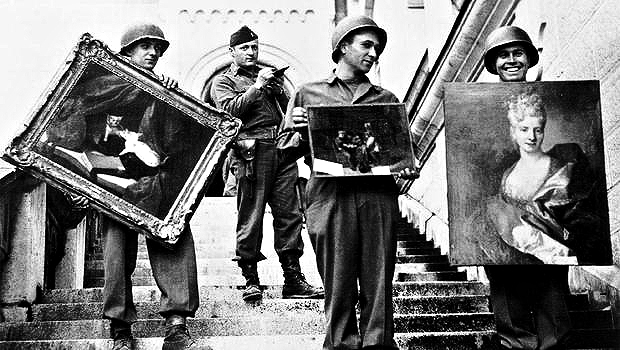
The wholesale Nazi looting of Jewish private and communal property during the Second World War is well known. What is less appreciated is that even today, 70 years after the end of the conflict, a significant proportion of the proceeds of the mass theft have still not been returned. A new report says “what amounts to the largest theft in history has not been adequately dealt with”.
This week, a major conference is due to be held in Brussels to consider the findings of the report on the status of post-Holocaust restitution in Europe. The 1,200-page document, which took three years, was commissioned by the European Shoah Legacy Institute and examines responses of 47 countries pledged to oversee the status of Holocaust-era assets.
The report’s brief was to look at “pre-war Jewish private property currently in the hands of the state and private individuals or entities … that has never been returned to Jewish communities”.
Although most states in Western Europe come out well, those in Eastern Europe — particularly Poland — “have not yet fulfilled their obligations”, says the study.
In 2009, the 47 states signed what became known as the Terezin Declaration, which among other principles declared no state should benefit from heirless property.
Instead, it said, funds from such property should be allocated to needy Holocaust survivors, about half of whom worldwide live in abject poverty. The report concludes: “In most countries in Eastern Europe, property that became heirless as a result of mass murder reverted to the state, and has not been returned”.
The report notes that “while the level of compliance in Eastern Europe is higher for communal than for private property, ownership over many formerly Jewish religious and communal properties in Latvia remains in dispute and is not subject to current restitution legislation”.
It continues: “Croatia, where the restitution law passed in the early 1990s covered only Communist-era property confiscations, excludes property taken during the Holocaust, and does not cover properties that were owned by different Jewish legal entities.
“In Poland, fewer than half of 5,550 Jewish communal property claims filed under the 1997 restitution law have been adjudicated.”
Gideon Taylor, chair of operations at the World Jewish Restitution Organisation, said: “This report shines a light on the failure of some countries to address the past and to return that which was taken.
“Progress has been made in recent years on returning and compensating for looted property but, as survivors pass away, Europe must ensure that all countries live up to their international commitments.”
The report notes private property restitution is a spcial case in the UK which, while not occupied, enacted legislation that confiscated property from “enemies of the state”.
“After the war, the UK set up a scheme to compensate victims of property confiscation and set up the Enemy Property Payment Scheme. The report, however, does not state how many people successfully applied for and received compensation.

Keep community journalism free.
Jewish News is free for everyone. No paywall. No barriers. Just trusted journalism for anyone who wants to stay connected to Jewish life in Britain.
If you value that, please support us.
From as little as £5 a month, you can help keep our journalism free and accessible to all.
Every day, we report on the issues that matter to our community. We celebrate achievements, support charities, challenge antisemitism and ensure Jewish voices are heard more widely.
From as little as £5 a month, you can help us continue to:
- Report on the stories shaping Jewish life in the UK and beyond
- Bring our community together through shared stories, events and campaigns
- Celebrate the people, culture and moments that define our community
- Support organisations doing vital work across Jewish Britain
You can make a one-off donation or become a regular supporter. Every contribution helps keep our journalism free, independent and accessible to all.
If everyone who values Jewish News gave a small amount, it would make a real difference to our future.