Prefer Jewish News on Google
October sees unprecedented surge in Israeli settler violence against Palestinians
Violence rises in the West Bank during the olive-picking season
Israeli settlers carried out at least 264 attacks against Palestinians in the West Bank during October, marking the biggest monthly total since United Nations officials began tracking such incidents in 2006.
The United Nations Office for the Coordination of Humanitarian Affairs said the attacks, which resulted in casualties and property damage, amounted to an average of eight incidents per day.
Violence rises during the olive-picking season, which begins in October. Attacks often include physical assaults, stone-throwing, arson, vandalism of vehicles and homes, and the destruction or theft of agricultural property, especially olive trees.
Thousands of olive trees have been uprooted, burned, or otherwise damaged by settlers over the years, directly impacting Palestinian livelihoods, as olive oil is a crucial economic resource for many families in the West Bank.
Last Saturday, Israeli settlers attacked Palestinian olive harvesters in the West Bank villages of Beita and Burin near Nablus, injuring at least 15 people, including an IDF reservist and the administrator of an art school.



According to the Palestinian Health Ministry, 11 people were injured in the attack in Beita, among them Oded Yedaya, administrator of the Minshar School of Art.
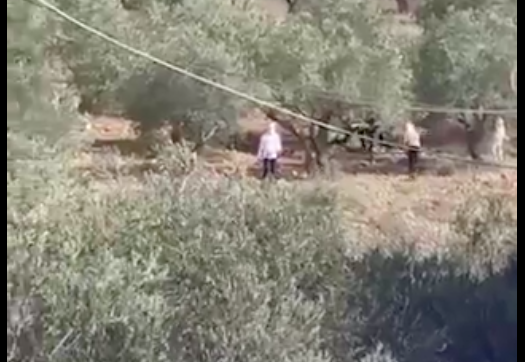
In nearby Burin, footage showed settlers throwing stones at Palestinians and activists in an olive grove.
Reuters reported that two employees – a photographer and a security adviser accompanying her – were among those injured in the attack.
Bashar Eid, a resident of Burin who was injured, told the Times of Israel that settlers threw stones at him and the activists, resulting in an injury to his neck. He was evacuated to a Palestinian hospital, where he is expected to undergo surgery.
Reports and video evidence show that some settlers are armed, sometimes with firearms, and often act in groups, sometimes masked.
In several incidents, settlers have been seen using clubs, metal rods, or even accompanied by dogs.
Multiple human rights organizations, including B’Tselem and Human Rights Watch, have documented that Israeli security forces are frequently present during attacks but rarely intervene to protect Palestinians or detain settlers.
In some cases, security forces have reportedly joined in or provided protection to settlers during attacks.
Repeated attacks have led to the displacement of several Palestinian communities, especially in rural areas near settlements and outposts.
Some families have abandoned farmland or homes due to ongoing violence and intimidation.
OCHA and other observers have noted not only a rise in the number of attacks, but also increasing severity, with more incidents resulting in serious injuries or the use of live ammunition.
Prosecution rates for settler violence remain extremely low.
According to Israeli rights group Yesh Din, only a small percentage of police investigations into settler violence result in indictments.
In addition to the attacks in Beita and Burin, there were reports in October of settlers torching Palestinian vehicles in the village of Qaryut, assaulting shepherds near Hebron, and vandalizing property in Al-Mughayyir and Deir Jarir.
Videos filmed by Palestinian farmers and anti-occupation activists have shown masked Israeli settlers using clubs and sticks, and sometimes holding rifles as they attack those seeking to expose their actions.
Meanwhile, other videos appear to show IDF soldiers failing to intervene as settlers carry out attacks.
One video appeared to show Israeli soldiers filmed stealing olives in the town of Sinjil, after declaring the area a military zone and expelling Palestinian farmers.
An IDF spokesperson said the particular incident showed “conduct of the forces .. not in line with IDF values.”
“Since 2006, OCHA has documented over 9,600 such attacks. About 1,500 of them took place just this year, roughly 15 percent of the total,” the UN body said in a statement.
More than 2.7 million Palestinians live in the West Bank, with over half a million Israeli settlers now also residing in the territory.
The UK, along with the United Nations, regards settlements as illegal under international law, which Israel disputes.
The UN agency also said that according to OCHA-confirmed data as of Wednesday, 42 Palestinian children had been killed by Israeli forces in the West Bank so far this year.

Keep community journalism free.
Jewish News is free for everyone. No paywall. No barriers. Just trusted journalism for anyone who wants to stay connected to Jewish life in Britain.
If you value that, please support us.
From as little as £5 a month, you can help keep our journalism free and accessible to all.
Every day, we report on the issues that matter to our community. We celebrate achievements, support charities, challenge antisemitism and ensure Jewish voices are heard more widely.
From as little as £5 a month, you can help us continue to:
- Report on the stories shaping Jewish life in the UK and beyond
- Bring our community together through shared stories, events and campaigns
- Celebrate the people, culture and moments that define our community
- Support organisations doing vital work across Jewish Britain
You can make a one-off donation or become a regular supporter. Every contribution helps keep our journalism free, independent and accessible to all.
If everyone who values Jewish News gave a small amount, it would make a real difference to our future.