Prefer Jewish News on Google
Once again, a supposedly damning UN Commission report on Israel lacks basic evidence
The report's actual function is far simpler - to confirm and justify the verdict and the demonisation of Israel.
The UN is at it again. One more supposedly “independent” inquiry into Israel. This time the Commission Of Inquiry concludes that “the evidence shows that Palestinian children have been deliberately targeted and killed by the Israeli security forces,” resulting in “genocide, crimes against humanity and war crimes.”
To borrow a phrase from the UN Secretary General, this report “did not appear in a vacuum”. It is simply the latest product of the UN’s permanent Commission of Inquiry into Israel, a unique, open-ended investigation created specifically for the Jewish state alone. Other conflicts, wars, dictatorships, crimes and atrocities can be investigated and concluded. Israel alone requires a commission with no end.
Yet, strip away the legalese, the diplomatic jargon and the accusation is simple enough. Israel is intentionally murdering Palestinian children. Or so the UN would have you believe.
That accusation has a name.
For centuries Jews have been accused of deliberately murdering Christian children to use their blood for religious rituals. The lie became known as the Blood Libel. It portrayed Jews as uniquely evil, barbaric and deserving of hatred. Today the accusation is directed not at scattered Jewish communities but at the Jewish state. The language has been updated. The Jewish state is now the Jew among the nations .



If you are going to accuse a liberal democracy, or any country for that matter, of intentionally murdering children, you better come with evidence. Credible, verifiable, independently corroborated evidence. Hard evidence that substantiates such serious accusations.
This report fails to do that across the board.
Instead, it substitutes allegation for evidence, inference for proof and conclusions for facts. Take almost any serious allegation in the report and the same question presents itself. Where is the evidence?
That’s the central weakness running through this report.
The report accuses Israel of intentionally targeting children. Fine. Where is the evidence? Children are dead. That is a fact. As terrible and tragic as that undoubtedly is, that children have been killed does not prove they were intentionally targeted.
Again, and again the report reaches conclusions without producing evidence capable of substantiating its claims.
One example illustrates the problem perfectly.
At the press conference launching the report, Commission Chair Justice Srinivasan Muralidhar told the world’s media that a breastfeeding baby had been shot through the head by an Israeli quadcopter, leaving the child permanently paralysed.
That’s a horrendous allegation, one of the worst alleged crimes mentioned in the report.
If you’re going to tell the world that an Israeli quadcopter deliberately shot a breastfeeding baby, you had better produce the evidence to support it. Where is the forensic evidence? Where is the evidence identifying the platform? Where is the evidence identifying the operator? Where is the evidence proving intent?
How did the Commission establish that it was an Israeli quadcopter that shot the infant? Did the commission identify the operator? How did it concluded the operator intentionally targeted a breastfeeding infant? What evidence established what the operator could actually see, or not? According to reports, the mother and baby were inside a tent. An accusation that grotesque deserves far more than the Commission simply telling us it has reached that conclusion.
The same problem runs through the Commission’s reliance on medical testimony.
The Commission relies heavily on doctors describing the injuries they treated. Their expertise as doctors is not in question. Their evidence proves that children were shot and killed. It does not prove who fired the shots, from where they were fired, what the shooter could see, whether Hamas fighters were operating nearby, whether there was crossfire or, most importantly, what the shooter’s intent was. Those are the very questions the Commission had to answer before accusing Israel of deliberately targeting children. Instead, it repeatedly moves from describing horrific injuries to concluding criminal intent without producing evidence that substantiates that leap.
The report identifies Israeli military units as the perpetrators of specific crimes. How were those units identified? What evidence links those units to those incidents? Where any operational records were examined? What, if any intelligence was relied upon? Is there any independent corroboration that exists? Again, such specific allegations demand more than conjecture.
Moreover, the Commission’s version of the battlefield bears little resemblance to reality and strips it of all context.
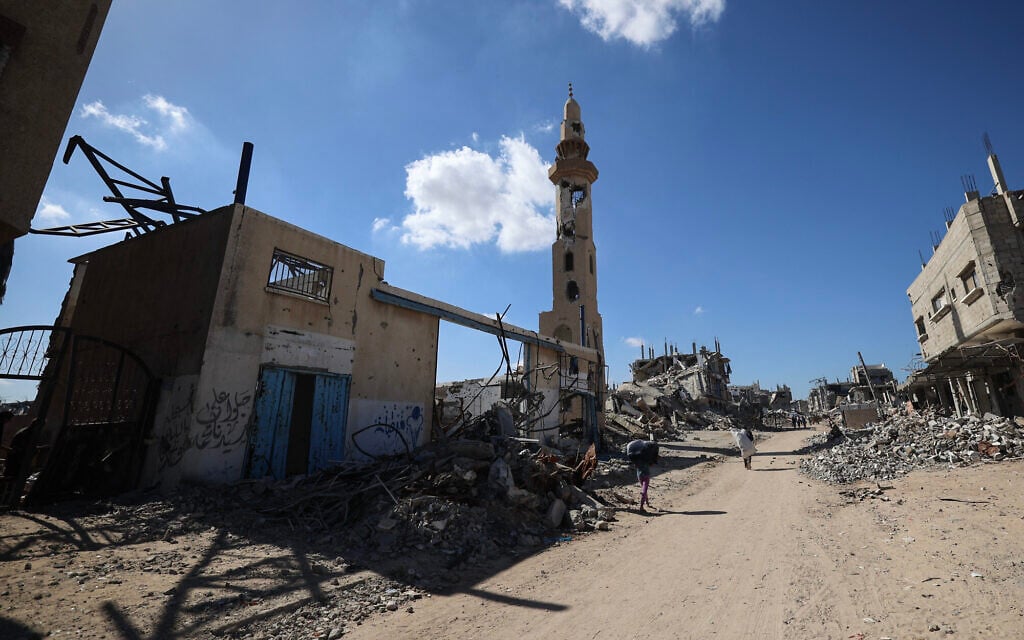
Reading it, you could easily conclude that hospitals simply treated patients, schools simply educated children and residential neighbourhoods simply housed civilians until Israel arrived. Hamas becomes almost incidental, when in reality Hamas built the battlefield. It spent years embedding itself inside civilian infrastructure, constructing an extensive tunnel network beneath urban areas and operating from civilian locations protected under the laws of armed conflict. Examining the IDF’s operations and their adherence to international law, questioning the level of civilian casualties are wholly legitimate. Pretending Hamas did not deliberately militarise civilian areas is not.
Context is not an inconvenience. It is the key to events.
Remove Hamas from the equation and every strike looks like an attack on civilians. Restore Hamas to the story and the legal and operational picture becomes immeasurably more complex. Any serious inquiry should wrestle with that complexity. This report appears determined to ignore it altogether.
Then there are the commissioners themselves.
The UN calls them independent.
Chris Sidoti has served on the Commission since its creation in 2021. In response to criticism of the Commission, he said accusations of antisemitism were being thrown around “like rice at a wedding.”
Miloon Kothari questioned why Israel should even remain a member of the United Nations and referred to the “Jewish lobby” controlling social media, remarks that prompted condemnation from numerous governments before he apologised.
Navi Pillay defended Kothari, saying his comments had been taken out of context. She chaired the Commission for almost four years and oversaw the earlier reports on which this report now relies, including one accusing Israel of genocide, with the same lack of hard evidence.
The current Chair, Justice Srinivasan Muralidhar, has inherited that Commission, that mandate and those earlier findings.
So how independent are they really? In reality, they are all long standing fixtures and integral players in the Human rights council and UN system.
Then there are the sources.
The number of footnotes grows. The amount of independent evidence doesn’t necessarily grow with it. The hundreds of footnotes are meant to convey a simple message. This report is backed by an overwhelming body of evidence.
Start following those footnotes and the picture becomes rather less impressive. A UN report cites an NGO report. The NGO report cites an earlier UN report. A later UN report then cites the NGO report as supporting evidence. Another NGO cites both. Before long, the same allegation has been spun around the system often enough, that it looks like multiple independent sources confirming the same fact. It isn’t! Time and time again, it’s the same allegation circulating through the same organisations until repetition is presented as corroboration.
It’s the evidential equivalent of making a photocopy of a photocopy of a photocopy, then claiming the last copy is the original document.
And what of the inconvenient truths, conveniently ignored as they would sit uneasily beside the report’s central accusation.
Throughout the war, Israel facilitated medical evacuations from Gaza under WHO arrangements, including the evacuation of wounded children and cancer patients for treatment abroad. In March 2025, for example, the UAE confirmed that 81 wounded people and cancer patients, around half of them children, were evacuated from Gaza for medical treatment.
Israel also coordinated the WHO and UNICEF polio vaccination campaign, which reached well over 600,000 children.
None of this answers every criticism of Israel’s conduct. None of it proves every military action was lawful. It does, however, sit very uneasily alongside the Commission’s allegation that Israel is pursuing a policy of intentionally murdering Palestinian children. States looking to murder children, or for that matter commit genocide, are not known to facilitate the evacuation of sick children, coordinate mass vaccination programmes or enable life-saving medical treatment for the very population they are supposedly trying to destroy.
If the United Nations is going to accuse the world’s only Jewish state of intentionally murdering children, it carries an equally heavy obligation to substantiate that accusation with evidence that can withstand the closest scrutiny.
In short, this report does not meet that standard. It presents conclusions with certainty, but too often leaves the question, where is the evidence?
This report should concern far more than those concerned with Israel and the Palestinians.
It is the latest rotten product of a wholly compromised permanent UN Commission created for one country and one country alone. It accuses the world’s only Jewish state of the gravest crimes imaginable, yet, repeatedly fails to produce evidence that substantiates accusations of such extraordinary gravity.
That is not a footnote. It goes to the heart of the report.
Justice is not served by lowering the evidential bar because the accused is Israel. It is not served by recycling allegations through the same institutional ecosystem until repetition is mistaken for corroboration. It is not served by expecting the world to accept the harshest conclusions without sufficient evidence.
This report fails on all accounts. It is one more hate-filled catalogue of unsubstantiated assertions, conjecture, falsehood and slander.
Just like its previous reports, the commission did not set out to investigate events in Gaza. It set out to confirm and justify its predetermined verdict and to continue the demonisation and delegitimization of the Jewish state.
Along with the double standards applied to Israel, the report makes a mockery of international law and justice. It confirms the wholly compromised and corrupt nature of the Human Rights Council and of the UN itself. It points to a virus of hatred infecting the world body, and ultimately brings into question the both the credibility and the very purpose of the UN.
Gary Cohen is a writer and filmmaker. His substack can be found here:

Keep community journalism free.
Jewish News is free for everyone. No paywall. No barriers. Just trusted journalism for anyone who wants to stay connected to Jewish life in Britain.
If you value that, please support us.
From as little as £5 a month, you can help keep our journalism free and accessible to all.
Every day, we report on the issues that matter to our community. We celebrate achievements, support charities, challenge antisemitism and ensure Jewish voices are heard more widely.
From as little as £5 a month, you can help us continue to:
- Report on the stories shaping Jewish life in the UK and beyond
- Bring our community together through shared stories, events and campaigns
- Celebrate the people, culture and moments that define our community
- Support organisations doing vital work across Jewish Britain
You can make a one-off donation or become a regular supporter. Every contribution helps keep our journalism free, independent and accessible to all.
If everyone who values Jewish News gave a small amount, it would make a real difference to our future.