Prefer Jewish News on Google
OPINION: A five point plan for real diplomatic action on Gaza to replace the statements
Peter Lerner argues that no child will sleep safer and no more aid will be received as a result of the latest words from 25 countries

The war in Gaza rages on amid talks of broadening the military action into Deir al Balah. Fifty hostages remain in captivity. Gazan children are on the verge of starvation. Aid convoys are blocked, raided, or bombed. Civilians, Israeli and Palestinian alike, continue to pay the unbearable price of political failure. Into this carnage stepped the best and brightest diplomats from 25 countries and produced a statement. A statement.
Thank you to the Foreign Ministers of Australia, Austria, Belgium, Canada, Denmark, Estonia, Finland, France, Iceland, Ireland, Italy, Japan, Latvia, Lithuania, Luxembourg, The Netherlands, New Zealand, Norway, Poland, Portugal, Slovenia, Spain, Sweden, Switzerland and the UK. Your statement was well-crafted. The rhetoric was strong. The moral tone sounded right. But let’s be honest: it will change nothing. Rather than focusing just on the war in Gaza, you veered off and included extremist settler violence, as if they are connected. In their own empty statement they undermined the importance of ending the war. Now is the time for real diplomacy, not statements.
No hostages will be released because of this statement. No bombs will stop falling. No aid will flow more freely. And no child will sleep safer tonight.
Like the French and Saudi led conference meant to revive work on a two-state solution to the Israeli-Palestinian conflict to be held later this year. Like the recognition of Palestine as a non-state member in the ILO that I participated in as
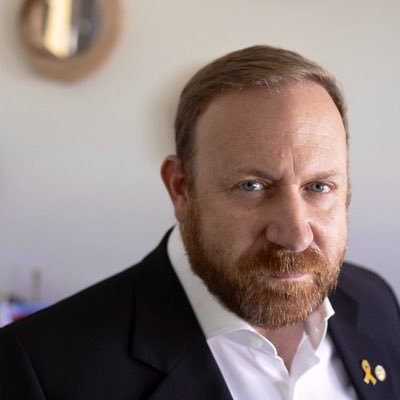
at the International Labour Conference this is the feeble state of diplomacy in 2025, where talk is cheap, and diplomatic talk is even cheaper. Public statements have replaced action. Symbolic notions leaving participants with a warm and fuzzy feeling. Condemnations are recycled again and again. And the theatre of concern substitutes for the reality of consequences.


I do not deny the importance of joint statements or symbolic actions. They are useful in establishing norms and consensus, and pointing us in the right direction. But when the world’s leading powers unite and still offer nothing but words, it is a damning indictment of our current diplomatic architecture.
Because here’s the truth: if the international community really wanted to change the equation, it could. Here are five diplomatic actions, not empty gestures, that could actually move the needle toward a ceasefire, a hostage release, and humanitarian relief. To my knowledge, none of them have been tried:
1. Set a public deadline for Hamas to release the hostages
The 25 signatories should issue a unified demand: release the hostages as a first step toward ceasefire. Back it with a public timeline and reinforce it with credible pressure from regional Islamic leaders. If Hamas seeks legitimacy, let them demonstrate responsibility. Let them finally put the people of Gaza first.
2. Pressure Qatar to expel Hamas leadership
Qatar plays host to Hamas’s political bureau. That must come with responsibility. The signatories should demand that Qatar sanction or expel Hamas leaders who obstruct negotiations. Tie this demand to diplomatic and economic ties. If Hamas wants to be at the table, it must stop hiding behind Doha’s diplomatic immunity.
3. Mobilise a real ceasefire negotiation platform
Enough with statements. Set up an international negotiation mechanism with permanent staff, independent funding, and the backing of the UN, EU, US, Egypt, and Qatar. Make the process transparent, time-bound, and accountable. Assign diplomats, not declarations. Publish progress. Negotiate like lives depend on it, because they do.
4. Publicly support US efforts, they’re the only opnes doing the work
While others talk, the US is, however imperfectly, engaged in shuttle diplomacy. The 25 signatories should stop hedging and support the US-led efforts with diplomatic, logistical, and political backing. No other non-regional actor is putting in the grind.
5. Offer a credible humanitarian aid plan that works
Instead of blaming or bypassing, offer a new multilateral aid model, one that addresses Israel’s concerns and bypasses Hamas commandeering, one that learns from the failures of the GHF and UN operating on behalf of Hamas. Propose an aid mechanism protected by international observers and secured with regional buy-in. Less idealism, more delivery.
None of these are impossible. All require courage, coordination, and political will. But that’s what diplomacy is supposed to be about. If we want to avoid yet another generation defined by trauma, siege, and vengeance, the statements must stop and the action must begin.
Diplomacy is not broken beyond repair but it must remember its purpose: not to look concerned, but to make change happen. The people of the region don’t need more words. It needs leadership. It needs consequences. And above all, it needs hope backed by deeds.
Over 70 percent of Israelis want this war over. Lacking any credible poll, I can imagine that most of the people of Gaza are also tired of the uncertainty of war. After a year and ten months only diplomatic action that moves both sides closer to reality, and holds them to it, can bring an end to this nightmare.

Keep community journalism free.
Jewish News is free for everyone. No paywall. No barriers. Just trusted journalism for anyone who wants to stay connected to Jewish life in Britain.
If you value that, please support us.
From as little as £5 a month, you can help keep our journalism free and accessible to all.
Every day, we report on the issues that matter to our community. We celebrate achievements, support charities, challenge antisemitism and ensure Jewish voices are heard more widely.
From as little as £5 a month, you can help us continue to:
- Report on the stories shaping Jewish life in the UK and beyond
- Bring our community together through shared stories, events and campaigns
- Celebrate the people, culture and moments that define our community
- Support organisations doing vital work across Jewish Britain
You can make a one-off donation or become a regular supporter. Every contribution helps keep our journalism free, independent and accessible to all.
If everyone who values Jewish News gave a small amount, it would make a real difference to our future.