Prefer Jewish News on Google
OPINION: As a minister, I saw how police independence became a shield for inaction
In an exclusive article for Jewish News, Tom Tugendhat says: 'Policing must shift from full operational independence to operational direction. Politicians shouldn't have power to order arrests but democratic accountability should extend to strategic priorities'
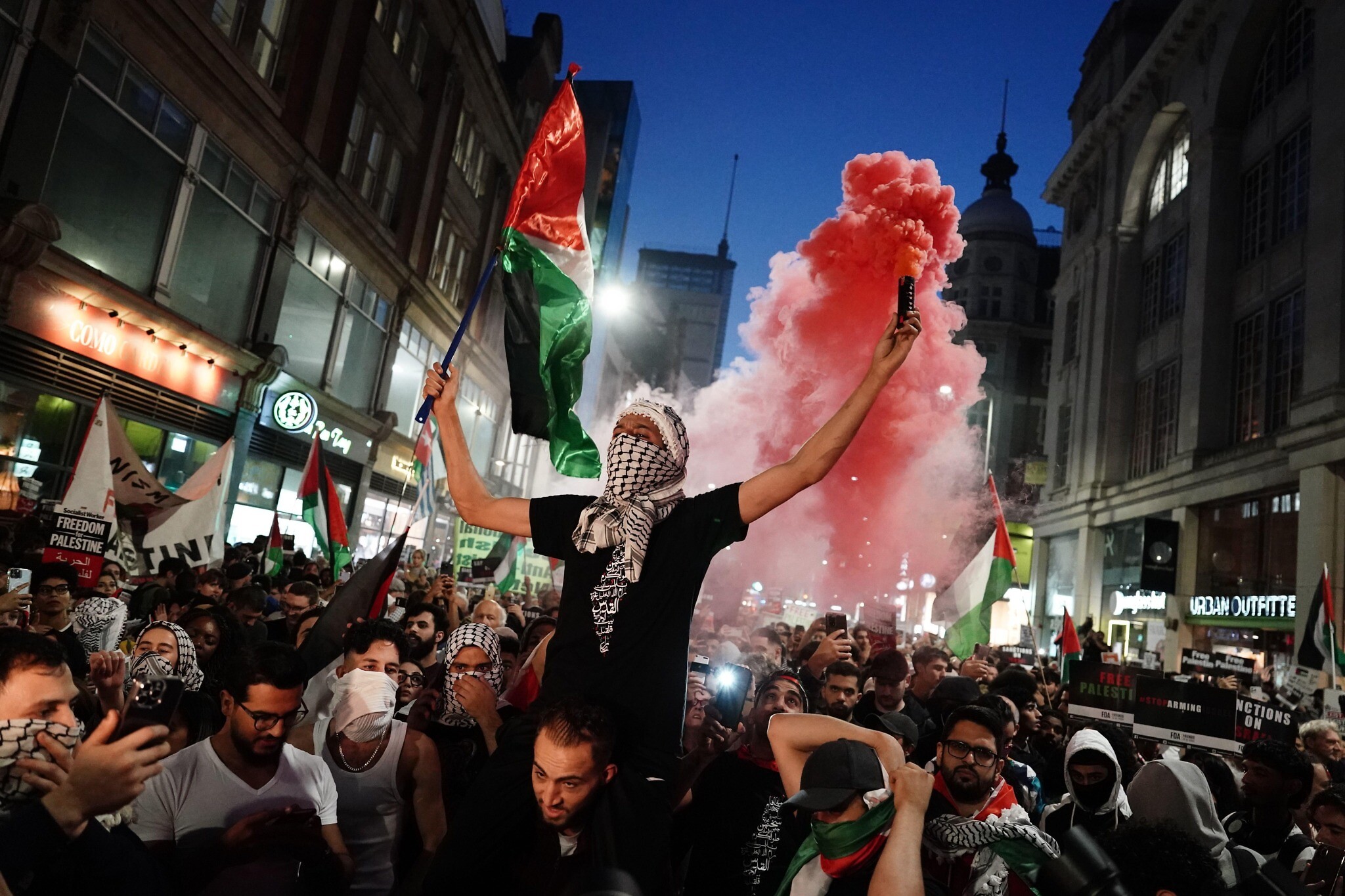
Over the past two years we’ve seen protesters chanting ‘globalise the intifada’. In Manchester, they got exactly what they wanted: British citizens murdered simply for being Jewish.
This isn’t just a one-off. This is the tragic conclusion of a terrifying cultural shift—one that accelerated after 7 October but started long before. We are now living with the consequences.
As Security Minister, protecting vulnerable communities was top of my agenda. I increased spending on security to shuls and schools, oversaw meetings with police and intelligence chiefs, and marched against antisemitism in Manchester and in London.
Those efforts failed. Here’s why.
There are many courageous police officers but the leadership has, in many instances, become political. One of the reasons for the successful turnaround of the Greater Manchester Police is that the Chief Constable, Sir Stephen Watson, refuses to be drawn. This isn’t universally the case. I saw too often how police leadership determined its own political priorities.
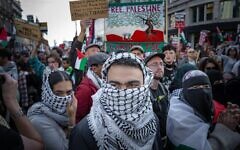
Two years ago, the rising tide of protest was more than a response to the events in Gaza. In the days leading up to Remembrance Sunday, I asked the Metropolitan Police to look again at a pro-Palestine protest planned for the country’s one national weekend a stone’s throw from the Cenotaph. Did they listen? No.
A few days later, sitting around the Cabinet table, I asked the leading police officers why arrests had not been made for visible incitement to racial hatred using slogans intended to spread fear and support for proscribed terrorist groups. I was told that the interpretations of their cultural adviser differed from mine. Were they theologians or Arabists? No, just people from the community.
Having spent years studying Arabic and Islam and living in Muslim countries, I
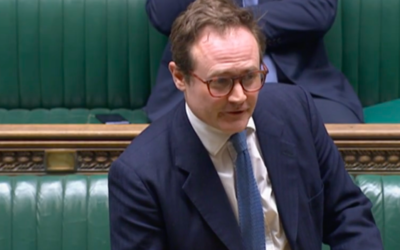
challenged their decision but operational independence meant their determination was the only one that mattered. More importantly, the decision that peace on the day was more important than increased fear and radicalisation over time—an inherently political trade-off—was one for the operational commander on the ground, and them alone.
This isn’t just about the Jewish community. Muslim parents complained to me that their children were seeing images of the events and were being led to believe the symbols of hatred and the ideology of those they supported, were tolerated, even encouraged. After all, the police looked on and did nothing, giving an impression of impunity and even support. That political choice put the rights of protesters over those of parents terrified that their children would be drawn down a path of radicalisation.
Despite many requests—by me, the Home Secretary, and the Prime Minister—the police determined the threshold for action was not met and would not shift. The political statement this sent and who was empowered to determine it, was telling.
Policing is rightly there to enforce the law without fear or favour. It must be independent to prevent a government from directing arrests of opponents. That is the cornerstone of a free society. It underpins equality before the law and access to justice. But democracy requires giving those charged with representing us the power to prioritise conflicting interests.
The Commissioner of the Met himself recognised the need for more political direction when he said he had no choice but to arrest the comedian Graham Linehan.
But today, elected ministers must watch as police officers determine the political implications of even the most contentious events placing a burden on the police they were neither trained nor elected to bare. So we see armed officers arrest a comedian, and other officers look on as our basic freedoms are threatened.
That’s why we need to rethink how policing in this country works.
We even saw it this week. In the wake of one of the most horrifying terror attacks in British history, we watched the depressing spectacle of the Prime Minister and Home Secretary calling the protests ‘disgraceful’ and pleading with protesters to ‘take a step back’, before admitting they are powerless to do anything about them.
When the state looks impotent it encourages challenge, first from its opponents, later from its now-frustrated supporters.
It’s time to change that. Policing must shift from full operational independence to operational direction. Politicians should have no power to order arrests but instead democratic accountability should extend to strategic priorities. When senior officials can ignore legitimate ministerial priorities, the organs of the state are acting without a democratic mandate.

Operational independence has become a shield for inaction. When public safety and social cohesion are at stake, ministers must be able to direct resources and set clear operational priorities and be held accountable for the result. Democracy requires that elected representatives can act when the public demands it. Without this, we surrender to bureaucratic paralysis while hatred normalises on our streets.
The globalised intifada is here. It is spreading fear amongst Jewish children walking to school under guard and Jewish families praying behind locked gates. It is threatening our shared future.
History shows that antisemitism adapts, changes form, and cloaks itself in each era’s language. It is a political interpretation to determine whether the illusion of safety on the day trumps longer term security against a spreading poison. This is not just an operational matter for the police. It’s a political choice about who we are and what we will tolerate.
We stand at a crossroads. One path is familiar and comfortable: defer to process, avoid difficult decisions, hope that somehow this resolves itself. History tells us it won’t. Hatred unchallenged becomes hatred emboldened. Weakness masquerading as restraint becomes an invitation to further violence, if we persuade ourselves it cannot happen here, we repeat the mistakes of the past.
The other path requires courage: to reform structures that no longer serve us, to empower those we elect to protect us, to make clear that incitement to hatred and violence will not be tolerated on British streets, no matter the cause it claims to serve.
This is ancient hatred in modern dress. The question is whether we have the clarity to name it and the courage to confront it.
I know which path I choose. The question is whether our country will choose it too, before the next attack, before the next funeral, before it’s too late.

Keep community journalism free.
Jewish News is free for everyone. No paywall. No barriers. Just trusted journalism for anyone who wants to stay connected to Jewish life in Britain.
If you value that, please support us.
From as little as £5 a month, you can help keep our journalism free and accessible to all.
Every day, we report on the issues that matter to our community. We celebrate achievements, support charities, challenge antisemitism and ensure Jewish voices are heard more widely.
From as little as £5 a month, you can help us continue to:
- Report on the stories shaping Jewish life in the UK and beyond
- Bring our community together through shared stories, events and campaigns
- Celebrate the people, culture and moments that define our community
- Support organisations doing vital work across Jewish Britain
You can make a one-off donation or become a regular supporter. Every contribution helps keep our journalism free, independent and accessible to all.
If everyone who values Jewish News gave a small amount, it would make a real difference to our future.