Prefer Jewish News on Google
OPINION: Assisted Dying and the Book of Life
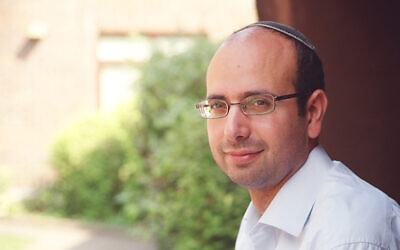
Rabbi Dr Raphael Zarum, Dean of the London School of Jewish Studies, writes that 'life is always a struggle, but we should fill our days rather than try to reduce them'

Right now, the House of Lords is debating one of the greatest moral issues of our time. Introduced to Parliament last year, the “End of Life Bill” will enable a person who is terminally ill and meets certain criteria to request and lawfully be provided with assistance to end their own life.
Chief Rabbi Mirvis has eloquently opposed the bill, explaining that it would “impose a new and immeasurable pressure upon terminal patients, who are already extremely vulnerable.” When a similar bill was proposed in 2006, Chief Rabbi Sacks also contested it: “Life is sacred. It is God’s gift not ours.” That bill was rejected by the House of Lords at its second reading.
In the 1980s, Chief Rabbi Jakobovits along with several other rabbinic arbiters concluded that any form of active euthanasia is prohibited in Jewish law, although the withdrawal of factors that may artificially delay the patient’s death in the final phase are allowed. This subtle balance is not always easy to apply in practice.
What concerns me is why the demand for assisted dying is growing predominantly in Western countries. Wishing to end one’s life due to unbearable pain and no hope of recovery is understandable, and the desire to assist someone in this situation is genuinely compassionate. Indeed, possibly the oldest recorded instance of assisted dying is the merciful death of King Saul at the hands of an Amalekite after the king’s unsuccessful suicide attempt. However, the fact that modern liberal democracies lead the call for assisted dying exposes something very worrying. Individual choice has become so strident that it overrides any other value. Today, unfortunately, rights tend to trump responsibilities.
In contrast, like all faiths, Judaism believes that life has a deep purpose. The gift of existence calls us to live responsibly. Personal autonomy does not just mean we can do what we like, it means we have the ability to discover our own particular way of making a difference. Every moment is an opportunity: to learn something new, to alleviate hardships of those less fortunate, to have meaningful experiences, to build loving relationships with family and friends, and to contribute to a more caring society.

There is a story of a rabbi on his deathbed. When his students asked him why he looked troubled, reassuring him that his virtuous life meant that he was surely bound for the World to Come, he responded, “In this world, with just a few of coins, I can do a mitzvah and help someone, but where I’m going, I can’t do a thing.”
Even at the end of life, even when in terrible pain, life still has purpose. In Kathryn Mannix’s moving book, With the End in Mind, a patient told her: “I wanted euthanasia, and no one could do it. But if they had… chances are I would have asked too soon… I was angry with you because you’re part of the System that says no to assisting with dying. But you weren’t saying no to dying, you were saying yes to living.”
In the Unetaneh Tokef prayer on Rosh Hashanah and Yom Kippur we sing, “Who will live and who will die? …who by fire, who by water? …who in serenity and who in anguish?” We recognise the fragility and limits of life, but then we choose to respond with “Repentance, Prayer and Charity”. This is what it means to be “inscribed in the Book of Life.”
It feels undignified to be greatly diminished by terminal illness, but in this last stage of life dignity can come in the response of the person dying and of those around them. Life is always a struggle, but we should fill our days rather than try to reduce them.
Rabbi Dr Raphael Zarum is the Dean of the London School of Jewish Studies (LSJS) where he holds the Rabbi Sacks Chair in Modern Jewish Thought. He will discuss the ‘End of Life Bill’ with Dr Lindsay Simmonds on Monday 8 September. Book at www.lsjs.ac.uk

Keep community journalism free.
Jewish News is free for everyone. No paywall. No barriers. Just trusted journalism for anyone who wants to stay connected to Jewish life in Britain.
If you value that, please support us.
From as little as £5 a month, you can help keep our journalism free and accessible to all.
Every day, we report on the issues that matter to our community. We celebrate achievements, support charities, challenge antisemitism and ensure Jewish voices are heard more widely.
From as little as £5 a month, you can help us continue to:
- Report on the stories shaping Jewish life in the UK and beyond
- Bring our community together through shared stories, events and campaigns
- Celebrate the people, culture and moments that define our community
- Support organisations doing vital work across Jewish Britain
You can make a one-off donation or become a regular supporter. Every contribution helps keep our journalism free, independent and accessible to all.
If everyone who values Jewish News gave a small amount, it would make a real difference to our future.