Prefer Jewish News on Google
OPINION: BBC’s ignorance of Hamas hasn’t just dented its credibility on Gaza – it’s shattered it
Misguided comments in a staff meeting from the corporation's head of news and current affairs further exposes deep institutional issues
When Jews ask me – as they sometimes do: isn’t the BBC antisemitic? – I answer, no. Because, as an institution, it is not.
When the Corporation makes mistakes, more often than not, ignorance is the explanation leading to what the BBC’s former director of television Danny Cohen rightly describes as blindness to anti-Jewish bigotry.
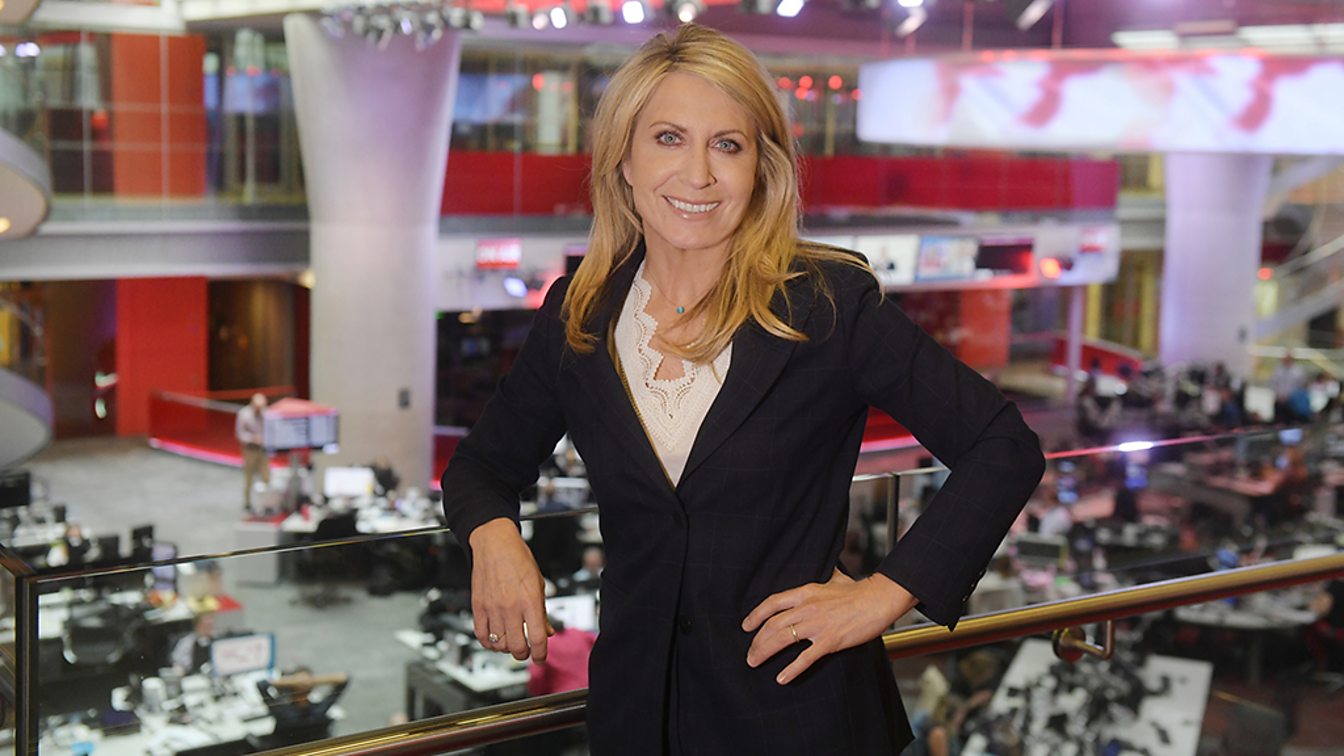
Deborah Turness, CEO of BBC News and current affairs is not blind to bigotry but in her apology to staff for the shelved BBC documentary How to Survive a Warzone she has sadly demonstrated a high degree of ignorance about Hamas.
This is incompatible with her important, influential and very well-paid position. (£431,000 pa).
True, Turness has sincerely apologised for the BBC’s failure to disclose that the father of the documentary’s eloquent 13-year-old narrator, Abdullah, was a Hamas government minister.
However, The Times revealed this morning that Turness also told staff: “It’s really important we are clear that Abdullah’s father was the deputy agriculture minister, and therefore, you know, was a member of the Hamas-run government, which is different to being part of the military wing of Hamas.”
She is four years out of date.
In 2021 the government finally caught up with the US and several other governments by accepting that distinguishing between Hamas’s political and military wings was artificial. No longer should they be treated as different organisations, because “Hamas is a complex but single terrorist organisation”.
That’s because Hamas’s military wing is ultimately subject to the strategies set by its political wing.
Indeed, Hamas’s co-founder Ahmed Yassin emphasised the seamless nature of his creation when in 1998 he explained: “We cannot separate the wing (s) from the body. If we do so, the body will not be able to fly. Hamas is one body.”
Turness continued: “…externally it’s often simplified that he (Abdullah’s father) was in Hamas, and I think it’s an important point of detail that we need to continually remind people of the difference and of that connection.”
It is Turness who has over-simplified the issue.
Days after transmission, the investigative journalist David Collier showed that far from Abdullah’s father – Ayman Al-Yazouri – being some minor Hamas political minion, in clan terms he was “Hamas royalty”.
Ayman was cousin to another co-founder of Hamas, the late Dr Ibrahim Al-Yazouri to whom Ayman referred as the “Dean” of the Al-Yazouri family.
Collier also found that an “Ayman Al-Yazouri” spoke at the official Hamas memorial service for Dr Al-Yazouri in 2021. Present were machine gun- toting members of Hamas.
Deborah Turness, CEO of BBC News and current affairs, is not blind to bigotry but in her apology to staff for the shelved BBC documentary How to Survive a Warzone she has sadly demonstrated a high degree of ignorance about Hamas
Abdullah’s father had also praised the Hamas terrorists who murdered four Israelis at a restaurant and petrol station in the West Bank in June 2023.
To be clear, blame for the non-disclosure lies more with the independent production company Hoyo Films commissioned by the BBC to make the programme, than it does with the BBC.
That was the finding of a review by the Corporation’s Director of Editorial Complaints and Reviews, Peter Johnston.
Repeated requests by BBC executives to Hoyo’s founder and director Jamie Roberts to double check Abdullah’s background, were met with “nothing to see here” – even though Roberts, and his crew had known for months that Abdullah’s father was a Hamas government minister.

Nonetheless, as Turness has said, the BBC was partly to blame because the executives overseeing the programme shouldn’t have just taken Roberts’ word for it; they should have “run those questions to ground.”
Yet her latest comments about Hamas carry an echo of Hoyo’s own unconvincing explanation for failing to disclose that Abdullah was part of an influential Hamas family.
According to Johnston, Hoyo regarded Abdullah’s father’s ministerial role as merely “technocratic” rather than a “political or military position.”
This is where Johnston’s report raises as many questions as it answers.
Whilst he finds the BBC were too incurious for such a high-risk programme, so too has Johnston been incurious about Hoyo’s conduct – a factor that I would respectfully suggest should weigh in favour of three BBC executives now facing disciplinary action.
Yet Johnston also finds that Hoyo hadn’t intentionally misled the BBC because he’s satisfied Hoyo acted in good faith.
He says that’s because since the imbroglio, Hoyo had been “consistently transparent” by admitting they should have told the BBC about Abdullah’s father.
Of course, had the BBC known Abdullah was the son of a senior Hamas member, the £400,000 programme – at least in its current form – may never have been commissioned.
Hoyo learnt about Abdullah’s family links to Hamas in July 2024, so why didn’t they tell the BBC straight away?
Hoyo says that at that early stage in the programme’s development it wasn’t yet sure they’d “even include the narrator.”
Really? Hoyo had surely all but decided that it would.
Not only had Abdullah been given a prominent role in the document that Hoyo had pitched to the BBC for this lucrative commission.
In August 2024 – just a month after Hoyo purported to be unsure about a role for Abdullah – the “crew” met his father to seek his permission to film the boy.
Between 19 December 2024 and 22 January 2025, there were at least five occasions when Hoyo was asked by BBC executives if it had conducted due diligence on the background of interviewees.
The BBC also told Hoyo the audience needed to “know more about” Abdullah.
On 12 January, 2025, Hoyo was also asked if “due diligence has been done…..on the lead boy” to ensure he “doesn’t have links in any way” to Hamas.
Three days later Hoyo was again asked specifically for “background, family social media” of the “narrator.”
These questions were not answered. Again, the question is: why not? Roberts says he was struggling to keep up with the “bombardment” of requests and emails from the BBC.
I’ve been there. I know how he feels.
Yet nothing – but nothing – could have been more central to compliance with BBC editorial guidelines which are designed to keep the Corporation’s journalism out of trouble – most especially in what has become by some distance the world’s most divisive conflict.
The question as to why Hoyo failed to address the BBC’s questions becomes even more pertinent when we learn that at a pre-transmission meeting on 22 January to discuss any outstanding issues, the BBC raised a strikingly similar issue that had confronted Panorama on a Gaza programme.
One of Panorama’s contributors was the son of the mayor of Gaza. Panorama was – rightly – transparent about this by reporting the fact, not hiding it.
However, Roberts told Johnston he didn’t recall this exchange. I understand BBC executives who were present are clear that it did happen.
Immediately following transmission, there was yet another incident which, on its face, might suggest that Hoyo had knowingly chosen not to raise the issue of the narrator all along.
In a footnote, Johnston reveals there was a telephone call between a BBC executive and Hoyo in which the company is alleged to have said the reason the information had been withheld was because they didn’t “want to scare the BBC.”
Hoyo has categorically denied ever saying this.
However, although the BBC executive made a contemporaneous note of the conversation, Johnston did “not consider” this was sufficient evidence “to impute the suggested intention of the comment as being a concession that the information was knowingly withheld.”
Of course, I can’t get into Hoyo’s mind. Perhaps it genuinely didn’t think the fact that the central character in their documentary was the son of a Hamas minister warranted disclosure to the BBC.
Yet if that really was what Hoyo thought, it shouldn’t have been anywhere near Gaza – at least not on the BBC’s nickel.
I know there will be many in the Jewish community who wouldn’t mourn the Corporation’s loss. To them I would simply say that in a post truth age – be careful what you wish for
Hoyo director Jamie Roberts is an accomplished film-maker and he’s won an impressive list of top awards for his documentaries. Like How to Survive a War Zone, they focus on engaging people at the centre of conflicts.
So, it’s strange that he ventured into the Middle East minefield with his eyes seemingly closed, whilst his BBC paymasters were urging him to keep them open and to check, check and check again.
He’s not the first journalist to come a cropper in the Israel-Palestine conflict. And he won’t be the last.
It’s just a shame that he and his company have done so much damage to the BBC.
I know there will be many in the Jewish community who wouldn’t mourn the Corporation’s loss.
To them I would simply say that in a post truth age – be careful what you wish for.
Very careful.
The irony is the programme itself was well made, broadly fair, and included people cursing Hamas and showing how Gaza paramedics were little short of heroic, braving intense IDF missile strikes.
It’s the BBC’s job to show the human misery of living in a war zone – and how unconscionably harsh are the conditions that ordinary Palestinians are having to endure month after month.
Yet this public duty was sabotaged by the simple fact that licence payers were never told the narrator was part of Hamas royalty – even though there was nothing particularly contentious in the script written for him by the BBC.
If that sounds petty to pro-Palestinian supporters, it’s clearly not. The BBC always has to play it straight, most especially when it comes to the world’s most divisive conflict.

Keep community journalism free.
Jewish News is free for everyone. No paywall. No barriers. Just trusted journalism for anyone who wants to stay connected to Jewish life in Britain.
If you value that, please support us.
From as little as £5 a month, you can help keep our journalism free and accessible to all.
Every day, we report on the issues that matter to our community. We celebrate achievements, support charities, challenge antisemitism and ensure Jewish voices are heard more widely.
From as little as £5 a month, you can help us continue to:
- Report on the stories shaping Jewish life in the UK and beyond
- Bring our community together through shared stories, events and campaigns
- Celebrate the people, culture and moments that define our community
- Support organisations doing vital work across Jewish Britain
You can make a one-off donation or become a regular supporter. Every contribution helps keep our journalism free, independent and accessible to all.
If everyone who values Jewish News gave a small amount, it would make a real difference to our future.