Prefer Jewish News on Google
OPINION: Hollow interfaith gestures have had their day
Rather than reduce Jewish-Muslim relations to platitudes and tea and samosa smiles, it's time to move into this challenging space with courage, dignity and honesty
The flawed and inherently weak nature of Muslim-Jewish relations in the UK was exposed by 7 October.
As someone who worked in this area for almost 25 years, 7 October showed not only the deep fragility of the nature of these relations, but the superficiality of them.
The feelgood pictures taken for social media between a handful of Jews and Muslims and between the same individuals circulating in various circles, sometimes premised on the need to show some action, more out of self-indulgence rather than real long term change.
Even today, some groups purporting to do this work and who receive substantial public funding sums repeat and rehash the same tea and samosa smiles on photos for social media. We should therefore be asking what is the actual measure of the public good of their work, apart from knowing or having a connection with a minister which ensures their rolling funding.
What 7 October also demonstrated was how the hardliners in both communities had pulled minds towards the polar opposites over time; as though either was now confirmed in the minds of the other as a risk or worst still, an existential threat.

Sadly, these spectrums of view missed out where these communities were – in the safety of the United Kingdom and with its range of protections.
Nonetheless, the pain of 7 October, the hostage taking and the history of antisemitism, shook British Jews to their core. This is something that many British Muslims simply fail to grasp or deflect away because of the awful killings in Gaza.
7 October felt like an existential threat to Jews globally. Many Jews felt that a basic empathy and connection was missing from Muslims they knew. This added insult to injury. This is something that cannot be denied, since there were very few Muslims I know of who sent their Jewish friends and neighbours texts or messages of compassion and empathy after 7 October . So for many British Jews, I am sure, it felt like they were alone. Again.
For many Muslims, the opposite is true. That after so many deaths and killings in Gaza, (somewhere in the range of 20-25,000 women and children), few British Jews sent them messages which demonstrated an acknowledgement of their pain or the harshness of Israel’s response to the two million people in Gaza. Even it seems that figures of the dead in Gaza could not be agreed on with claims of Hamas’figures being unacceptable for Israel and with no other independent agencies able to get into Gaza to verify actual numbers.
The mistrust and long list of grievances echoes globally between Muslims and Jews, with no attempts to try and salvage and build sustainable wider longer term engagement between the two.
What is clear is that Muslim-Jewish engagement has come to an abrupt and severe halt and apart from the same handful of individuals taking the same photos of the same people, there has been no real grass roots momentum in trying to build engagement, dialogue and support points between Muslims and Jews.
Both communities seem to be talking at each other, rather than with each other. We are now in our third year of a stagnation that feels like the walls and divides between both communities re getting higher and higher.
Which is why, for those of us who care deeply about social cohesion between Muslim and Jewish communities, there needs to be a radical overhaul of the kind of work that brings both communities together.
Interfaith has had its day. It has run its course and cannot be supported by public funds any more. We need work that challenges both communities from moving from their rigid positions about the other, and which gives them a stake in something that they believe can make a real difference for both communities.
If nothing is done, I am sure of one thing. Both sets of communities will seek alliances with organisations or groups that seek to undermine the other, or worst still, re-enforce toxic stereotypes about each other.
This, I fear, is where we are already at. I fear for younger generations. Surely they deserve a future without hate and intolerance, just because we did not want to put our heads above the parapet and do the right thing.
The right thing means getting out of our cushioned slumber, and stepping forward into the unknown with courage, dignity and empathy towards each other.
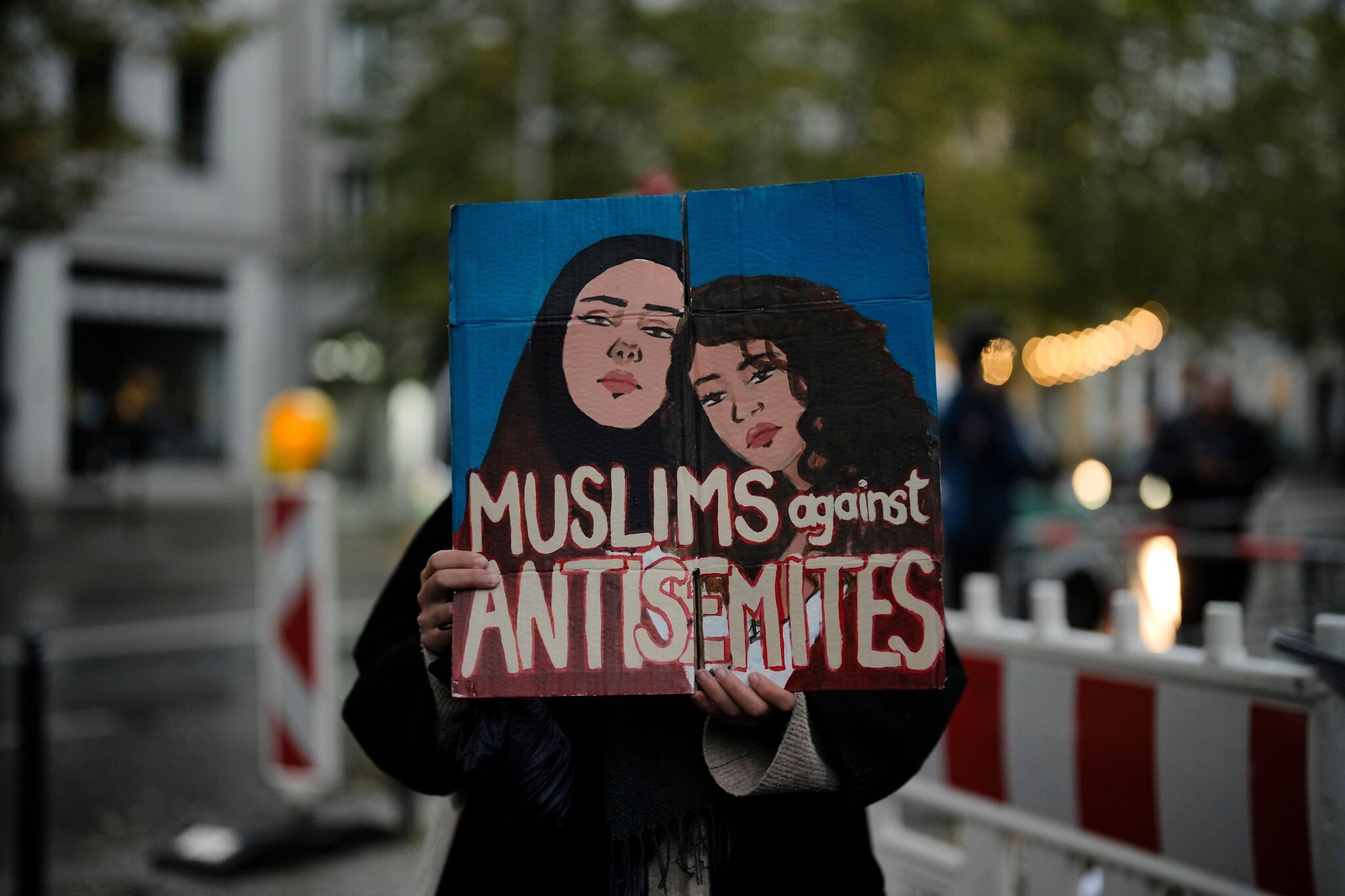
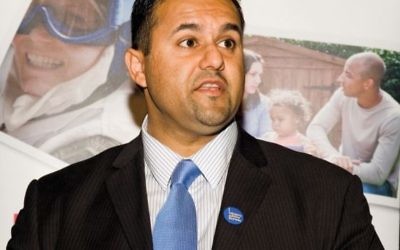
Fiyaz Mughal OBE is the Founder of Faith Matters, Tell MAMA and Muslims Against Antisemitism

Keep community journalism free.
Jewish News is free for everyone. No paywall. No barriers. Just trusted journalism for anyone who wants to stay connected to Jewish life in Britain.
If you value that, please support us.
From as little as £5 a month, you can help keep our journalism free and accessible to all.
Every day, we report on the issues that matter to our community. We celebrate achievements, support charities, challenge antisemitism and ensure Jewish voices are heard more widely.
From as little as £5 a month, you can help us continue to:
- Report on the stories shaping Jewish life in the UK and beyond
- Bring our community together through shared stories, events and campaigns
- Celebrate the people, culture and moments that define our community
- Support organisations doing vital work across Jewish Britain
You can make a one-off donation or become a regular supporter. Every contribution helps keep our journalism free, independent and accessible to all.
If everyone who values Jewish News gave a small amount, it would make a real difference to our future.