Prefer Jewish News on Google
OPINION: Palestinian statehood recognition now betrays Labour’s better traditions
Labour has two paths to choose from: the failed legacies of Bevin and Corbyn, or successful ones like Blair's Northern Ireland Peace Agreement

The Labour Party has a complex history with Israel. The post-war Labour government neither intended to recognise the Jewish state nor support its UN membership, abstaining from the UN Partition vote in 1947. Foreign Secretary Ernest Bevin told his US counterpart that Britain was “unanimous” in opposing a Jewish state, calling the Balfour Declaration an “unfortunate error.”
After the vote, Bevin condemned President Truman’s recognition of Israel, insisting borders not be recognised and the arms embargo maintained. Labour systematically tried to sabotage the UN Partition Resolution, such as offering “wholehearted support” for the Bernadotte Plan, which would have removed 60% of the Jewish state. They were among the few to abstain from the 1949 vote admitting Israel to the UN.
Yet Labour giants like Nye Bevan and Richard Crossman celebrated the new state. Harold Wilson, the only modern prime minister to win four general elections, continued this legacy throughout the 1960s and 70s, expressing reverence for “social democrats who made the desert flower.”
However, Soviet bloc support for Israel reversed from the late 1960s, with extreme anti-Zionist propaganda infecting the far-left, including then-outsiders Jeremy Corbyn and George Galloway.
Tony Blair’s leadership saw Labour reaffirm close ties with Israel as a fellow democracy surrounded by hostile actors, clinging to liberal values in an anti-democratic region plagued by extremism.


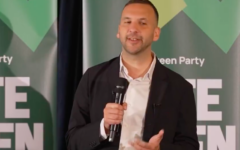
Today, Starmer’s Labour holds little influence with Israel. Foreign Minister David Lammy allegedly couldn’t secure a meeting with the Israeli Prime Minister during his visit. When two Labour MPs were barred from Israel for calling for sanctions, 70 colleagues were reduced to a protest photoshoot.
After hostile diplomatic gestures, Sir Keir dramatically announced UK recognition of a Palestinian state — presumably for cynical electoral reasons, after feeling squeezed by vocal anti-Israel backbenchers and independents who make Gaza their core policy offering.
But pandering to extremists for whom Labour can never be extreme enough is unacceptable when voices of reason are so desperately needed. The government cannot explain the borders it will recognise and has no clear idea how the Palestinian Authority can exercise governance. It seemingly hasn’t noticed that the PA relies on aid, is deeply unpopular, corrupt, has lost control of West Bank areas to Iran-backed terror groups, pays salaries to convicted terrorists, and glorifies violence and racism to children.
The only effect of announcing recognition has been encouraging Hamas, who celebrated the “victory” of 7 October and rejected ceasefire deals, prolonging the war. Hamas has no incentive to release remaining hostages.
This move is the worst of all worlds. Israel’s far-right exploited it to advance retaliatory measures, dialling up diplomatic pressure on Israel while absolving Hamas of scrutiny. Conversely, Hamas alone has the power to end this war by releasing hostages and laying down arms.
The real-world consequences are severe. By recognising a Palestinian state unilaterally — without a peace deal, without security guarantees for Israel, without meaningful PA reforms or demands on Hamas — Labour neither advances a lasting two-state solution nor promotes dialogue and negotiations. It rewards terrorism.
If this Labour government truly wants to be a party of peace, it should exert maximum pressure on Hamas through regional allies to release hostages and end this war. Only then can Labour help lay groundwork for a meaningful peace process befitting its better traditions.
Labour has two traditions to follow: the failed legacies of Bevin and Corbyn, or successful ones like Blair’s Northern Ireland Peace Agreement. As it stands, statehood recognition will be remembered not as bold statesmanship, but as the moment Labour turned its back on one of its proudest legacies.

Keep community journalism free.
Jewish News is free for everyone. No paywall. No barriers. Just trusted journalism for anyone who wants to stay connected to Jewish life in Britain.
If you value that, please support us.
From as little as £5 a month, you can help keep our journalism free and accessible to all.
Every day, we report on the issues that matter to our community. We celebrate achievements, support charities, challenge antisemitism and ensure Jewish voices are heard more widely.
From as little as £5 a month, you can help us continue to:
- Report on the stories shaping Jewish life in the UK and beyond
- Bring our community together through shared stories, events and campaigns
- Celebrate the people, culture and moments that define our community
- Support organisations doing vital work across Jewish Britain
You can make a one-off donation or become a regular supporter. Every contribution helps keep our journalism free, independent and accessible to all.
If everyone who values Jewish News gave a small amount, it would make a real difference to our future.