Prefer Jewish News on Google
OPINION: Reckoning with the Manchester Synagogue Attack
Anti-Jewish hatred in the UK is not a string of isolated incidents. It is ideology hardening into hate, when prejudice is excused and institutions lose the courage to name it.
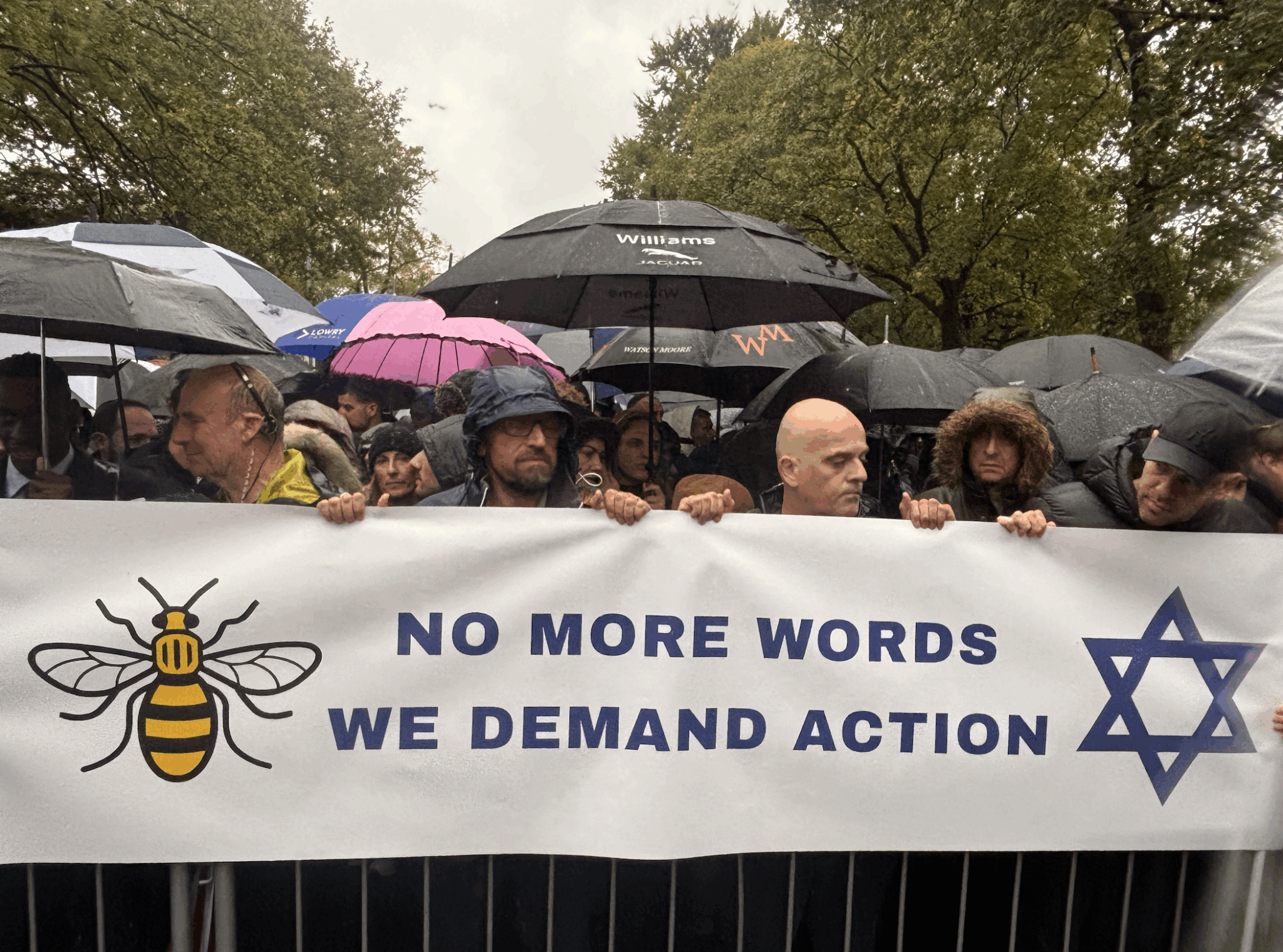
For more than three and a half centuries, Jews have found in Britain a place to live, build and belong. Through waves of change, we have been proud to call this country home. But today, Jewish people across the UK are asking questions we could once hardly imagine: Are we safe here? Do we still belong?
The killing of Jews on our holiest day was shocking, but not unforeseen. It was the culmination of something deeper and more corrosive — a steady erosion of safety and trust as anti-Jewish hatred becomes normalised in our society.
When I was a student in Manchester forty years ago, I felt entirely at ease — proud to be a British Jew in a city that embodied tolerance. Returning now as the incoming interim CEO of the Jewish Leadership Council, standing to remember those murdered simply for being Jewish, the change is unmistakable. The security of my university days has been replaced by fear — for our safety and our future. To walk our streets as visibly Jewish, to enter our places of worship, now carries the fear of violence.
This moment exposes what many have long understood: anti-Jewish hatred in the UK is not a string of isolated incidents. It is ideology hardening into hate when prejudice is excused, when institutions lose the courage to name it.
For generations, British Jews have felt pride in our place in this nation’s story — contributing across science, medicine, business and public service. A spirit of duty to Britain sits at the core of our identity, and like so many minorities who have found a home here, we have helped make this country what it is.



If that spirit is eroded, if Jews can no longer live, speak and worship freely, Britain risks losing more than a small community of 300,000. It risks losing part of its moral core. The Jewish story in Britain is not separate — it is woven into the national fabric itself.
My family came to the UK believing in that fabric. My parents left apartheid South Africa so we could grow up in a country that valued tolerance and freedom. Britain, for them, was a refuge where decency prevailed over division. They were right then. But would they still believe it now?
What matters now is not lament, but resolve — clarity, courage and commitment from our national leaders. The government must not only condemn hatred but confront it at its roots. Whether driven by anti-Jewish hatred, anti-Muslim hatred, racism or any ideology that denies human dignity, it corrodes everything it touches. That means protecting communities, safeguarding the right to worship freely, and refusing to let public discourse be hijacked by ideologies of hate.
It means leadership — moral, civic and political — that knows the difference between debate and demonisation, criticism and prejudice. We cherish the freedoms of democracy: to speak, protest and disagree robustly. But freedom carries responsibility. When political language dehumanises, when demonstrations intimidate, when advocacy cultivates hatred, that crosses a line no democracy should tolerate. Extremists exploit that line; governments too often hide behind it. Real leadership means confronting extremism and rebuilding the social resilience that allows every community to flourish.
To be clear: people have the right to publicly disagree with the actions of Israel. What they cannot do is call for a “global Intifada” — a movement that in principle and practice means the murder of Jews — or for the exclusion or destruction of those who believe in a Jewish state.
Jewish community leaders have already told the Prime Minister what concrete steps are needed to address this crisis. What remains is whether the government will act — or offer sympathy without change. In a time of deep social division, this is a test of national will.
We do not ask for special treatment, only for the same right as anyone else — to live, contribute and belong. That is what British Jews have done for four hundred years. And that is what we still want to do: proudly, freely, and together with our fellow citizens.
Debbie Fox is the incoming interim CEO of the Jewish Leadership Council

Keep community journalism free.
Jewish News is free for everyone. No paywall. No barriers. Just trusted journalism for anyone who wants to stay connected to Jewish life in Britain.
If you value that, please support us.
From as little as £5 a month, you can help keep our journalism free and accessible to all.
Every day, we report on the issues that matter to our community. We celebrate achievements, support charities, challenge antisemitism and ensure Jewish voices are heard more widely.
From as little as £5 a month, you can help us continue to:
- Report on the stories shaping Jewish life in the UK and beyond
- Bring our community together through shared stories, events and campaigns
- Celebrate the people, culture and moments that define our community
- Support organisations doing vital work across Jewish Britain
You can make a one-off donation or become a regular supporter. Every contribution helps keep our journalism free, independent and accessible to all.
If everyone who values Jewish News gave a small amount, it would make a real difference to our future.