Prefer Jewish News on Google
OPINION: Rising Lion was diplomacy by other means
Jeremy Havardi argues Israel’s strike on Iran was a calculated warning - not an act of war

Israel’s ‘12-day war’ with Iran may well go down as one of the most successful military operations in modern history. In a short period of time, Israel took control of Iran’s airspace, eviscerated its military and strategic command, defanged much of its nuclear weapons programme and assassinated key regime targets.
The feats of intelligence needed to achieve this level of operational success surpassed even those of the bleep operation against Hezbollah. Despite the tragic loss of 28 Israeli lives and the destruction of many civilian buildings, Israel can be proud of what it achieved.
But while the war has ended, the confrontation with the Ayatollah regime is not over. To quote von Clausewitz, Operation Rising Lion is ‘diplomacy by other means’, a method of gaining leverage for a future round of negotiations.

Iran may have retained fissile material removed from the nuclear sites, and there are rumours of secret locations that contain centrifuges. Most importantly, Iran still has extensive nuclear ‘know-how’ and scientists who will eventually help to reconstitute the programme at a time of their choosing. The danger from Iran has been reduced, not eliminated.
What must now follow are talks aimed at a comprehensive dismantling of Iran’s nuclear ambitions, not just any facilities that may remain, along with any hidden and illicit material, but the desire to rebuild it.



The West’s primary leverage is that the war has opened up complete control of Iranian airspace and deep intelligence penetration of its regime and, with it, the ability to attack targets, including the country’s civilian leadership, at will.
If Iran refuses to comply with the demand for a ‘Libya style’ end to its nuclear weapons programme, the West can simply turn a blind eye as Israeli and/or American operations decapitate the regime altogether. If Iran complies, however, Western leaders can promise that they will not topple the regime, now or in the future. (Regime change from within Iran is a different matter).
But a truly comprehensive treaty with Iran cannot stop there. The 12-day war showed the devastating impact of Iranian ballistic missiles as they tore into apartment blocks and turned buildings into rubble.
While Israel’s attacks on launch sites and production infrastructure have set back the missile program for a significant length of time, the long-term threat remains. A treaty must go further than the JCPOA, which merely said that Iran should not undertake ballistic missile activity related to the delivery of nuclear weapons. It should aim to ban the missiles altogether.
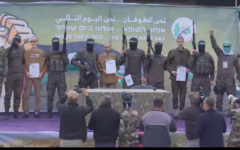
Thirdly, a new treaty should address Iran’s funding and arming of proxy forces in the Middle East, including Hamas (what remains of it), Hezbollah, the Houthis and the proxies in Iraq and Syria.
Iran certainly has its bloody fingerprints all over the 7 October attacks. One report from the Wall Street Journal stated that Iran helped plot the attack in the weeks preceding the assault and that days before, the green light came from the Iranian Revolutionary Guards Corps. Iran has long funded Hezbollah, which, prior to the war, boasted the strongest arsenal of any non-state actor in the world, and it has armed and trained the Houthis, who have threatened Western commercial shipping.
Iran must be made to end any funding or arming of these groups in order to safeguard wider regional stability and prevent the recurrence of regional wars. Naturally, intense and ongoing verification will be needed to ensure that the ayatollahs comply with such conditions.
With Iran’s power to terrorise the Middle East now diminished, it is possible to see an end to the conflict in Gaza. There are rumours of a deal made between Trump and Netanyahu whereby the war could be concluded within a fortnight in return for the removal of Hamas leaders and the return of 50 hostages.

Four Arab countries, including Egypt and the UAE, would take control of Gaza during its reconstruction and allow Palestinians who wished to leave to seek refuge in other countries. There is talk of other nations joining the Abraham Accords, including Syria and Saudi Arabia, conditioned on Israel accepting in principle a Palestinian state, though this would depend on PA reform.
If true, there is much to welcome in this proposal. It is essential that Hamas be truly disarmed and removed from Gaza, and to do this, a new PA-led security force should be established. The PA does indeed require serious political reform to make it palatable to Israel, including an end to incitement and corruption, as well as new leadership. It is only then that there can be any talk of a pathway to peace.
The expansion of diplomatic agreements between Israel and other Arab countries, especially Saudi Arabia, is an immensely important goal that could set the path for a new and more prosperous Middle East. It is also the true and lasting riposte to Iran’s war of 7 October.
- Jeremy Havardi is a freelance journalist and author

Keep community journalism free.
Jewish News is free for everyone. No paywall. No barriers. Just trusted journalism for anyone who wants to stay connected to Jewish life in Britain.
If you value that, please support us.
From as little as £5 a month, you can help keep our journalism free and accessible to all.
Every day, we report on the issues that matter to our community. We celebrate achievements, support charities, challenge antisemitism and ensure Jewish voices are heard more widely.
From as little as £5 a month, you can help us continue to:
- Report on the stories shaping Jewish life in the UK and beyond
- Bring our community together through shared stories, events and campaigns
- Celebrate the people, culture and moments that define our community
- Support organisations doing vital work across Jewish Britain
You can make a one-off donation or become a regular supporter. Every contribution helps keep our journalism free, independent and accessible to all.
If everyone who values Jewish News gave a small amount, it would make a real difference to our future.