Prefer Jewish News on Google
OPINION: Short term economic damage but Israel will emerge stronger
The long and the short of it - a view of the financial impact of war in the Middle East
Middle East wars no longer have the same power to disrupt global energy supplies as they did in 1973 when Arab producers slapped an embargo on the West generating a great inflation and recession. Nevertheless, Israel’s audacious assault on Iran’s nuclear capability and Tehran’s ballistic retaliation will have far reaching economic consequences.
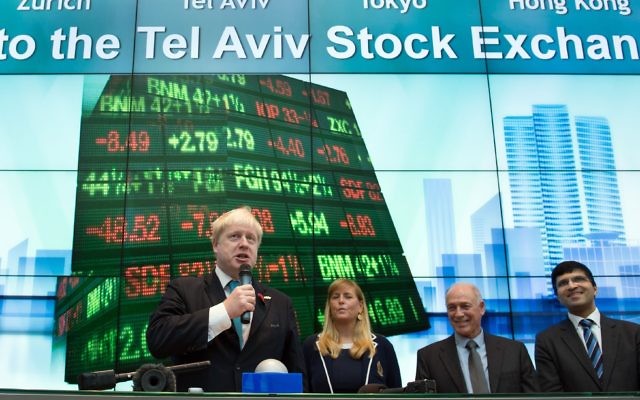
Remarkably, given the damage inflicted on central Israel, the Shekel, Israeli shares and bonds have bounced strongly. Global investors are confident that when the tit-for-tat exchanges end Israel will emerge stronger. Most of Iran’s proxies have been destroyed and Iran’s nuclear programme disabled if not destroyed.
Over the longer haul that should make investment in Israel less risky than it has been historically. The bigger concern is that the war in Gaza, currently overshadowed by the battle with the ayatollahs, has done irreparable reputational damage giving additional firepower to boycott and sanctions activity.
The short-term damage to the economy will also be considerable. Ben Gurion airport is closed so commercial access to the country by overseas businesses and the tech community cut-off. Government offices, for the moment, remain closed although the pandemic demonstrated that state employees have the capacity to work from home. Consumers have been stocking up on food and essentials, but a prolonged conflict would present supply problems.
The lengthy war in Gaza, now into its second year, has been provided for in the 2025 budget. The most recent fiscal documents show up to $15bn has been provided for. Current estimates are that a month-long conflict with Iran, involving four rounds of missile exchanges, would cost some $11bn. The Iran war is costly because of the advanced equipment deployed. There has been no budgeting for the considerable damage done to buildings and facilities although so far major infrastructure, such as oil refining facilities in Haifa, remain safe.




The war is being watched anxiously on markets across the globe. The dollar initially bounced on the foreign exchanges on the outbreak of hostilities reversing a backlash against Trump tariff and tax bedlam which has driven the dollar down 8pc this year. In times of trouble fund managers flee for safety and dollar assets, which currently offer a decent yield, come back into fashion. Gold, the ultimate safe-haven, climbed to record levels, continuing a remarkable run.
Nowadays just one-fifth of Gulf energy production passes through the Staits of Hormuz with most output heading to Asia. Self-sufficiency of oil and liquified natural gas (LNG) in the United States means that one of the world’s largest energy consumers is no longer directly impacted.
Nevertheless, with airports across the Middle East temporarily closed, shipping in danger and the US doubling down on security at its Middle East bases the threat to energy supplies is very real. Big oil may have what it needs, a return to higher global prices, but the cost is heavy.
Israel already faces substantial rebuilding costs in the South and the Galil because of damaged inflicted by Hamas on October 7 and Hezbollah in the North prior to its effective defeat. Of the 60,000 Israeli citizens who left the North for safety many decided not to return because of safety concerns.
If victory over Iran can be delivered, then reconstruction and the return of reserve troops to work will boost output. There are huge uncertainties, but Israel’s markets are betting on victory and a return to growth led by a vibrant tech sector. Let’s hope they are correct.
- Alex Brummer, City Editor, the Daily Mail

Keep community journalism free.
Jewish News is free for everyone. No paywall. No barriers. Just trusted journalism for anyone who wants to stay connected to Jewish life in Britain.
If you value that, please support us.
From as little as £5 a month, you can help keep our journalism free and accessible to all.
Every day, we report on the issues that matter to our community. We celebrate achievements, support charities, challenge antisemitism and ensure Jewish voices are heard more widely.
From as little as £5 a month, you can help us continue to:
- Report on the stories shaping Jewish life in the UK and beyond
- Bring our community together through shared stories, events and campaigns
- Celebrate the people, culture and moments that define our community
- Support organisations doing vital work across Jewish Britain
You can make a one-off donation or become a regular supporter. Every contribution helps keep our journalism free, independent and accessible to all.
If everyone who values Jewish News gave a small amount, it would make a real difference to our future.