Prefer Jewish News on Google
OPINION: Starmer’s symbolic gesture hurts Palestinians more than Israel
By using Palestinian statehood as political leverage, the Prime Minister has undermined its legitimacy
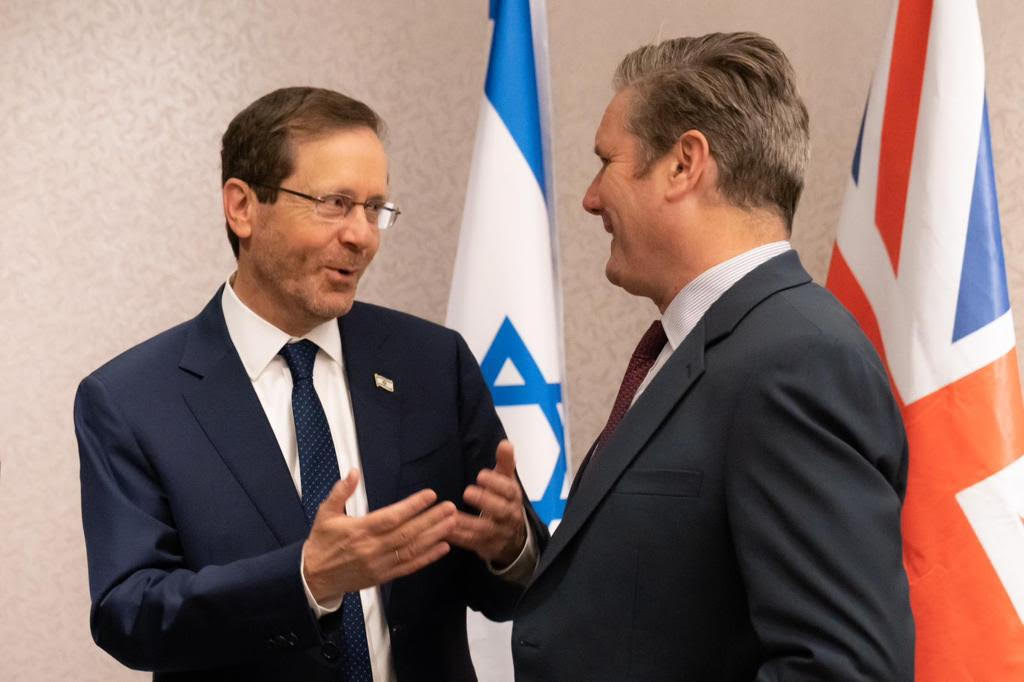
Keir Starmer didn’t want to do this, not now and not in this way, at least. The PM was clever enough to realise that recognising a Palestinian state unilaterally at this time is nothing more than an empty symbolic gesture.
I’ve been hearing that much from sources who shared this sentiment both off and on record. I dare say that the PM still doesn’t think that recognising a Palestinian state without it being part of a wider agreement is an effective, beneficial, or meaningful move. It’s pretty obvious that Starmer was pressured into making his announcement. The horrific images from Gaza, the growing criticism from within and out of his party, and President Macron’s declaration all pushed the PM into doing something that, in my opinion, he doesn’t wholeheartedly believe in. The result, like in many cases of decisions born from pressure, is a half-baked resolution that will harm the Palestinians more than anybody else.
For decades, the Palestinian national movement has been advocating that a Palestinian state is a right and not a reward. The roots of the Israeli-Palestinian conflicts, and to some extent the Arab-Jewish conflict in the Middle East, can be traced to the Arab claim that Palestine is their rightful homeland. The Arab League fiercely rejected the Balfour Declaration and the UN’s partition plan, as it was not willing to entertain the notion of a Zionist state in what they saw as an Arab land. Since 1967, the Palestinian national movement has advocated that a Palestinian state should be a fact and not a question. When, in 1988, Yasser Arafat declared the state of Palestine and received the title of its first president, he was seeking recognition but not conditions. To date, 147 countries recognise a Palestinian state.
By setting terms for his possible recognition, the PM has conveyed a message that a Palestinian state is not a right, not a fact, but a matter of consequence. Moreover, Starmer’s condition for recognising a Palestinian state has nothing to do with the Palestinian leadership or people and has everything to do with Israel. If Israel fulfils Starmer’s terms, Britain won’t recognise a Palestinian state. If Israel won’t oblige, Britain will.
If it feels like the PM is trying to use a Palestinian state as leverage, and even as punishment, well… that’s because he is. The PM did say that Hamas needs to disarm, release the hostages, and not hold a position of leadership in this new state. I hate to break it to you, but it doesn’t seem like Hamas is asking for permission or is overly impressed by anything Starmer asks. Is the PM willing to do anything to make Hamas release the hostages? Disarm? Will he do anything to make sure Hamas no longer holds power? I think we all know the answer. The only thing the PM is willing to do is to recognise a Palestinian state.
I, for one, think that recognising a Palestinian state now will send a terrible message of encouragement to Hamas, which is still armed, in control of Gaza, and holding 50 hostages. Unilaterally recognising this ambiguous state (who will be in charge of it? What are its borders?) will only hinder peace rather than progress it. Having said that, there’s one thing that is even worse than recognising a Palestinian state in this fashion and time, and that’s turning this state into a negotiation tactic and waving it around as a threat. The PM wanted to pressure Israel but ended up harming the Palestinians much more. All of that for what? Britain is no longer an empire that can create a state simply by declaring it.
- Elad Simchayoff is the Europe correspondent for Israel’s Channel 12

Keep community journalism free.
Jewish News is free for everyone. No paywall. No barriers. Just trusted journalism for anyone who wants to stay connected to Jewish life in Britain.
If you value that, please support us.
From as little as £5 a month, you can help keep our journalism free and accessible to all.
Every day, we report on the issues that matter to our community. We celebrate achievements, support charities, challenge antisemitism and ensure Jewish voices are heard more widely.
From as little as £5 a month, you can help us continue to:
- Report on the stories shaping Jewish life in the UK and beyond
- Bring our community together through shared stories, events and campaigns
- Celebrate the people, culture and moments that define our community
- Support organisations doing vital work across Jewish Britain
You can make a one-off donation or become a regular supporter. Every contribution helps keep our journalism free, independent and accessible to all.
If everyone who values Jewish News gave a small amount, it would make a real difference to our future.