Prefer Jewish News on Google
OPINION: To Wagner or not to Wagner?
A night at the German embassy sparks debate on the composer’s legacy

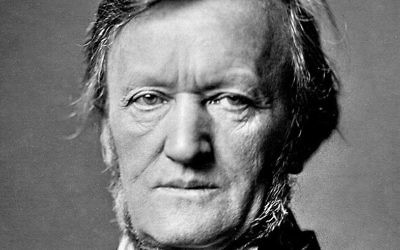
We get many invites at the Board of Deputies. One that we hesitated on was to a reception and soiree at the German Ambassador’s residence to hear extracts and discussion on Glyndebourne’s new production of Richard Wagner’s Parsifal.
There is certainly a view that one should feel guilty for listening to Wagner or even shun Wagner due to his antisemitism or even more because of how Wagner was idolized by Hitler and the Nazis.
Among my father’s childhood records were not only Gilbert & Sullivan 78s but also Wagner’s Tannhauser and Lohengrin. Over years these were certainly unplayed and not replaced.
I have enjoyed opera in quite a few middle European opera houses – Mozart, Rossini, Verdi, Beethoven, Strauss – but never Wagner. I have only seen Wagner in London – The Valkyrie – and that had the particular attraction of Placido Domingo (Siegmund) and Bryn Terfel (Wotan).
Whilst Wagner was an antisemite and his critique of Jews in German music is blatant, he still had Jewish friends and one of them, Hermann Levi, the son of a rabbi, conducted the first production of Parsifal. There is equally many articles written questioning if his biological father was actually Jewish.
Suddenly the invitation to the German embassy to listen to Wagner did not sound so mad
So questions continued, to go or not to go. Oddly, one of the alternatives for me was to watch Spurs playing Hoffenheim in Germany. But in the end I went.
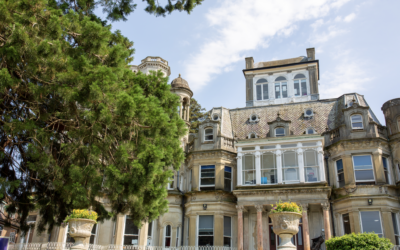
Arriving at the newly renovated German ambassador’s resident in Belgrave Square and entering a room for a soiree seemed somewhat decadent and from a bygone age.
The German ambassador, Herr Miguel Berger, welcomed the audience. To my surprise he immediately connected the event with the 80th anniversary of the end of the war, and spoke about the history of Glyndebourne and how it had been built by escapees from Nazi Germany.
The story was extended even further by Gus Christie the executive chairman of Glyndebourne, whose grandfather John Christie founded Glyndbourne in 1934. He said his grandfather was a German music lover and apparently took his sports car over the channel on a trailer behind his boat – before cross-channel ferries. Before zooming to southern Germany where he brought back Fritz Busch (a major German Conductor) and Karl Eber …
Fritz Busch had served in World War One and then conducted at Stuttgart and Dresden. However he was an ardent anti-Nazi and in 1933 he was fired.
Busch was not Jewish, but had many Jewish friends. He believed in democracy not dictators. Busch was very public in his views of the Nazis and after Hitler came to power the Nazi controlled Saxony regional parliament dismissed him. He became the founding musical director of Glyndebourne Festival Opera, before continuing his career in Scandinavia and in Argentina, though he passed away in London.
He worked together at Glyndebourne with the stage director, Carl Ebert. Ebert was also strongly against the Nazis and he became the artistic director of Glyndebourne in 1934 and continued in the role until 1959.
The final émigré Rudolph Bing was Jewish. He was to become the general manager of the New York Opera. He became a British subject and was knighted in 1971. He was born in Vienna in 1902 and by 1927 was already the manager opera house in Berlin and then in Darmstadt. However with the rise of Nazi Germany, the Bing family left for London in 1934 and helped to build the Glyndebourne Festival before leaving for New York. He is seen as one of the key founders of Glyndebourne.
Suddenly the invitation to the German embassy to listen to Wagner did not sound so mad. Later I was also told that Mala Tribich, one of our most beloved and prominent Holocaust survivors had spoken at the German School in Richmond. The parents who told me this were proud and thankful that she had come and really valued it.

Keep community journalism free.
Jewish News is free for everyone. No paywall. No barriers. Just trusted journalism for anyone who wants to stay connected to Jewish life in Britain.
If you value that, please support us.
From as little as £5 a month, you can help keep our journalism free and accessible to all.
Every day, we report on the issues that matter to our community. We celebrate achievements, support charities, challenge antisemitism and ensure Jewish voices are heard more widely.
From as little as £5 a month, you can help us continue to:
- Report on the stories shaping Jewish life in the UK and beyond
- Bring our community together through shared stories, events and campaigns
- Celebrate the people, culture and moments that define our community
- Support organisations doing vital work across Jewish Britain
You can make a one-off donation or become a regular supporter. Every contribution helps keep our journalism free, independent and accessible to all.
If everyone who values Jewish News gave a small amount, it would make a real difference to our future.