Prefer Jewish News on Google
OPINION: When the Law of Genocide Loses Its Grip
Genocide was once law’s most precise term. It has now been crafted into a slogan
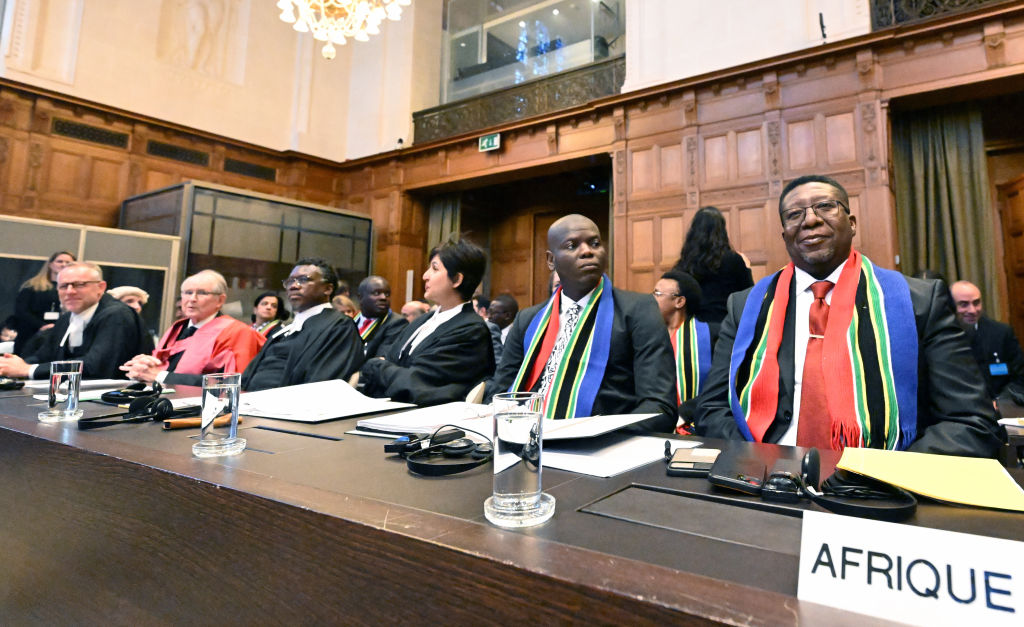
Here’s the absurdity at the heart of international justice: one court decides if a genocide has happened; another decides who did it. You’d think those two tasks would go hand in hand—that no one could be convicted of genocide unless a court had already confirmed there was one. But no. They’re separate. The International Court of Justice (ICJ) determines whether a genocide occurred; the International Criminal Court (ICC) judges individuals. So it’s entirely possible, in this strange split, for someone to be convicted of committing a genocide that, in law, has never happened.
Two courts, Two realities This division isn’t a quirk—it’s structural. The ICJ, applying the 1948 Genocide Convention, decides whether a government intended to destroy a group. The burden of proof is crushingly high—‘fully conclusive evidence’—and in three‑quarters of a century it has recognised only one genocide: Srebrenica, which seems to me chalk and cheese compared with Gaza.
The ICC is different. It judges individuals and can act on ‘reasonable grounds to believe’ they had genocidal intent. The result: two systems, two thresholds, two ‘truths’. That need not be fatal to justice, but it breeds confusion. The ICC’s judges (no jury) can convict only if there’s no reasonable doubt of intent. If plausible doubt exists, they can’t convict. And what does ‘beyond reasonable doubt’ mean except that?
How can people be so sure? Maybe we shouldn’t be overly legalistic—but genocide, the crime of crimes, is legalistic. So how can we not be?
That institutional gap has corrupted the moral force of the word itself. Genocide was once law’s most precise term, born of Raphael Lemkin’s moral genius. A Polish‑Jewish lawyer who lost most of his family in the Holocaust, Lemkin coined it in 1944 to describe the Nazis’ extermination of groups as a single, coordinated plan to erase entire peoples—six million murders, one plan.
His triumph was to give the world ‘a crime without a name’ and, through the Genocide Convention, turn that word into law. As revealed in The Nuremberg Interviews, Leon Goldensohn’s extraordinary record of conversations with Nazi defendants, many were stunned to be accused of a crime that had not existed when they acted. Lemkin’s genius was to make law answer to morality—but its power depended on precision.
Genocide works for headlines, posters, slogans—it screams Evil with a capital E. ‘Crimes against humanity’, developed by another Jewish lawyer, Hans Lauterpacht, lacks that punch.
Genocide is short, stark, unforgettable. Philippe Sands’s East West Street explains all this brilliantly.
Recklessness and the Limits of Certainty
Intent is required for almost all crimes, especially genocide. But how to prove it? Some argue that foreseeing mass casualties proves intent. Yet foresight isn’t intent. Could the real aim have been something else—as Israel insists: attacking tunnels, command centres and combatants rather than civilians?
Then there’s the claim of deliberate denial of aid. The aid agencies say what they must—they have a job to do, to demand and deliver aid, and we should accept that not enough gets through. How could there ever be enough in war? How could they not be full of anger about it? But that isn’t the charge. The charge is that aid is being deliberately denied not for military purposes, but solely to destroy a defined group—and nothing else.
As ghastly as that would be if true, it is far, far, far from being established. And even if it were, intent still matters. Other explanations must be heard and examined seriously. Courts do this all the time: test every inference, weigh competing evidence, and ask the essential question—does any other plausible explanation exist for what happened? Without that rigour, the charge of genocide collapses into outrage.
The ‘Non‑Lemkin Test’: When Outrage Replaces Evidence
Many who accuse Israel of genocide ignore intent—the heart of Lemkin’s definition. Instead, they infer it backwards from outcome: civilians died, so that must have been the aim. The real ‘test’ has become:
1. Did many people die?
2. Did anyone in leadership make hateful remarks?
3. Is outrage at fever pitch?
If so, the charge sticks. It’s cathartic—but it’s not Lemkin’s law, nor the standard Sands describes. It’s emotion, not evidence.
Why the Word Now Means Nothing
‘Genocide’, once precise, has been hollowed into a headline, a slogan. The term Lemkin crafted—the twentieth century’s most profound legal innovation—now risks becoming meaningless.
So where should truth hold? Parliament? Universities? Schools? Not a snowball’s chance. We see what they’re doing when they lead with wild claims—and we see the outcome. And this is my point. These are the places where truth, accuracy and responsibility should count, where rigorous analysis should take place—not serve up as echo chambers for slogans that slip‑side us into an even more divided society.
Now, what do they intend?
Clive Lewis is a businessman and philanthropist

Keep community journalism free.
Jewish News is free for everyone. No paywall. No barriers. Just trusted journalism for anyone who wants to stay connected to Jewish life in Britain.
If you value that, please support us.
From as little as £5 a month, you can help keep our journalism free and accessible to all.
Every day, we report on the issues that matter to our community. We celebrate achievements, support charities, challenge antisemitism and ensure Jewish voices are heard more widely.
From as little as £5 a month, you can help us continue to:
- Report on the stories shaping Jewish life in the UK and beyond
- Bring our community together through shared stories, events and campaigns
- Celebrate the people, culture and moments that define our community
- Support organisations doing vital work across Jewish Britain
You can make a one-off donation or become a regular supporter. Every contribution helps keep our journalism free, independent and accessible to all.
If everyone who values Jewish News gave a small amount, it would make a real difference to our future.