Prefer Jewish News on Google
OPINION: We need a new name for what happened on 7 October
The attacks weren't simply terrorism, they were an attempt at slaughter aimed not at negotiation but at annihilation, writes a resident of Sderot
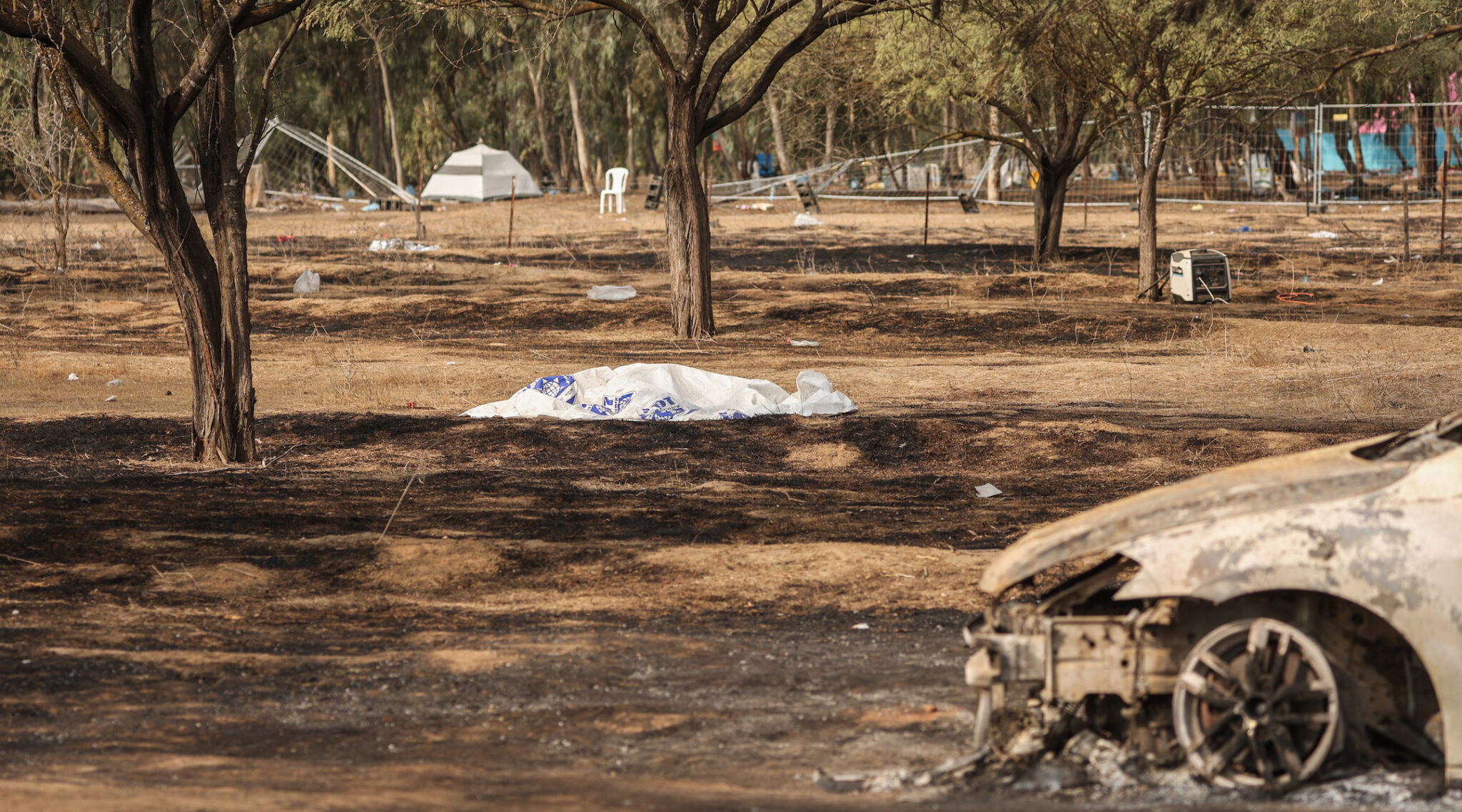
The 7 October Parliamentary Commission Report, published recently, is an amazingly important document, the most comprehensive report to date on the 7 October attacks. But it is missing one thing: a name for the type of attack that Hamas conducted against Israel that day.
It has been called terrorism, a pogrom, legitimate resistance, a Holocaust, an invasion and more. Some of these terms are more accurate than others, yet none capture the precise nature of the event.
I propose that we define the 7 October attacks as eliminationist terrorism – that is, murderous terror which targets civilians not in order to create a political or ideological shift in the world but rather to serve as the opening act in the wholescale destruction of a national, ethnic or religious group. Its goal is genocidal; yet its result is not – simply because the means are lacking.
It is mass murder that seeks to foreshadow and inspire a full-scale genocide in the future, rather than achieve one in the here and now.
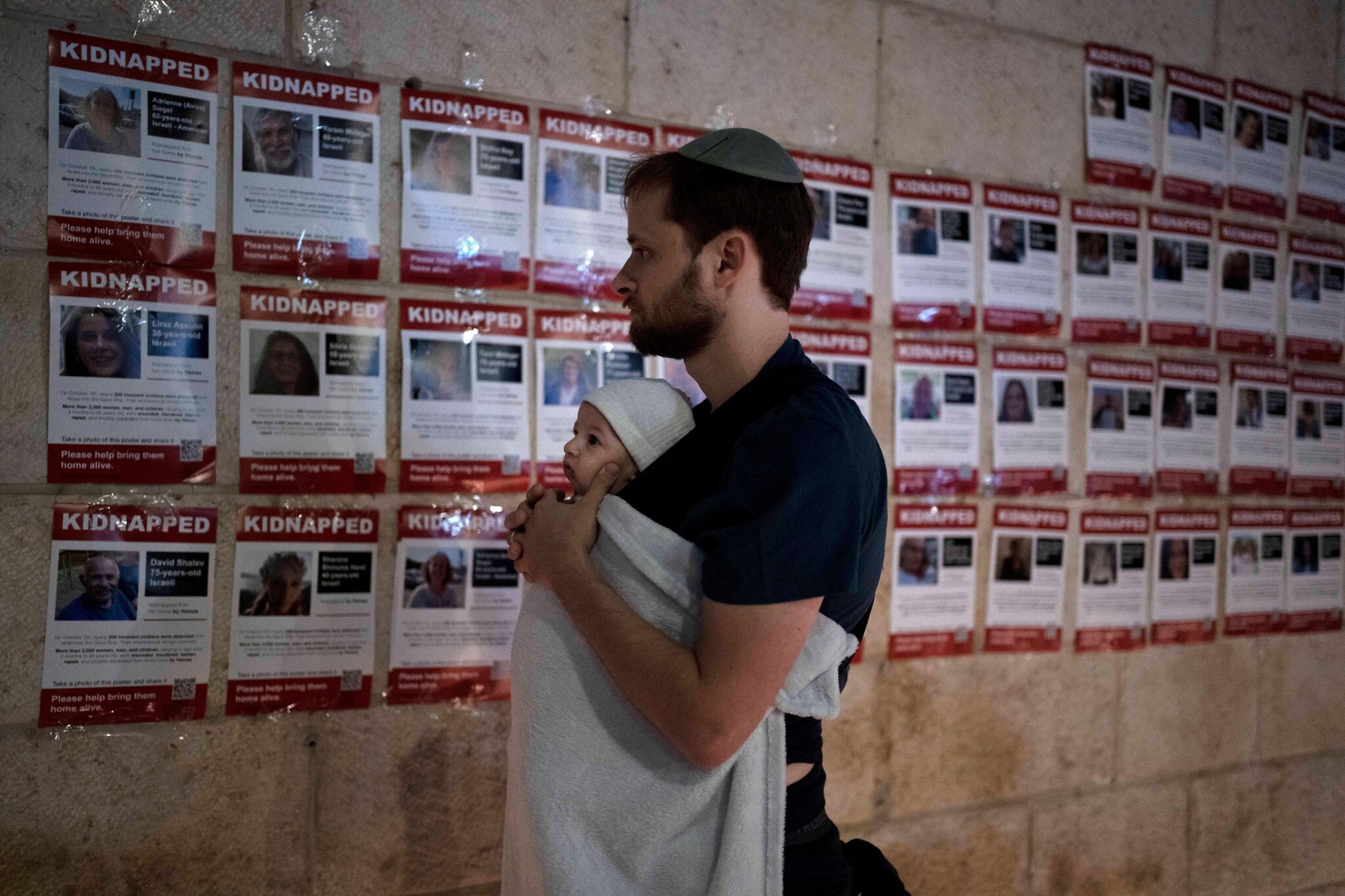
The 7 October attacks certainly do constitute a form of terrorism, as civilians were the primary target and perpetrators sought to advance a clear religious and political agenda.
Yet the term “terrorism” can be misleading, because the Western mind tends to equate it to familiar examples with more legitimate goals.

The IRA attacked both Protestant civilians in Ireland as well as civilian targets within Britain. The Basque ETA in Spain killed some 340 civilians over several decades in their pursuit of autonomy, and similar movements and tactics can be found historically in Canada’s Quebec, Italy’s South Tyrol and more. Anti-colonial movements in 19th century India and 20th century Algeria attacked British and French targets, murdering many civilians along the way. (The colonial authorities, of course, murdered many civilians as well.)
What do the IRA, the Basques and the Algerians mentioned above all have in common? None of them sought to destroy the British people or use mass-murder to end the existence of France or Spain altogether. None of these rebels, however hateful and violent they were, sought to educate their peoples about the racial inferiority of their enemies.

Hamas, quite openly, seeks the destruction of Israel as a state. Its founding charter says that Islam will “obliterate” Israel, while citing religious texts that promote the killing of Jews (not just Israelis) and quoting extensively from the Protocols of Elders of Zion (the Jews caused both world wars, control the banks, etc.). Since taking control of Gaza in 2007, Hamas has educated to both religious fanaticism as well as extreme Jew-hatred.
One does not have to be an expert on Gazan society to guess correctly which of the two most famous books associated with the Holocaust – Mein Kampf and the Diary of Anne Frank – is widely available and officially sanctioned, and which can barely be found.
The UK’s 7 October Parliamentary Commission Report concludes that “The assault was driven by Hamas’ commitment to the destruction of the Jewish State, regardless of whether this was a realistic aim.” It cites one of the attackers, who – following his arrest – explained their instructions for the attack: “The mission was simply to kill…kill every single one you see”, “to kill and kidnap the ones we can”, and “to cleanse and conquer the Kibbutz.”
Beyond the difference of intent, the 7 October attacks had a completely different scale and methodology than classic terrorism. 6,000 men invaded Israel in the attacks, with thousands more providing logistical support.
Besides in the first hour or two of the assault, Hamas focused its efforts on maximising civilian casualties: 73% of the 1,182 people killed were civilians in their homes or at a party. Almost all were killed at close range via shooting, burning or suffocation.
49% of the 251 people kidnapped were women and children. The deliberate killing of civilians (from babies to Holocaust survivors) at close range; the large-scale use of sexual violence; the torture and starvation of hostages; the desecration of corpses – all in a controlled, organised and pre-meditated fashion – are more reminiscent of genocides than of classic terrorism.
While Hamas sought (and seeks) to eliminate a people, I also believe that the crimes of 7 October do not constitute genocide. While the fantasy of genocide stood behind them, the 7 October attacks (and eliminationist terror generally) cannot be considered genocide because they fall far short of the internationally recognised definition of genocide.
Raphael Lemkin, the Polish Jew who invented the term genocide, defined it as the “extermination of nations and ethnic groups” via “synchronised attacks” on the physical existence and on the political, economic and culture life of such a group.

Neither the Jewish people nor the Israeli nation were exterminated that day. The goal of eliminationist terror is not to obliterate a people in the immediate sense, but to pave the way to genocide by increasing hatred, normalising mass atrocities and inspiring future ones.
On the road to genocide, it is neither Wannsee or Auschwitz, but rather Kristallnacht.
- George Stevens, a resident of Sderot, was evacuated for 6 months following the 7 October attacks. George serves as co-founder and strategic director of the 4MENA Network, a network of organisations in the Middle East promoting tolerance and regional integration. A version of this was presented at the Contemporary Antisemitism London

Keep community journalism free.
Jewish News is free for everyone. No paywall. No barriers. Just trusted journalism for anyone who wants to stay connected to Jewish life in Britain.
If you value that, please support us.
From as little as £5 a month, you can help keep our journalism free and accessible to all.
Every day, we report on the issues that matter to our community. We celebrate achievements, support charities, challenge antisemitism and ensure Jewish voices are heard more widely.
From as little as £5 a month, you can help us continue to:
- Report on the stories shaping Jewish life in the UK and beyond
- Bring our community together through shared stories, events and campaigns
- Celebrate the people, culture and moments that define our community
- Support organisations doing vital work across Jewish Britain
You can make a one-off donation or become a regular supporter. Every contribution helps keep our journalism free, independent and accessible to all.
If everyone who values Jewish News gave a small amount, it would make a real difference to our future.