Prefer Jewish News on Google
Original counterfeit notes from Operation Bernhard to be displayed at Holocaust Centre North
Historic artefacts of failed Second World War attempt to bankrupt the British economy and help Germany win the war
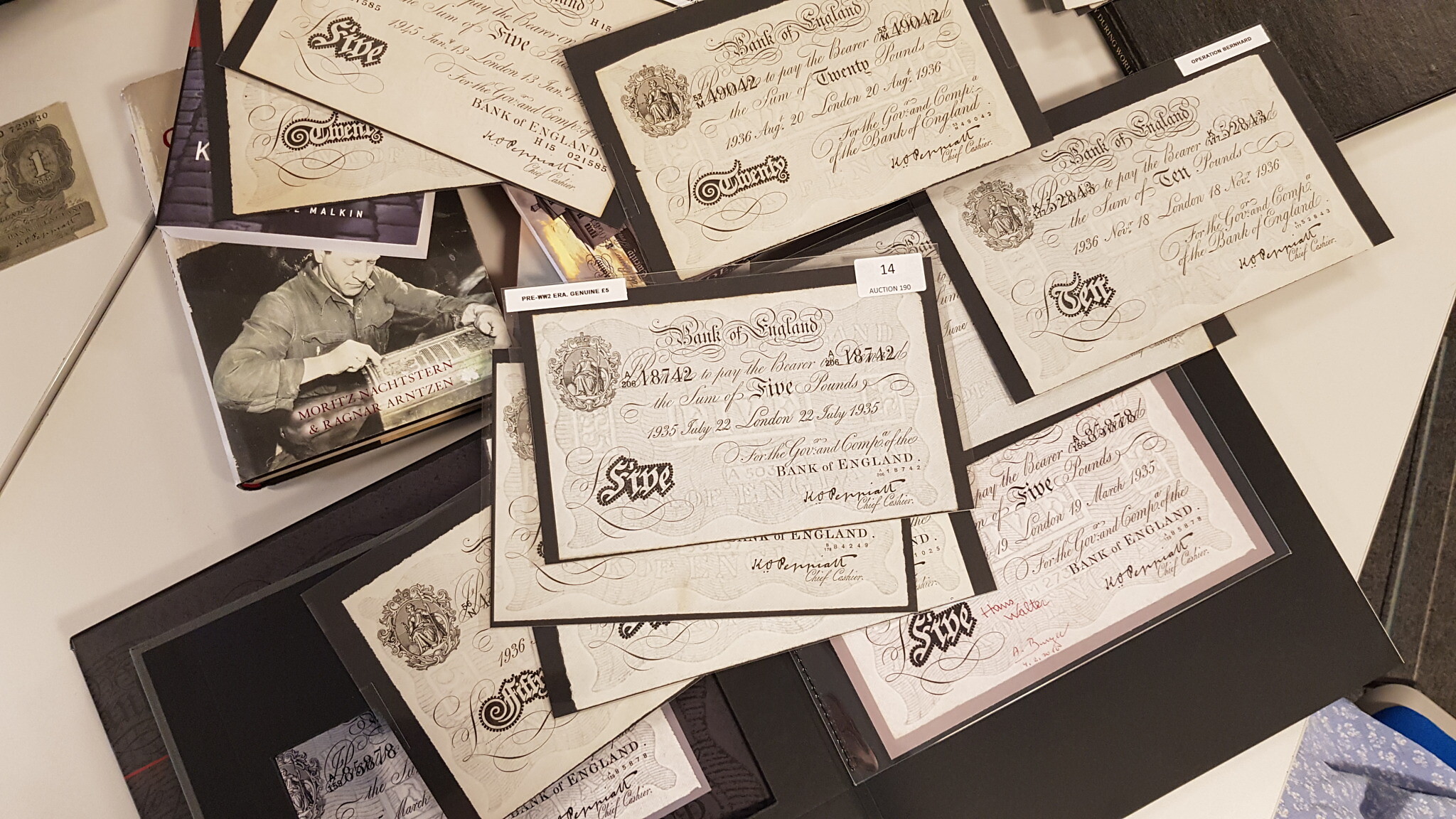
Original counterfeit banknotes created for the infamous Operation Bernhard mission from WW2 are to go on display at Holocaust Centre North from 1 May, alongside genuine £5 notes from the 1930s and 1940s
Donated to the centre by Andy Taylor, an avid British banknote collector, the historic artefacts bring to life the failed attempt by Nazi Germany to flood England with fake banknotes in order to bankrupt the British economy.
143 skilled creative Jewish prisoners – from engravers and painters to photographers and artists, as well as anybody identified as having a skill that could be useful to the forgery operation – were taken from different concentration camps and sent to Sachsenhausen Concentration Camp, near Berlin.
There, they were put into Blocks 18 and 19 and forced to produce forged bank notes, under the supervision of SS Major Bernhard Krueger.
In the camp, prisoners were not allowed to interact with other inmates and were always kept separate, to ensure the operation was kept a secret.

Survivor Jack Plaper described how they were given more leniency than other inmates and were allowed to smoke. They also had Sundays off and could go to bed when they wanted, when their work-day was over. They were, however, certain they would be killed for their knowledge of such a top-secret operation and they constantly feared for themselves and their relatives. Most, however, did survive.
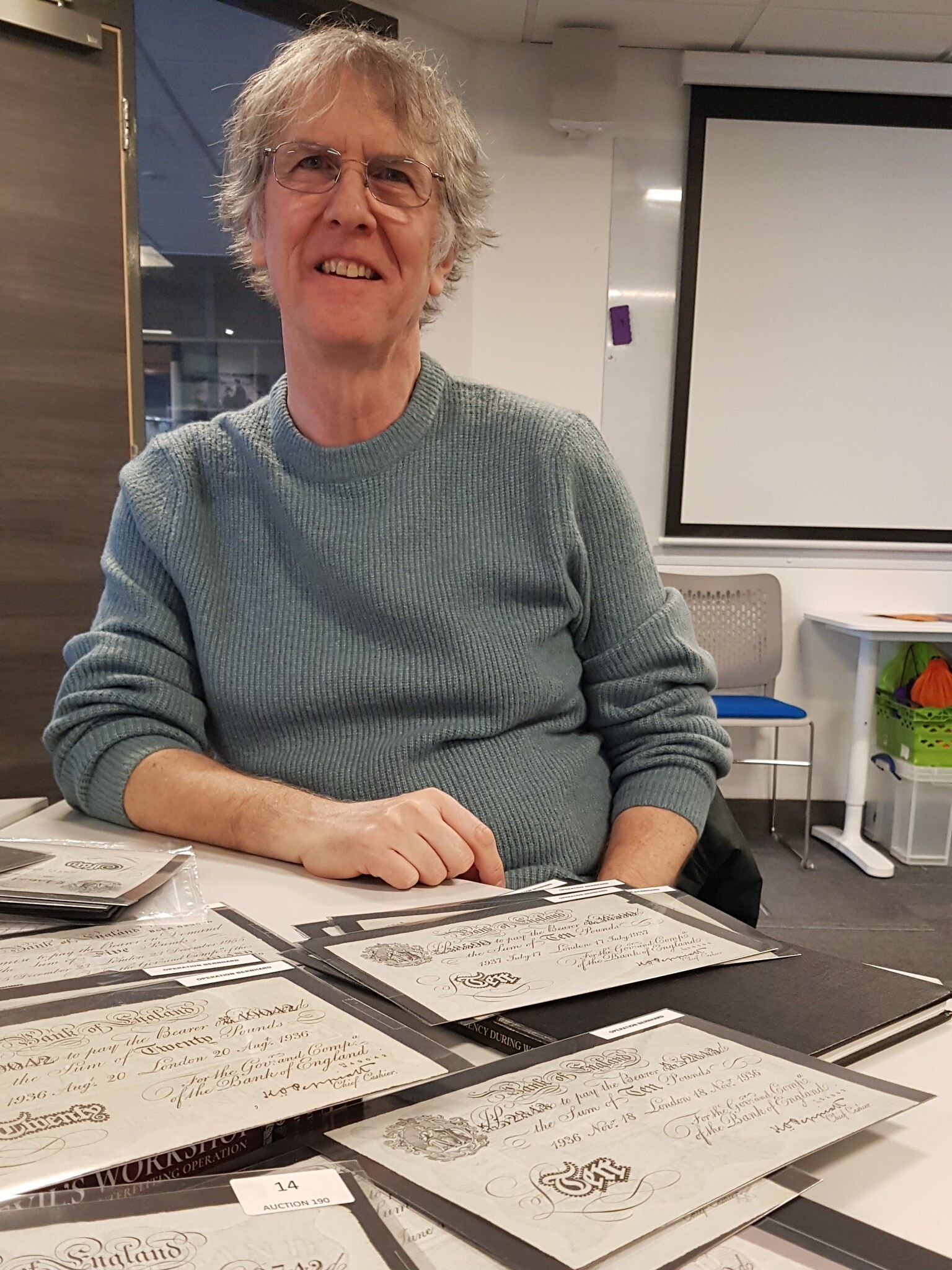
The plan behind Operation Bernhard was initially to air drop the notes into Britain but the notes they produced were of such high quality that they were used to fund Nazi intelligence operations, and £100,000 in counterfeit money was used to help free Mussolini during the 1943 Gran Sasso Raid.
Even so, the prisoners managed to secretly employ tactics to communicate the truth about the counterfeit notes. Survivor Adolf Burger described how prisoners would pierce the top left corner of the notes on purpose through the effigy of Britannia – where “none of the King’s subjects would ever allow themselves to pierce”.
The forgery mission was eventually discovered by a cashier in Tangier, which sent shockwaves through the Bank of England.
According to the Bank of England, the counterfeit Operation Bernhard notes continued to turn up in circulation right up until 1964. At the end of the war, the remaining uncirculated notes were dumped into Lake Toplitz in Austria, where they remained until 1959.
It is these stories behind the counterfeit money, and of the forgers themselves, that has led Andy Taylor to donate part of his extensive banknote collection of both counterfeit and genuine banknotes from the 1930s and 40s to the Holocaust Centre North.
Taylor said: “I saved up a year for my first historical note after seeing it in an antique and collector’s shop in York. At first, it was the look of the notes that drew me to them and to start my collection, but as my collection grew so too did my fascination in their back stories and in the parts of history that they were connected to.
“I have read so much about the Jewish men who were forced into slave labour in the camp to make these notes. I feel very strongly that more people should have the chance to see them, so they too can learn the stories behind them and keep their memories alive.
“To me the banknotes are not about profits, they are about people. I am very proud and delighted to donate them to the Centre which is dedicated to preserving history and telling the story of which this Operation was a key part.”
The Operation recently featured in the latest Peaky Blinders film The Immortal Man, on Netflix.

Keep community journalism free.
Jewish News is free for everyone. No paywall. No barriers. Just trusted journalism for anyone who wants to stay connected to Jewish life in Britain.
If you value that, please support us.
From as little as £5 a month, you can help keep our journalism free and accessible to all.
Every day, we report on the issues that matter to our community. We celebrate achievements, support charities, challenge antisemitism and ensure Jewish voices are heard more widely.
From as little as £5 a month, you can help us continue to:
- Report on the stories shaping Jewish life in the UK and beyond
- Bring our community together through shared stories, events and campaigns
- Celebrate the people, culture and moments that define our community
- Support organisations doing vital work across Jewish Britain
You can make a one-off donation or become a regular supporter. Every contribution helps keep our journalism free, independent and accessible to all.
If everyone who values Jewish News gave a small amount, it would make a real difference to our future.