Photography from a Troubled Land: Testimonies from Israel and Gaza
Public discourse often demands certainty and simplicity; these photos offer the courage to look closely, direct our gaze towards others, feel compassion and ask difficult questions
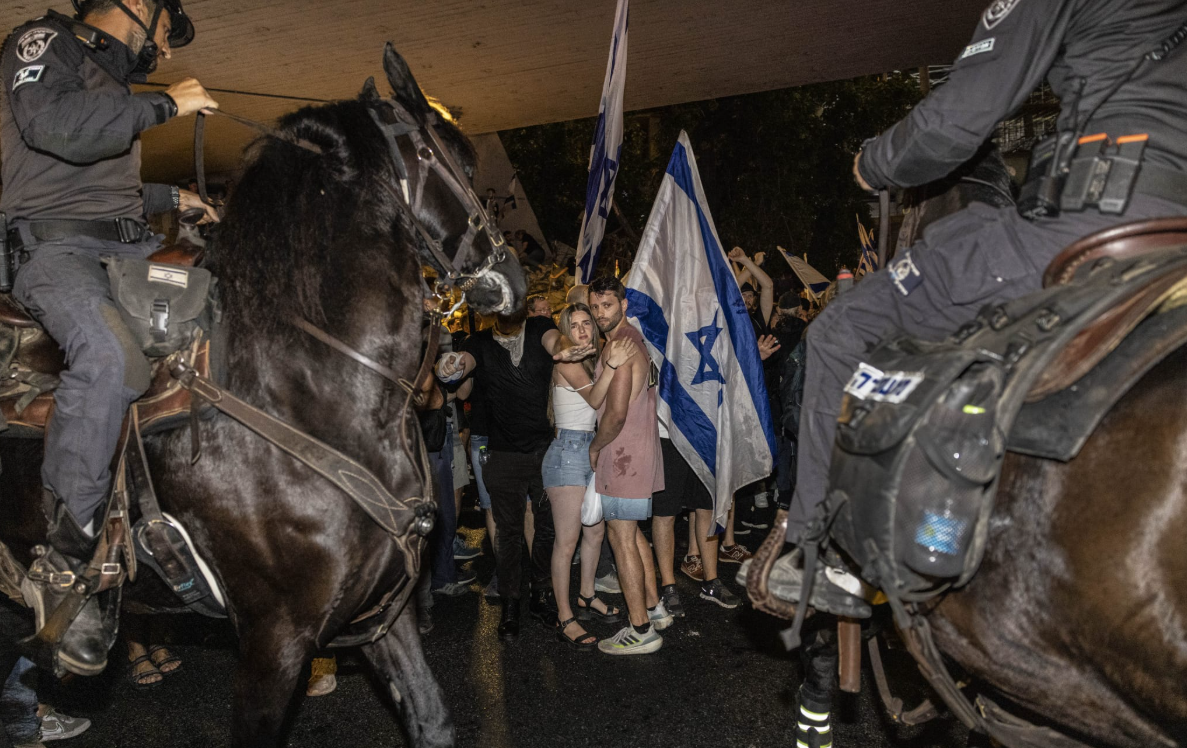
For many, war creates not only physical destruction, but also a narrowing of what can be said, shown and heard.
There is a familiar argument in Israeli public life: that in times of war, dissent should wait. That complexity can be postponed. That now is not the right time. But when “now” stretches into months, and then years, silence risks becoming the status quo. And with it, something more fragile is also placed at risk: the space for free expression, independent journalism and democratic debate.
It is precisely in such moments that photography becomes more than aesthetic documentation. It becomes testimony, evidence and a call to attention – a form of protective presence that resists the silencing of violence, exposes what might otherwise remain hidden, and creates a public record that demands accountability.
“Local Testimony” is an annual press and documentary photography exhibition presented at the Eretz Israel Museum in Tel Aviv since 2003. A selection of images from the original exhibition will be presented to the London public from 10 to 12 June under the title Testimonies from a Troubled Land.
The London exhibition brings together images taken over the past year that refuse to settle into a simple narrative. On the contrary, they hold multiple, often conflicting realities: hostages returning home from Gaza, embraced by families and communities that refused to give up on them; mass demonstrations across Israel, where citizens demand the protection of democratic institutions; alongside the destruction of war in both Israel and Gaza, grief etched into the faces of families at funerals, and the daily reality of settler violence in the West Bank.
These images bring Israel — its beauty and its despair — to life in London. Together, they form a visual record that resists simplification and embraces humanity. At its core, the exhibition is not about offering answers. It is about insisting on the legitimacy of holding more than one truth at once. Equally, it is about defending the conditions that make such plurality possible: freedom of expression, a free and independent press, and the ability to question, challenge and dissent without losing a sense of connection and hope. It is about the importance of thinking critically even in a time of ongoing war.
This is not abstract. When a society is at war for so long, these freedoms do not disappear overnight – but they can narrow, subtly and steadily. Voices fall silent. Space contracts. The boundaries of what feels permissible begin to shift.
Photojournalists work precisely at that edge. Often under immense political, social and personal pressure, they continue to document what others might prefer not to see. Their work becomes especially vital at a time when truth itself is increasingly contested and vulnerable to political manipulation. A free press does more than report events; it protects the public’s right to know, makes space for uncomfortable realities, and keeps democratic conversation alive.
Many of the photographers in this exhibition accompanied those affected by the war through long processes of grief, healing and renewal. Their sustained and sensitive work fostered bonds of trust with the people they documented. Out of these encounters emerged intimate and deeply human testimonies that reflect both the pain and resilience of societies living through one of the most difficult chapters in recent history.
The ability to sustain this kind of openness does not happen by accident. It is supported by a wider civic infrastructure of organisations, activists and independent institutions committed to democracy, free expression and a shared future for Israelis and Palestinians. Many of these efforts are supported by organisations such as the New Israel Fund, which is hosting this exhibition in London and works year-round to uphold democratic values and equal citizenship in Israel.
As the curator of this exhibition, I invite you to visit and engage with Israel and Gaza beyond headlines. To encounter the full spectrum of lived experience: hope and despair, resilience and fear, protest and grief. And, perhaps most importantly, to recognise that complexity is not a weakness to be avoided, but a reality to be faced, and that the freedom to express it is something that must be actively protected.
In a time when public discourse so often demands certainty and simplicity, these photographs offer something else: the courage to look closely, to direct our gaze towards others, to feel compassion, to ask difficult questions, and to hold complexity even when there are no clear or comfortable answers.
That, too, is a form of solidarity.
Dana Wohlfeiler-Lalkin is the Founder and Executive Curator of Local Testimony
More information on New Israel Fund and Local Testimony’s London exhibition 10 – 12 June can be found here.

Keep community journalism free.
Jewish News is free for everyone. No paywall. No barriers. Just trusted journalism for anyone who wants to stay connected to Jewish life in Britain.
If you value that, please support us.
From as little as £5 a month, you can help keep our journalism free and accessible to all.
Every day, we report on the issues that matter to our community. We celebrate achievements, support charities, challenge antisemitism and ensure Jewish voices are heard more widely.
From as little as £5 a month, you can help us continue to:
- Report on the stories shaping Jewish life in the UK and beyond
- Bring our community together through shared stories, events and campaigns
- Celebrate the people, culture and moments that define our community
- Support organisations doing vital work across Jewish Britain
You can make a one-off donation or become a regular supporter. Every contribution helps keep our journalism free, independent and accessible to all.
If everyone who values Jewish News gave a small amount, it would make a real difference to our future.