Prefer Jewish News on Google
President Rivlin concludes talks to find new PM amid election deadlock
Head of state heard recommendations from the remaining parties before he is to select a candidate most suitable to form a coalition
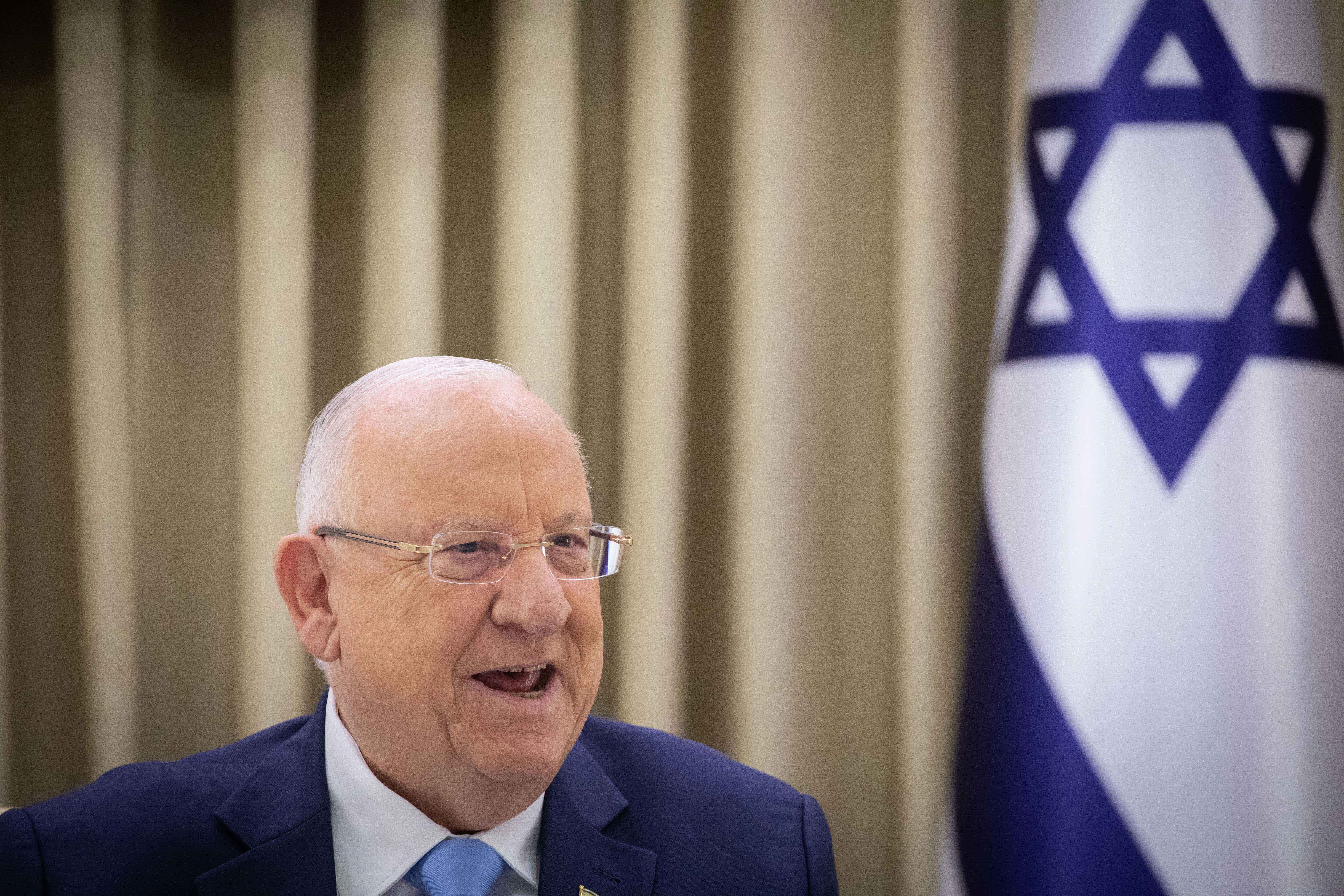
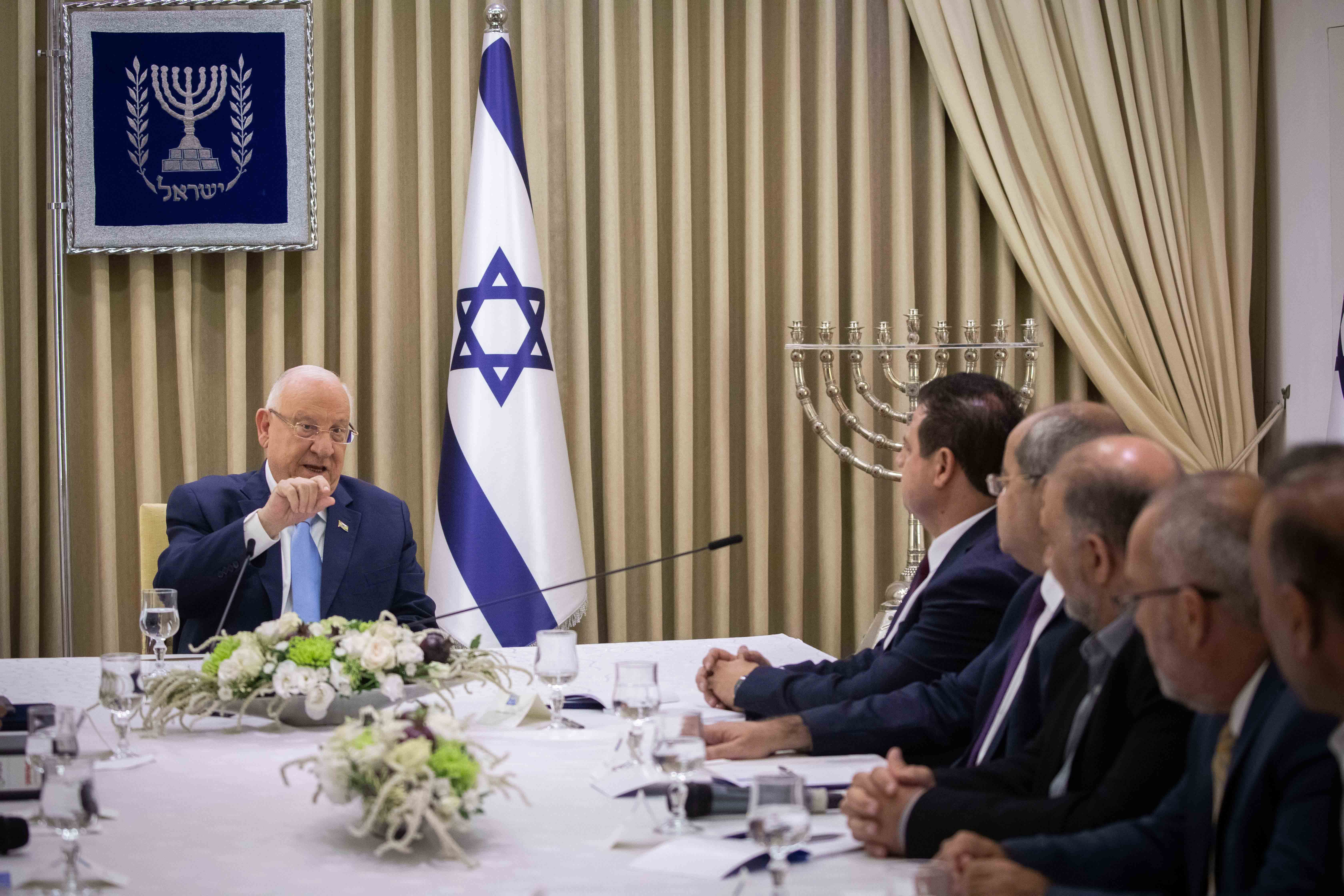
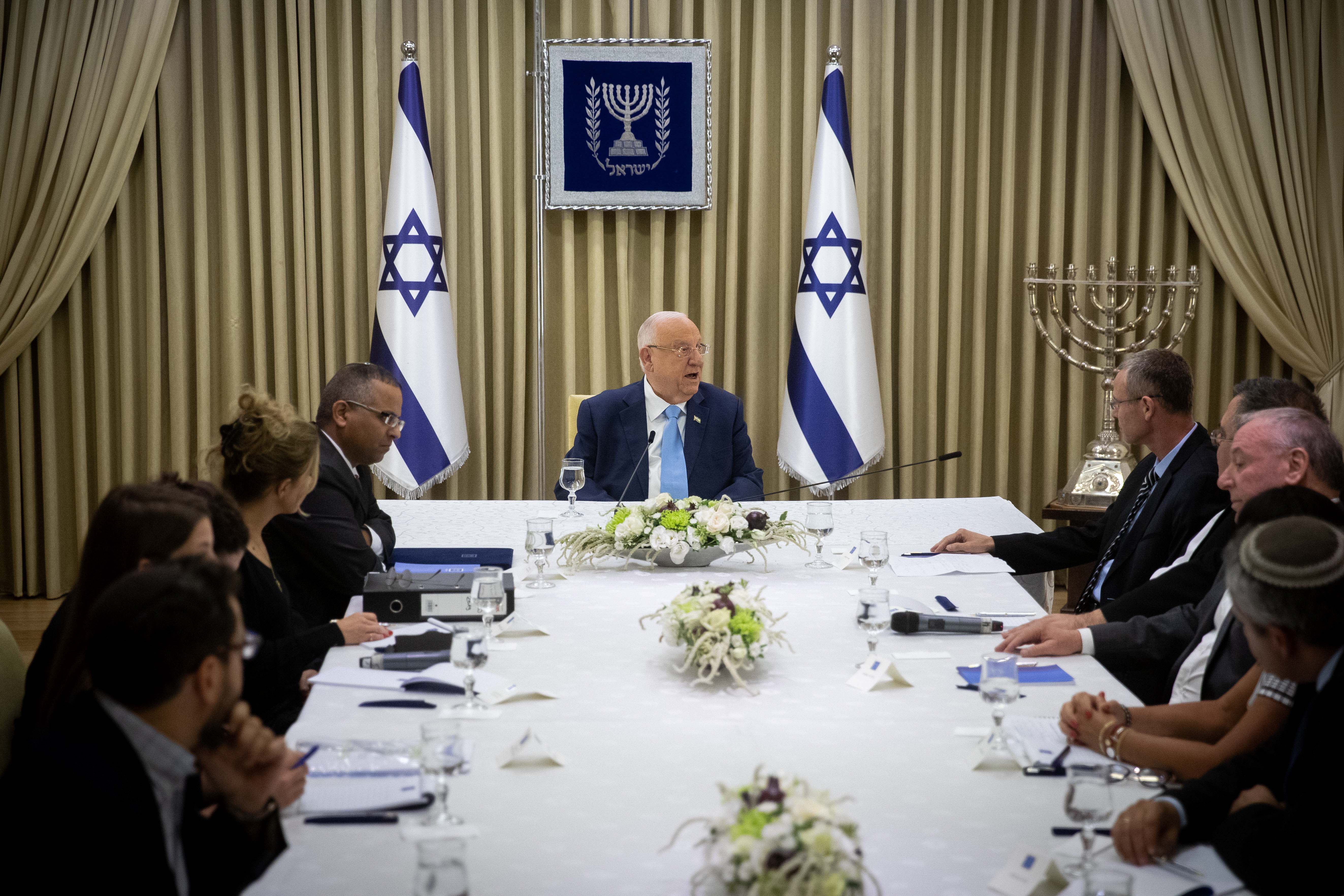
Israel’s president wrapped up his second and final day of crucial talks to find a new prime minister and a way out of political deadlock, after meeting on Monday with the smaller parties elected in last week’s vote.
After hearing the recommendations from the remaining party for who should head a government, Reuven Rivlin must now select the candidate he deems most able to form a stable coalition.
He is set to make his decision by Wednesday.
The post-election consultations are usually a formality, but the largely ceremonial president is now playing a key role after an almost tied election result.
“There is one thing that the people are largely united over and that is the desire that there won’t be third elections,” Mr Rivlin said.
The smaller parties’ recommendations were split between Israeli prime minister Benjamin Netanyahu and Blue and White’s Benny Gantz.
That would suggest that, coming out of the talks, Mr Netanyahu holds a small edge over Mr Gantz.
Mr Rivlin will likely pick the candidate with the most recommendations who will then have 28 days to try to cobble together a government.
If the first candidate chosen fails within that time, the second is given the opportunity.
If he too does not manage, the country could head to a third, unprecedented election.
In Mr Rivlin’s first round of talks on Sunday, the Joint Arab List threw its support behind Mr Gantz, the first time the Arab parties had recommended a candidate since 1992, saying it was doing so in a bid to topple Mr Netanyahu, whose anti-Arab rhetoric has infuriated and offended Arabs in Israel during his decade in power.
The backing promised to give Mr Gantz a slight edge in support.
But on Monday, the Joint Arab List said it was withdrawing some of its members’ recommendations for Mr Gantz, trimming his support to below Mr Netanyahu’s.
Last week’s repeat election produced no clear winner, with Blue and White receiving 33 seats in Israel’s 120-member parliament and Mr Netanyahu’s Likud garnering 31 seats.
Both sides fell short of the majority needed to form a government and therefore must seek the support of other parties.
Neither party can form a coalition without the eight seats won by firebrand former Defense Minister Avigdor Lieberman, who on Sunday declined to endorse either candidate for prime minister.
Mr Lieberman has pushed Mr Gantz and Mr Netanyahu to agree to sit with him in a broad, secular unity government, and both have agreed in theory but disagree over who should head it.
The vote last week was a never-before held second election which was triggered after Mr Netanyahu was unable to forge a coalition and then dissolved parliament.

Keep community journalism free.
Jewish News is free for everyone. No paywall. No barriers. Just trusted journalism for anyone who wants to stay connected to Jewish life in Britain.
If you value that, please support us.
From as little as £5 a month, you can help keep our journalism free and accessible to all.
Every day, we report on the issues that matter to our community. We celebrate achievements, support charities, challenge antisemitism and ensure Jewish voices are heard more widely.
From as little as £5 a month, you can help us continue to:
- Report on the stories shaping Jewish life in the UK and beyond
- Bring our community together through shared stories, events and campaigns
- Celebrate the people, culture and moments that define our community
- Support organisations doing vital work across Jewish Britain
You can make a one-off donation or become a regular supporter. Every contribution helps keep our journalism free, independent and accessible to all.
If everyone who values Jewish News gave a small amount, it would make a real difference to our future.