Prefer Jewish News on Google
Pro-Israel influence debate in Westminster sparks outcry over antisemitism
Petitions Committee's John Lamont said:' When reflecting on how this debate has gone, and more widely on how the Jewish community has reacted to the petition, I would certainly argue that it should not come back for another debate'
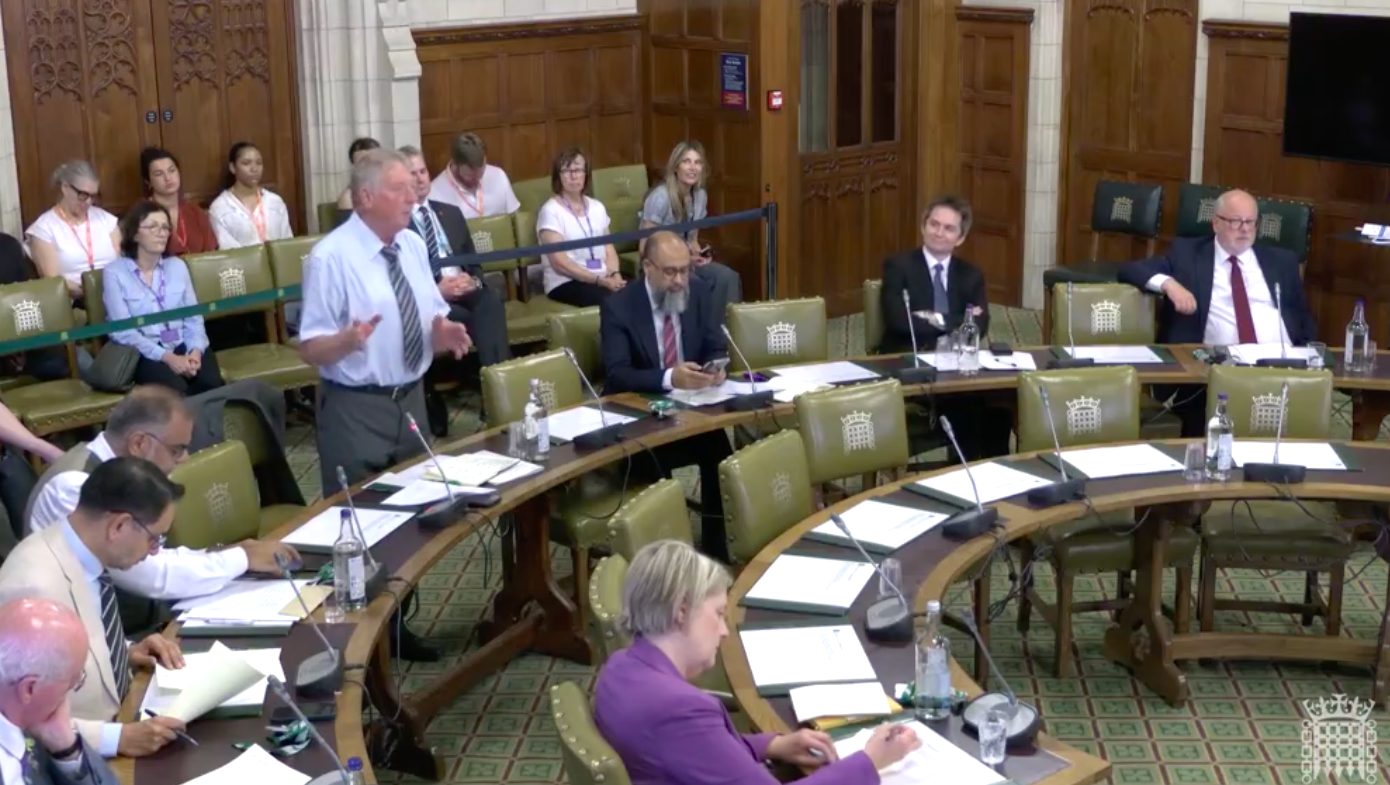
Parliamentarians from across the political spectrum have condemned the staging of a Westminster debate on alleged pro-Israel influence in UK politics.
A succession of MPs warned that its premise echoes antisemitic conspiracy theories at a time when Britain’s Jewish community faces mounting threats and attacks.
Monday’s debate, prompted by a public petition calling for an inquiry into the influence of pro-Israel groups, was held against the backdrop of increased antisemitic incidents in the UK.
Many MPs argued that the very nature of the petition risked legitimising age-old prejudices.
“Why is Israel singled out in this way? Why not Gulf countries, Iran, eastern Europe or the USA?” asked Andrew Mitchell, Conservative MP and former minister.

“The petition is being discussed at a time when the Jewish community are clearly under threat and are suffering numerous hideous attacks.
“I am not sure I trust the motivation of the petition organisers. I fear the whole thing smacks of an antisemitic conspiracy theory.”
Jewish Labour MP Peter Prinsley echoed these concerns at the debate, held in Westminster Hall.
“Shame on those who have orchestrated this regurgitation of antisemitic tropes,” he said. : It is ancient just as it is predictable. … The idea that Jews exercise hidden influence over politics, democracy and society is not new, it is an ancient conspiracy theory repeatedly used to isolate Jews, undermine social cohesion and stoke hatred.
“Let us come to our senses. We must reject antisemitism in all its forms, reject conspiracy theory dressed up as political analysis, and defend a politics based on evidence, decency and truth.”
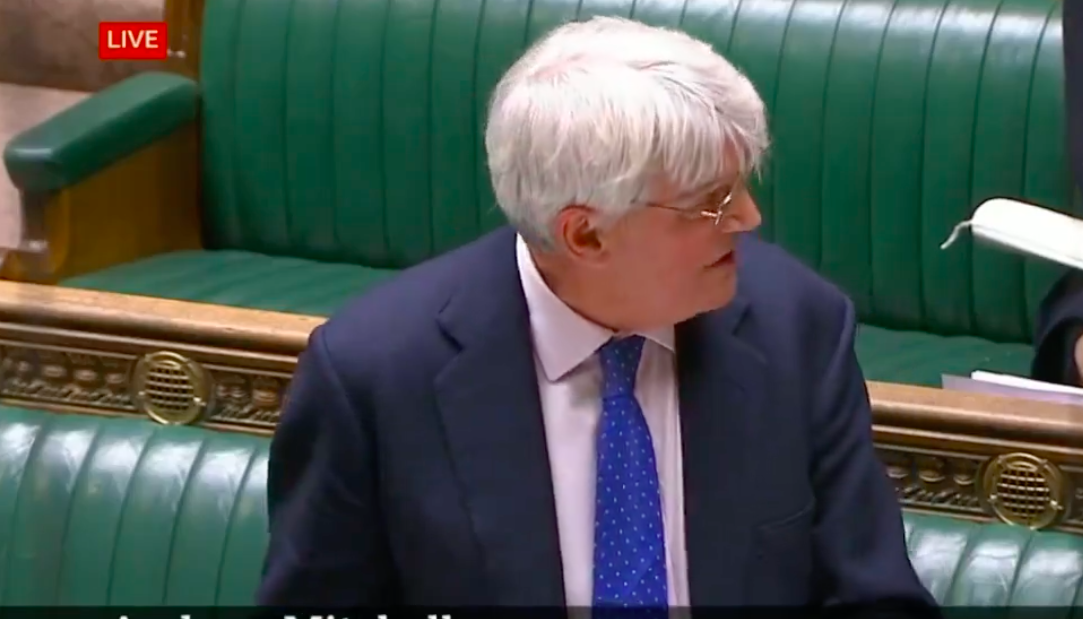
James Frith, Parliamentary Secretary in the Cabinet Office, restated the government’s stance.
“The Government do not support a public inquiry solely on pro-Israeli influence … the premise is that Israel—the world’s only Jewish state—is an influence on British politics that stands alone and must be held to a standard different from that for any other democratic nation,” he argued.
“It is unfortunate that the petition behind this debate plays into the same old antisemitic tropes of hidden forces and malign control … The framing used risks reinforcing the narratives historically associated with antisemitism.”
John Lamont, a Conservative MP also emphasised the danger of such narratives.
A member of the House of Commons Petitions Committee, the body responsible for considering public petitions which reach the signature threshold for parliamentary debate, he added:”Parliament should reject those narratives, and send a clear message that antisemitic narratives, whether old or newly repackaged, will find no home in this Parliament of the United Kingdom.”
Lamont’s intervention set the tone for the debate, placing the committee’s response on record as rejecting the petition’s framing and underscoring the importance of opposing antisemitic tropes in public discourse.
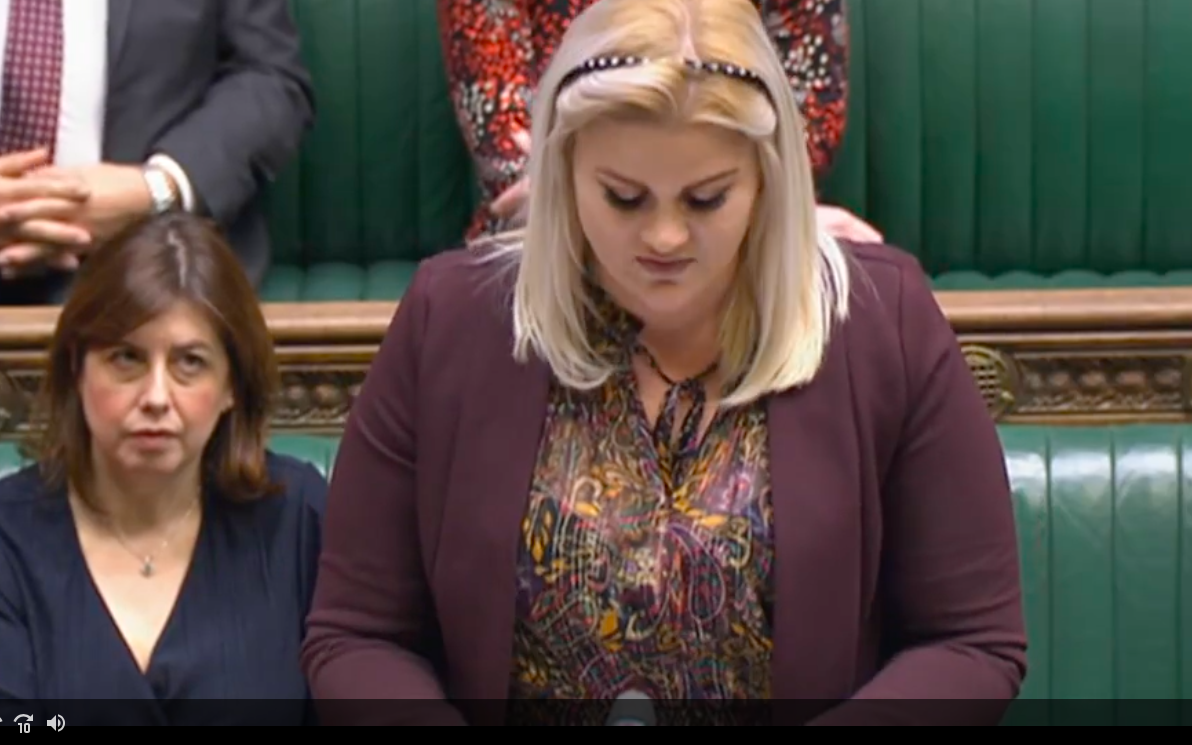
“The petition does not call for a review of lobbying regulations generally,” he noted.
“Instead, it singles out one country and, more importantly, invokes a long-standing allegation that people who support that country exercise hidden or improper influence over our democratic institutions. Parliament should reject those narratives, and send a clear message that antisemitic narratives, whether old or newly repackaged, will find no home in this Parliament of the United Kingdom.”
Labour MP and former Home Office minister Alex Davies-Jones warned:”If this is about foreign influence in general, let us have that conversation properly, if it is about transparency in lobbying, let us have that conversation, too, but if the concerns keep landing on Israel specifically, more than they do on other countries, as has been mentioned, it is worth pausing and asking why that might be.
“There is something deeply uncomfortable about the idea that, out of nearly 200 countries, it is the world’s only Jewish state that needs a special parliamentary inquiry into hidden influence. I gently note that this type of framing has a very long history, and it is not always an easy one.”
Reform UK’s deputy leader Richard Tice said the motion was “antisemitic to the very core.”
He added:”The motion asks us to talk about the influence of Israel on democracy.
“Democracy thrives when citizens are healthy, so maybe we should celebrate the incredible brilliance and influence of Israeli scientists, entrepreneurs and those specialising in medical research and artificial intelligence applications. Their work and innovations, whether they live in the state of Israel or somewhere else such as London, have an incredibly positive influence on the success and health of us all.”
Mike Wood, a Conservative MP, underlined the opposition’s position:”The use of terms such as ‘the Israel lobby’ to describe British Jewish communal bodies combines unfounded claims of disproportionate backroom influence with the ancient insidious trope that Jewish citizens are inherently disloyal or untrustworthy.”
Despite the broad consensus against any parliamentary inquiry, some MPs argued for greater transparency regarding foreign lobbying, including by Israel.
Ayoub Khan, Independent, said: “It is also said that the power of a lobby group is measured by how far a Government can be pushed beyond the limits of policy making.
“I think it is fair to say that for millions up and down this country, the Government’s approach to Israel has defied the most basic logic, justice and humanity. Labour Friends of Israel, which funded many Cabinet members, was reported to the Electoral Commission over concerns about opaque funding arrangements. …
“Ministers in this Government publicly identify themselves as members of that organisation, yet it is not registered as a Members’ association, and therefore avoids the further disclosure requirements that accompany that status. That cannot be right. More troubling still is the question of direct support from the Israeli state.
“Electoral records show that the Israeli Ministry of Foreign Affairs has provided financial support to UK parliamentarians. That must be transparent.”
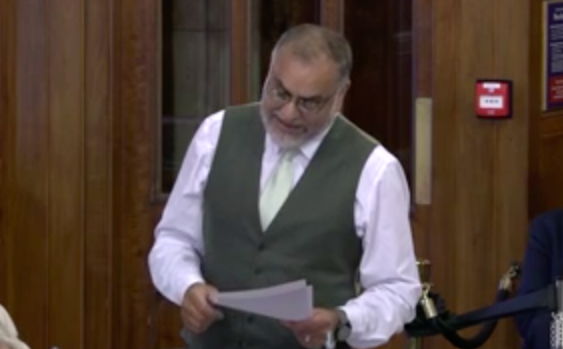
The pro-Gaza MP Shockat Adam claimed:” I want to concentrate my speech particularly on Elbit, which supplies around 85% of Israeli military drones and land-based military equipment.
As the International Court of Justice considers allegations of genocide, and while the ICC has issued arrest warrants against the Israeli Prime Minister and former Minister of Defence, Elbit continues to profit from the genocide in Gaza. United Nations investigators have documented the repeated use of armed quadcopter drones against Palestinian civilians. One of those systems, the Lanius drone, is manufactured by Elbit.”
He continued:” Elbit has a significant presence in my city of Leicester through its manufacturing and technology operations. The company generates billions of dollars in annual revenue while supplying the military equipment used in a conflict that is subject to allegations of genocide before the International Court of Justice. That is why parliamentary scrutiny of its access to Ministers is essential.”
Iqbal Mohamed, an Independent MP, pointed to recent media investigations.
“In June 2024, Declassified UK revealed that 13 of the then 25 members of the Labour Cabinet received hundreds of thousands in donations from pro-Israel donors, and that some 180 of Britain’s 650 MPs had accepted such funding during their political careers,” he said.
“That is one in four elected Members. Britain claims to defend its democracy from foreign interference. … yet when substantial evidence of foreign influence concerns Israel, our principles of transparency, scrutiny and accountability appear to vanish.”
He was later criticised by Tory MP Wood over remarks he made later.
Mohamed said: Maybe I was not very clear, but he mischaracterised my remarks as referring to all Jews or Jewish donors. My remarks clearly referred to pro-Israeli donors, whoever they are. To clarify, it is those who support the illegal actions of Israel …”
The debate was sparked by UK e-petition 752646, which gathered over 118,000 signatures, passing the mandatory 100,000-signature threshold required for parliamentary consideration.
It was put online by a member of the public with a history of pro-Palestine activism.

The text of the petition said: “We are concerned about reported Israeli state-linked and pro-Israel lobbying activity in UK politics. We believe it is important to determine the scope and impact of any such influence campaigns.
“We feel that the horrific devastation in Gaza, the ongoing suppression of Palestinians in the West Bank, and the UK’s political response underline the urgent need to scrutinise how pro-Israel organisations, networks, and lobbying efforts may shape government decisions, party policy, and public debate.”
The government responded to the petition on April 17, 2026, saying it does not support a public inquiry on pro-Israeli influence and does not have plans to hold an inquiry on wider foreign influence and lobbying more generally.
It nevertheless said that it takes concerns about foreign influence in politics and democracy seriously, and is already taking action to address this.
Lamont ended the discussion saying:”Any further petition would have to attract more than 100,000 signatures, but the Petitions Committee has discretion, even when it reaches that number, on whether to grant another debate.
“When reflecting on how this debate has gone, and more widely on how the Jewish community in particular has reacted to the petition, I would certainly argue that it should not come back for another debate, even if it reached that threshold. “

Keep community journalism free.
Jewish News is free for everyone. No paywall. No barriers. Just trusted journalism for anyone who wants to stay connected to Jewish life in Britain.
If you value that, please support us.
From as little as £5 a month, you can help keep our journalism free and accessible to all.
Every day, we report on the issues that matter to our community. We celebrate achievements, support charities, challenge antisemitism and ensure Jewish voices are heard more widely.
From as little as £5 a month, you can help us continue to:
- Report on the stories shaping Jewish life in the UK and beyond
- Bring our community together through shared stories, events and campaigns
- Celebrate the people, culture and moments that define our community
- Support organisations doing vital work across Jewish Britain
You can make a one-off donation or become a regular supporter. Every contribution helps keep our journalism free, independent and accessible to all.
If everyone who values Jewish News gave a small amount, it would make a real difference to our future.