Prefer Jewish News on Google
Prosecutors told banners and chants viewed on social media may stir up hatred
CPS guidance warns protest chants and banners shared online could lead to seven-year stirring-up-hatred prosecutions
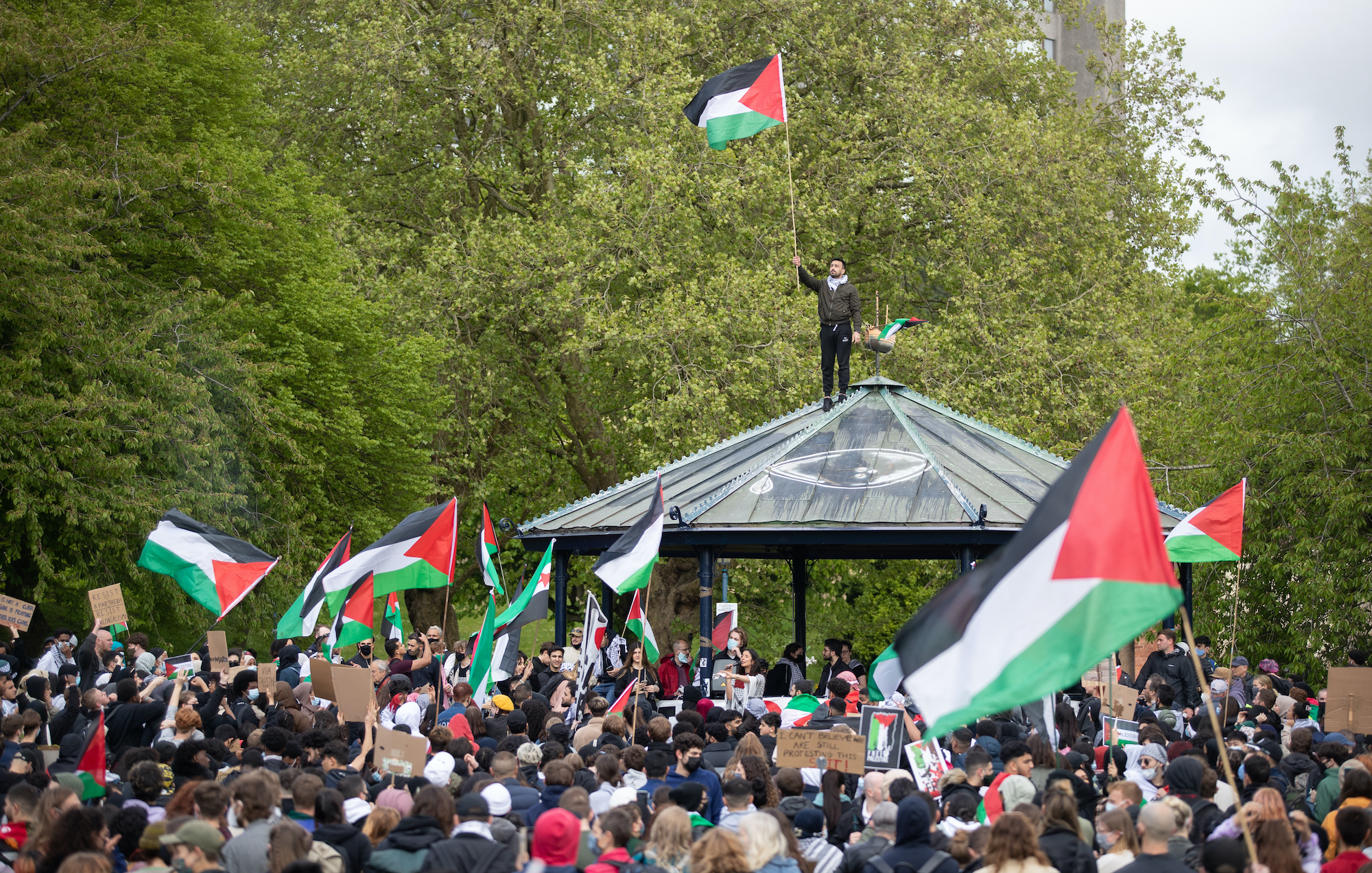
Prosecutors have been told to consider whether protest placards, banners and chants viewed on social media may amount to offences of stirring up hatred ahead of planned rallies in London on Saturday.
The new guidance, issued before what police have described as an “unprecedented” security operation, urges prosecutors to assess whether slogans, symbols or chants may influence audiences online if they are filmed and shared.
Thousands of officers are set to take to the streets alongside armoured vehicles, police horses, dogs, drones and helicopters as the Met aims to avoid clashes between Tommy Robinson’s Unite the Kingdom march and the pro-Palestine Nakba Day rally.
The Crown Prosecution Service (CPS) said the revised advice is designed to reflect “the changing international context” and follows separate guidance concerning the fast-tracking of hate crime prosecutions issued earlier this month.
The guidance tells prosecutors to take account of the wider context surrounding protests, including heightened tensions linked to national or international events.

Recent criminal cases have seen suspects charged after shouting “death to the IDF (Israel Defence Forces)” and “globalise the intifada”.
Director of Public Prosecutions Stephen Parkinson said: “This is not about restricting free speech. It is about preventing hate crime and protecting the public, particularly at a time of heightened tensions.
“Where the line into criminality is crossed, we will not hesitate to prosecute.”
The CPS said offences of stirring up hatred under the Public Order Act 1986 carry maximum prison sentences of seven years.
Prime Minister Sir Keir Starmer visited a police command centre in Lambeth on Friday alongside Metropolitan Police Commissioner Sir Mark Rowley and London Mayor Sir Sadiq Khan before the weekend rallies.
Sir Mark, while seated in the gold command suite in front of live CCTV images of different parts of the capital, told Sir Keir: “We’ve got a time when hate crime has been escalated for the last two or three years.”
He added: “And then ‘small p’ politics and protest groups who have got more polarised and angry, and so both groups at the weekend have a track record of having an intimidatory effect on the communities.”
Commander Clair Haynes also told the Prime Minister that drones would be used to monitor both protest routes for “potential clashes or flashes” while officers in Wembley would monitor CCTV feeds from the FA Cup final to identify supporters travelling towards demonstrations.
For the first time under official protest restrictions, organisers of the rallies will face prosecution as well as any speakers who break the law by using the events as a platform for extremism or hate speech.
Live facial recognition will be used for the first time in a protest policing operation, with cameras set up in an area of Camden that is not on the route of the Unite the Kingdom march, but is expected to be used by a lot of people attending the event.
The Biometrics and Surveillance Camera Commissioner Professor William Webster told the Press Association police forces could find themselves taken to court over their use of the technology, saying it is not “foolproof”.
Around 4,000 officers are expected to be on duty on Saturday, with 660 being drafted in from forces outside the Met.
Sir Keir asked about protester numbers during his Lambeth visit, with police estimating around 50,000 people set to attend the Unite the Kingdom rally, and 30,000 at Nakba Day.
Metropolitan Police Deputy Assistant Commissioner James Harman said the policing operation will cost the force £4.5 million, with £1.7 million being used on bringing in officers from other forces to boost numbers.
He said the operation was taking place against a backdrop of “continued global instability and tension”, increased antisemitism, concerns within Jewish and Muslim communities, and a severe terrorism threat level.
Meanwhile, the Metropolitan Police Federation said officers faced “relentless demand” ahead of another major weekend operation.
Paula Dodds, the federation’s chairwoman, said many officers have had leave cancelled and rest days withdrawn to meet policing requirements, adding: “There are not enough of us.”

Keep community journalism free.
Jewish News is free for everyone. No paywall. No barriers. Just trusted journalism for anyone who wants to stay connected to Jewish life in Britain.
If you value that, please support us.
From as little as £5 a month, you can help keep our journalism free and accessible to all.
Every day, we report on the issues that matter to our community. We celebrate achievements, support charities, challenge antisemitism and ensure Jewish voices are heard more widely.
From as little as £5 a month, you can help us continue to:
- Report on the stories shaping Jewish life in the UK and beyond
- Bring our community together through shared stories, events and campaigns
- Celebrate the people, culture and moments that define our community
- Support organisations doing vital work across Jewish Britain
You can make a one-off donation or become a regular supporter. Every contribution helps keep our journalism free, independent and accessible to all.
If everyone who values Jewish News gave a small amount, it would make a real difference to our future.