Prefer Jewish News on Google
Refugee Shabbat in a hardening Britain
As rhetoric on refugees grows harsher, Refugee Shabbat urges Britain to remember the Jewish duty to welcome the stranger

Refugee Shabbat (13-14 March) arrives this year at a moment of profound moral testing. Across the United Kingdom, the conversation about refugees and people seeking asylum has grown harsher, more suspicious and increasingly detached from the human realities at its centre. Behind the rhetoric and statistics are people who have fled war, persecution, and trafficking and are now trying to rebuild a life in safety.
Jewish tradition places strong emphasis on the responsibility to treat newcomers with dignity and compassion. The instruction to “welcome the stranger” appears repeatedly in the Torah, reflecting a deep awareness that vulnerability and displacement are part of human history. Jewish memory includes many moments when survival depended on the willingness of others to offer refuge. That history shapes how many of us understand our responsibilities today.
Refugee Shabbat is therefore not simply a symbolic moment in our calendar. It is an opportunity to reflect on how those values apply now and to consider what practical support looks like in Britain today.
https://www.politicshome.com/
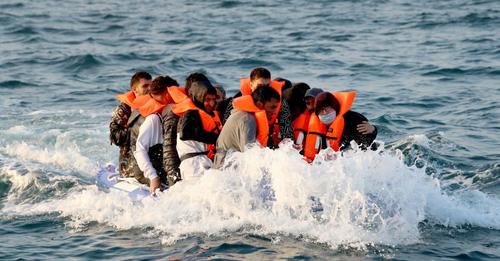
Home Office figures show that tens of thousands of people continue to seek protection in the UK each year – often after journeys marked by violence, displacement, and loss. Yet this country ranks significantly lower than other countries in Europe, receiving only the 15th highest number of asylum applications per head of population.
Among these people, many are children. According to the Home Office statistics for the year ending December 2025, 16,710 children claimed asylum in the UK. Of these, 66 percent were under 14 years old. Some children arrived with family members, while others came entirely alone, facing the daunting prospect of rebuilding their lives in a new country without any adult support.



For unaccompanied minors, the system can be particularly challenging. One troubling practice is the increasing reliance on visual “age assessments” to determine whether young people without documentation or proof of age are children or adults. Officials are sometimes asked to make life-altering decisions based largely on appearance and quick judgment.
The consequences of getting this wrong are severe. Children incorrectly identified as adults can be placed in adult accommodation and lose the essential safeguarding protections that vulnerable minors need. They may be left without access to education or specialist support services designed for children. A young person who has already experienced conflict, exploitation, or separation from family can find themselves navigating the system alone.
These are not abstract policy debates. They are decisions that shape the lives of young people who have already endured extraordinary hardship.
At HIAS+JCORE, we respond through both advocacy and practical support. One example is JUMP, our Unaccompanied Minors Project, which supports young asylum seekers and refugees in London and Brighton and Hove. Through mentoring, community activities, and casework, the programme helps young people access education, legal advice, and practical support to begin building stable lives in the UK.
For a young person who has arrived alone, even small forms of support can make an enormous difference. A trusted adult mentor, help accessing school or healthcare, or simply the chance to feel part of a community can transform the experience of starting again in a new country.
Donations make this work possible. They fund volunteer training, professional casework support, and hardship assistance for young people facing urgent needs. They enable organisations like HIAS+. JCORE not only provides direct support but also continues advocating for policies that treat refugees with fairness and dignity. Financial support turns moral conviction into practical help.
- Judith Flacks-Leigh is the Chair of HIAS+JCORE

Keep community journalism free.
Jewish News is free for everyone. No paywall. No barriers. Just trusted journalism for anyone who wants to stay connected to Jewish life in Britain.
If you value that, please support us.
From as little as £5 a month, you can help keep our journalism free and accessible to all.
Every day, we report on the issues that matter to our community. We celebrate achievements, support charities, challenge antisemitism and ensure Jewish voices are heard more widely.
From as little as £5 a month, you can help us continue to:
- Report on the stories shaping Jewish life in the UK and beyond
- Bring our community together through shared stories, events and campaigns
- Celebrate the people, culture and moments that define our community
- Support organisations doing vital work across Jewish Britain
You can make a one-off donation or become a regular supporter. Every contribution helps keep our journalism free, independent and accessible to all.
If everyone who values Jewish News gave a small amount, it would make a real difference to our future.