Prefer Jewish News on Google
René Cassin at 50: Why Britain cannot afford to weaken human rights
As calls grow to dilute the European Convention, Cassin’s legacy reminds us why enforceable rights exist
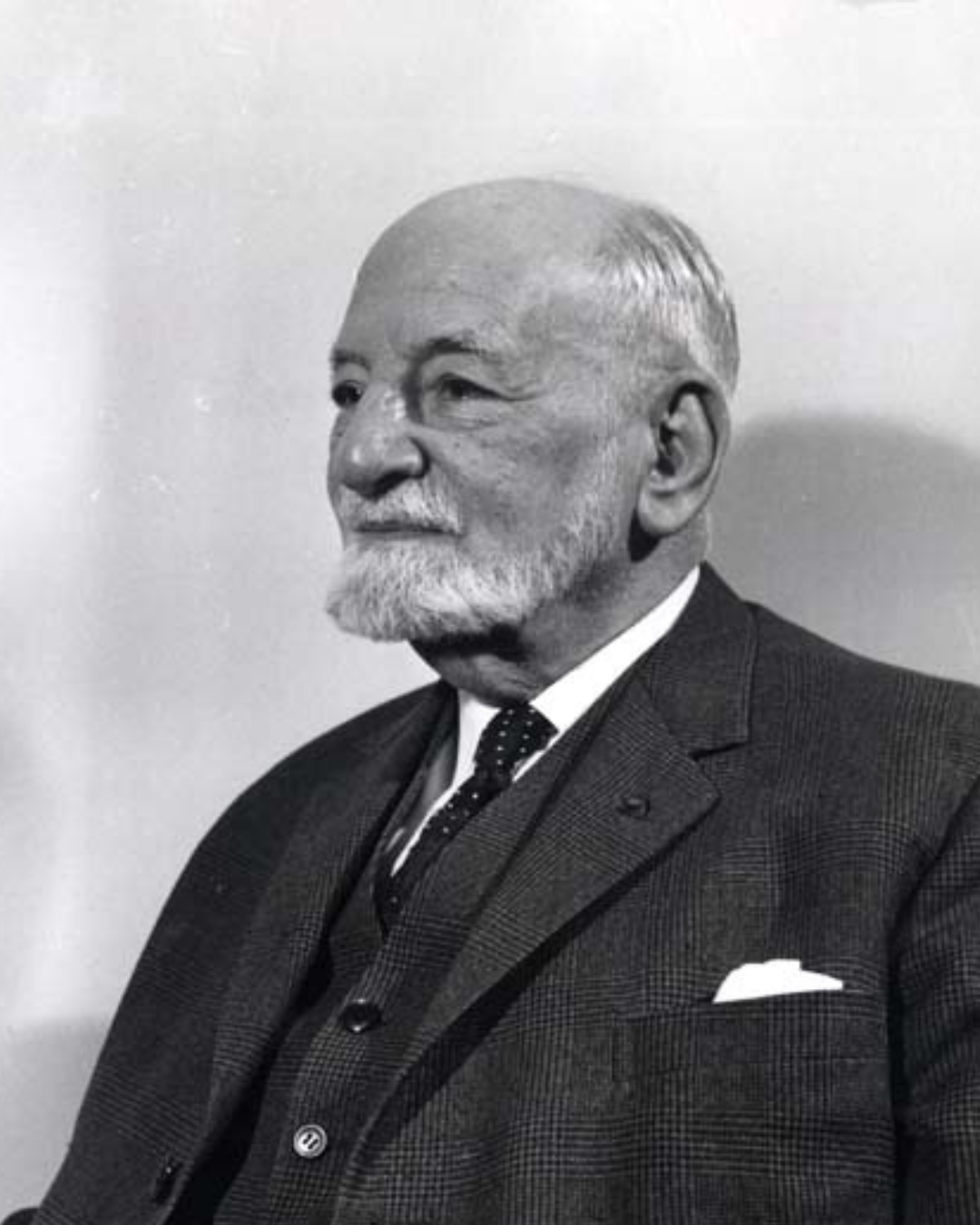
This year marks the 50th anniversary of the death of our namesake, Monsieur René Cassin, a jurist whose life and work helped shape the foundations of modern human rights.
In the aftermath and horrors of the Holocaust, Monsieur René Cassin played a central role in building a framework designed to prevent future atrocities and protect human dignity. As a co-drafter of the Universal Declaration of Human Rights, he helped articulate a universal promise: that every person, everywhere, is entitled to dignity, equality and protection under the law.
The Declaration emerged directly from the failures that allowed persecution, exclusion and mass violence to unfold. Monsieur Cassin understood that memory alone was not enough. What was needed were clear principles, shared standards, and legal commitments capable of restraining power and safeguarding the vulnerable. The Universal Declaration became the cornerstone of international human rights law, influencing treaties and protections that continue to shape our world today.
Part of that legacy, and one of the most enduring safeguards born from the post‑war human rights project, is the European Convention on Human Rights. Cassin was instrumental in shaping the intellectual foundations of the Convention, which established enforceable rights precisely because the Holocaust had shown the catastrophic consequences of relying on goodwill alone. Rights needed to be codified, enforceable, and universal, not optional or dependent on political mood.
Today, the Convention faces unprecedented criticism and calls for weakening its authority. Due to the bad faith arguments or bad faith actors who want to see human rights done away with in the UK and across Europe, the government is now under pressure to needlessly dilute the Convention. But to dilute the Convention is to forget why it exists. The Convention prevents governments from acting above the law; it protects minorities like our own when majorities turn hostile; and it provides remedies when domestic public systems fail.
At René Cassin we train Jewish organisations on how to use the European Convention on Human Rights, codified into domestic law through the Human Rights Act to help others within our community when human rights are denied.
Inspired by Monsieur Cassin, last year we launched the Jewish Everyday Rights Forum to bring human rights principles into the centre of Jewish communal life. We often think of human rights as happening above us, in international courts or to heads of states. But Monsieur Cassin intended for human rights to be something that each individual can rely on in their everyday lives. We set up the Forum because we saw – in schools, hospitals, housing, and many other settings – instances of human rights not being applied when it came to Jewish service users.

Our work has always reflected two pertinent sentiments in the Jewish community: that Jews have been victims to some of the worst atrocities throughout history and, linked to this, that Jews have a moral responsibility towards the protection of other nations. The Jewish Everyday Rights Forum reframes Jews not only as historical victims of rights violations nor solely as advocates for the rights of others, but as a community with present‑day rights needs of its own. It gives language to concerns many Jews have long felt but not always named. It empowers communities to articulate their rights in ways that institutions can recognise.
Cassin’s commitment to human rights principles was also deeply grounded in his Jewish beliefs, “human rights are an integral part of the faith and tradition of Judaism. The beliefs that man was created in the divine image, that the human family is one, and that every person is obliged to deal justly with every other person are basic sources of the Jewish commitment to human rights”.
Monsieur Cassin’s yahrzeit gives us a moment to ask whether the rights he fought to secure are genuinely felt by communities in Britain today, including our own. The frameworks for protecting human dignity as well as the dignity of communities like ours are there through the Universal Declaration of Human Rights and the European Convention on Human Rights. However, what Monsieur Cassin’s legacy demonstrates to us is that these conventions and principles can only hold up when our community has the confidence to articulate its rights, to advocate when those rights are eroded, and to ensure that the protections Cassin fought for are real in schools, hospitals, workplaces, local councils and anywhere else. Human rights only become meaningful when communities understand that they belong to them. Cassin built the architecture for a society built on mutual respect; it is up to us to inhabit it.
At René Cassin, we honour this legacy by carrying it forward, defending human rights as a living commitment, rooted in Jewish experience and values, and dedicated to building a more just and dignified future for all across generations.
- Jonathan Chern is the policy officer at René Cassin

Keep community journalism free.
Jewish News is free for everyone. No paywall. No barriers. Just trusted journalism for anyone who wants to stay connected to Jewish life in Britain.
If you value that, please support us.
From as little as £5 a month, you can help keep our journalism free and accessible to all.
Every day, we report on the issues that matter to our community. We celebrate achievements, support charities, challenge antisemitism and ensure Jewish voices are heard more widely.
From as little as £5 a month, you can help us continue to:
- Report on the stories shaping Jewish life in the UK and beyond
- Bring our community together through shared stories, events and campaigns
- Celebrate the people, culture and moments that define our community
- Support organisations doing vital work across Jewish Britain
You can make a one-off donation or become a regular supporter. Every contribution helps keep our journalism free, independent and accessible to all.
If everyone who values Jewish News gave a small amount, it would make a real difference to our future.