Prefer Jewish News on Google
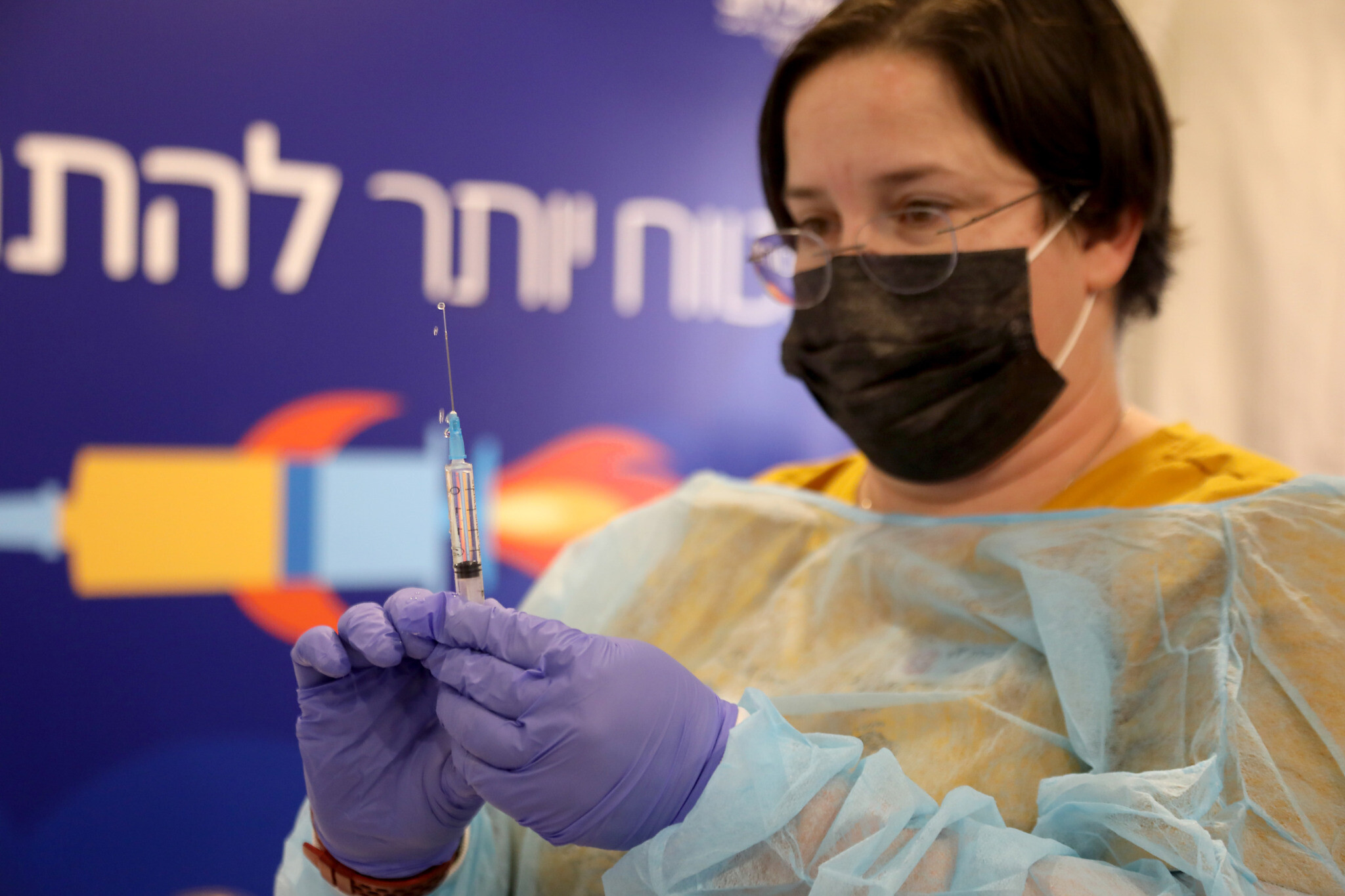
Report: Pfizer jab 85% effective after first dose for Israeli healthcare workers
Study in Lancet journal provides reassurance about UK's delay of second dose, after 7,000 healthcare workers at the Sheba Medical Centre show 75% fall in infection after one jab
Commenting on the research, Deborah Dunn-Walters, chairwoman of the British Society for Immunology Covid-19 and Immunology Taskforce and professor of immunology at the University of Surrey, said: “Due to the high percentage of the Israeli population vaccinated so far, we have been awaiting data from there to indicate the first signs of how effective Covid-19 vaccines are outside of a clinical trial setting and how dosing schedule plays into this.”
She added: “It should be noted that this study was carried out on people of working age, so it will be informative to see a similar study in older people after one dose.
“Although further research is needed, overall these new findings should provide reassurance around the UK’s decision to offer the two doses of the vaccine 12 weeks apart.
“While the results of this study show that a good level of immunity is present after one dose of the Pfizer/BioNTech vaccine, it is still the case that the highest and longest lasting protection from getting ill with Covid-19 will only be provided by getting two doses of the vaccine.
“It is critical that all people eligible for Covid vaccination do return to get their second dose when asked to do so by their medical providers.”
Dr Peter English, consultant in communicable disease control and former editor of Vaccines in Practice Magazine, described the findings as “good news” but added that available data is “quite limited”.
He said: “This is good news. It supports earlier data suggesting that, from six weeks or so after vaccination, vaccine efficacy is likely to be at least 85% – possibly considerably better – at least in vaccine recipients of working age.
“This is a letter, rather than a research paper – as such the data are quite limited, and I would expect far more details to be published in due course.”
Dr English added: “As far as I can tell, this particular letter does not include data on severe and mild infection – from other evidence (and experience with vaccination more generally) we would expect the vaccination to be more protective against severe disease than against mild disease, and more protective against mild disease than against asymptomatic infection.
“We may see more information on this when a more complete publication is made available.”

Keep community journalism free.
Jewish News is free for everyone. No paywall. No barriers. Just trusted journalism for anyone who wants to stay connected to Jewish life in Britain.
If you value that, please support us.
From as little as £5 a month, you can help keep our journalism free and accessible to all.
Every day, we report on the issues that matter to our community. We celebrate achievements, support charities, challenge antisemitism and ensure Jewish voices are heard more widely.
From as little as £5 a month, you can help us continue to:
- Report on the stories shaping Jewish life in the UK and beyond
- Bring our community together through shared stories, events and campaigns
- Celebrate the people, culture and moments that define our community
- Support organisations doing vital work across Jewish Britain
You can make a one-off donation or become a regular supporter. Every contribution helps keep our journalism free, independent and accessible to all.
If everyone who values Jewish News gave a small amount, it would make a real difference to our future.