Review: The Wolf of Wall Street ***
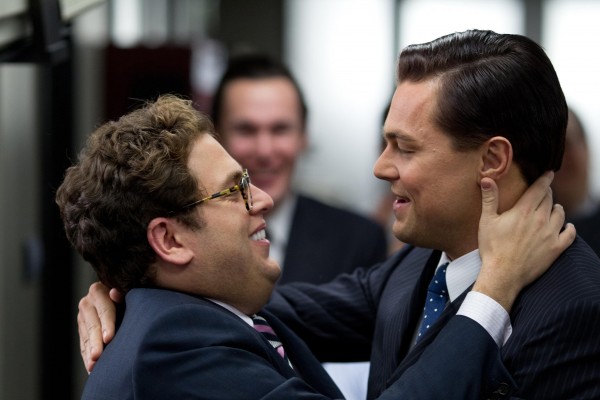
Funny, frenzied and vacuous – Leonardo DiCaprio fascinates in Martin Scorsese’s new Oscar nominated Wall Street morality tale, writes Rebecca Wallersteiner
As the FTSE hits an all-time high, a new generation of would-be Gordon Gekkos from both sides of the Atlantic have been queuing to see Martin Scorsese’s new Wall Street morality tale.
Based on the memoirs of fraudster Jordan Belfort, Scorsese skirts nervously over the lead character’s Jewishness, although in his previous films, as in Gangs of New York, also starring Leonardo DiCaprio as the lead, he seems to have felt comfortable satirising Italian-American mobsters, closer to his own background.
It’s difficult to take your eyes off DiCaprio’s extraordinary performance ,which will surely win him an Oscar. From the start the film is about Belfont, but unlike his memoir upon which it is based, the movie hardly refers to Belfont’s Jewish roots.

In the prologue to his memoir, Belfont writes that he hopes his life will serve as “a cautionary tale to the rich and poor alike.” Although it certainly does this from the opening scenes, the film glamorises greed and recklessness as DiCaprio immerses himself into the debauchery and drugs scenes – with dwarf throwing, hookers and cocaine galore.
His antics make Sodom and Gomorrah seem like a holiday camp in comparison.
You can’t help seeing parallels with Bernie Madoff’s story throughout. One of the film’s most intriguing performances is Joanna Lumley as the English aunt of Belfont’s wife, who ends up helping Belfont hide dodgy money to enliven her life.
An interesting flirtatious chemistry develops between Aunt Emma and her charming shyster nephew – as he makes her feel more alive. Sadly Aunt Emma has a heart attack and dies early on and the film reverts to focusing on her boring Barbie doll niece.
In his memoir, Belfont examines his motivation for fraud – a desire for acceptance from upper middle class WASP America, which he feels rejects him.
His dad, Max, grew up in the tough 1930s Bronx, although Belfont and the traders he recruited were predominantly middle class Jewish boys from affluent Long Island.
This film follows on from the recent release of American Hustle which depicts another cunning Jewish conman with a similar crooked ingenuity. Belfont is being hailed as a new folk hero on Wall Street.
Having lived through the 1980s – the film gave me a sense of déjà vu. Rather like the decade itself, I found the movie interesting, if somewhat long and depressing.
Greed isn’t good – in fact, it is rather soul-destroying!

Keep community journalism free.
Jewish News is free for everyone. No paywall. No barriers. Just trusted journalism for anyone who wants to stay connected to Jewish life in Britain.
If you value that, please support us.
From as little as £5 a month, you can help keep our journalism free and accessible to all.
Every day, we report on the issues that matter to our community. We celebrate achievements, support charities, challenge antisemitism and ensure Jewish voices are heard more widely.
From as little as £5 a month, you can help us continue to:
- Report on the stories shaping Jewish life in the UK and beyond
- Bring our community together through shared stories, events and campaigns
- Celebrate the people, culture and moments that define our community
- Support organisations doing vital work across Jewish Britain
You can make a one-off donation or become a regular supporter. Every contribution helps keep our journalism free, independent and accessible to all.
If everyone who values Jewish News gave a small amount, it would make a real difference to our future.