Prefer Jewish News on Google
Tributes pour in for pro-Israel Labour peer and MI6 operative Baroness Ramsay
Communal leaders and politicians praise Meta Ramsay following her death, aged 89
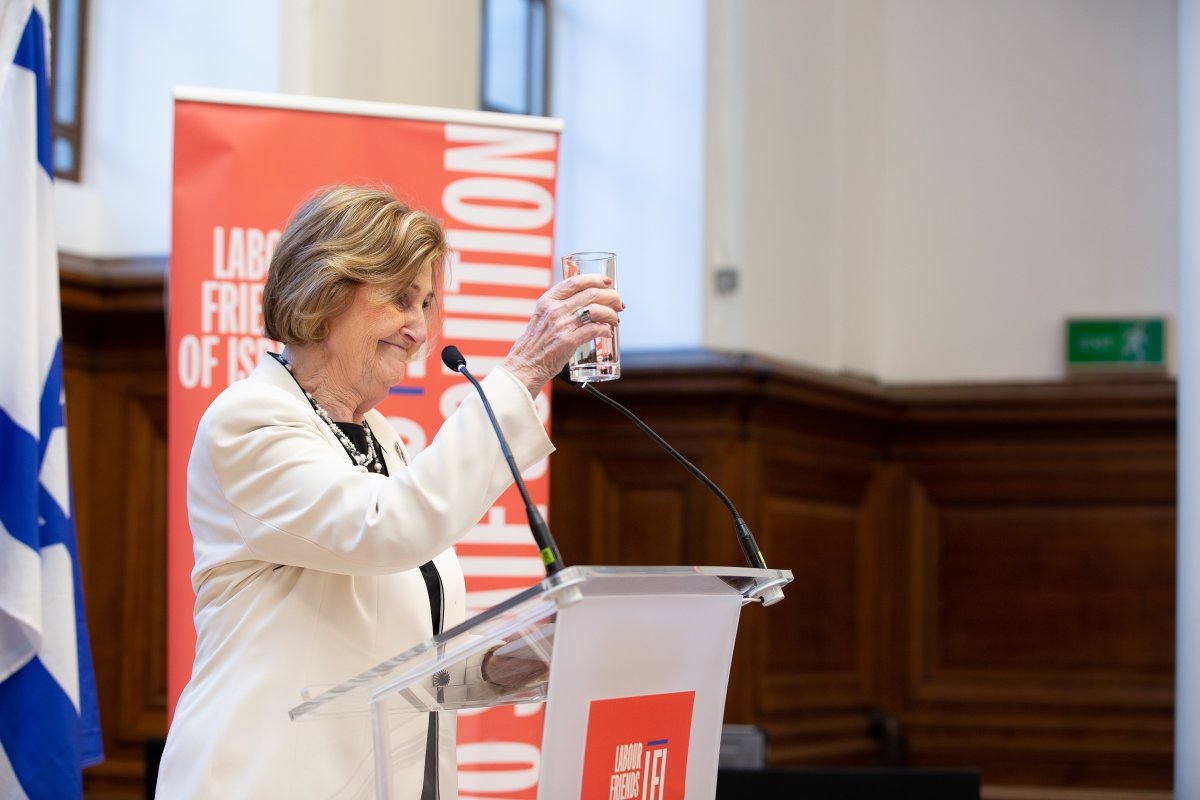
Tributes have poured in for the hugely influential politician, MI6 operative, diplomat, and Labour Friends of Israel chair, Baroness Meta Ramsay, following her death aged 89.
Following her death on May 28, LFI lay chair Adrian Cohen said: “Meta Ramsay was a public servant of immense intelligence, principle and bravery. She was a loyal and dedicated friend of Israel and the Jewish community and a fierce opponent of antisemitism.
“LFI benefited hugely from Meta’s longstanding work as our honorary parliamentary chair in the House of Lords. She will be greatly missed by all those who knew her.
“May her memory be a blessing.”
Senior political figures, including former Health Secretary Wes Streeting, also paid tributes. He said: “Every single conversation with Meta Ramsay was an education. What an extraordinary life she led. The epitome of public service.”
Progress executive director Adam Langleben described Ramsay as an “extraordinary woman in the truest sense.”
Born in Glasgow in 1936 to a working-class family with Jewish and Church of Scotland roots, Ramsay’s Jewish mother, with family roots tracing to Ukraine – her maternal grandmother had fled Tsarist-era pogroms there before settling in Glasgow’s Gorbals district – had embraced both Zionist and socialist ideologies.
Her father, Alexander Ramsay, was a shipyard pattern-maker brought up within the Protestant Church of Scotland.
Ramsay was educated at Hutchesons’ Grammar School and then at Glasgow University, where she read for a general degree, an MA covering the arts, languages, philosophy, and at least one science.
She joined the Secret Intelligence Service (MI6) in 1969, shortly after completing her studies.
She went on to forge a highly successful career both within the Foreign Office and as a Labour politician in the House of Lords.
Throughout this time she also remained a staunch defender of the state of Israel, and also spoke out against the rise of antisemitism in Labour under Jeremy Corbyn.
Writing for Jewish News in the aftermath of October 7, she said: “Hamas’ brutal assault of Saturday 7th October did not just trigger a war between the terror group and Israel. Instead, it launched a multi-front battle in a struggle to shape the very future of the Middle East.”
In October 2019, defending her friend Dame Louise Ellman’s decision to leave Labour during the Corbyn era, Ramsay wrote: “The hard left have fought a vicious battle against Louise in her constituency for the past four years.
“Any decent leadership of my party would have moved to suspend her constituency party and clear out the antisemites and bullies who dominate it. But these are, of course, the current leadership’s most loyal supporters and they will never move against them.”
A key posting for MI6 was in Helsinki, Finland, where she served as a case officer, managing agent handling and intelligence operations during the Cold War. In this role, Ramsay was directly involved in the 1985 exfiltration of KGB double agent Oleg Gordievsky, a high-value MI6 asset whose defection provided critical intelligence on Soviet intentions and contributed to shifts in Western policy toward the eventual collapse of the Soviet Union.
By the late 1980s, she had risen to become one of the most senior women in MI6.
Ramsay’s entry into Labour politics followed her retirement from the Secret Intelligence Service in August 1991 at age 55.
Slim but formidable, Ramsay also built a formidable reputation in 22 years with the Foreign Office.
She entered politics in the 1990s having had longstanding affiliations with the Labour Party, rooted in student-era friendships with figures such as John Smith and Donald Dewar.
Ramsay joined the office of John Smith as his foreign policy adviser shortly after he became Leader of the Labour Party on 18 July 1992, following the resignation of Neil Kinnock.
She became a life peer in 1996 and acted as the House of Lords Foreign Office spokesperson, as well as being a Labour whip, amongst several other leading roles.
She became a speaking whip in the Lords for Tony Blair, and from 2002 a Deputy Speaker. Her advice was valued by Gordon Brown when he succeeded Blair, and she was of great value to Labour, particularly in her native Scotland, as a fundraiser.

Keep community journalism free.
Jewish News is free for everyone. No paywall. No barriers. Just trusted journalism for anyone who wants to stay connected to Jewish life in Britain.
If you value that, please support us.
From as little as £5 a month, you can help keep our journalism free and accessible to all.
Every day, we report on the issues that matter to our community. We celebrate achievements, support charities, challenge antisemitism and ensure Jewish voices are heard more widely.
From as little as £5 a month, you can help us continue to:
- Report on the stories shaping Jewish life in the UK and beyond
- Bring our community together through shared stories, events and campaigns
- Celebrate the people, culture and moments that define our community
- Support organisations doing vital work across Jewish Britain
You can make a one-off donation or become a regular supporter. Every contribution helps keep our journalism free, independent and accessible to all.
If everyone who values Jewish News gave a small amount, it would make a real difference to our future.